It would seem quite strange if, by now, you haven’t heard the term VoIP or VoIP technology before, considering it has been named nothing less than the most successful technology of the last decade! If you indeed aren’t familiar with it, chances are big you’re already using it without knowing. And if you are aware of the term, but don’t know what it is or what it means, you’re in the right place. Meaning Voice over Internet Protocol, VoIP is a revolutionary technology that delivers voice communications and multimedia sessions over Internet Protocol (IP) networks, such as the Internet. In more simple words, it is an alternative and cheaper way of making and receiving phone calls. Other terms such as Internet telephony, broadband telephony, and broadband phone service specifically refer to the supply of voice, fax SMS, voice-messaging and other communication services over the Internet, instead of via the PSTN (public switched telephone network). How does VoIP…

Are you interested in the VoIP industry and want to learn more about VoIP? There are plenty of VoIP books out there that come in all sizes and some more technical than others. There are volumes that provide a simple straightforward review of VoIP, others cover the use of VoIP for both home and business networks, and a few of them even discuss security issues relating to voice and data networks. There is also a good deal of guides that explain how to evaluate, select, and install VoIP systems. But if you’re not crazy about looking and analyzing through hundreds of technical large VoIP books before finding the one you need, check out the list of our 10 favorite VoIP books for consumers. The Best 10 Books on VoIP VoIP For Dummies: By Timothy V. Kelly Low-cost and written in a clear and engaging way, VoIP For Dummies is one of…
A A2P – Application to person ACD – Average call duration ASR – Answer seisure ratio B B2B – Business-to-business C CDR- Caller detail records CLI -Calling line identification CNAM – Caller ID with Name CoDec – Coder/Decoder CPC – Calling Party Control D DID – Direct Inward Dialing DND – Do not disturb DSP – Digital Signal Processor E E1 – 30 concurrent calls H HD – High Definition I ISP – Internet Service provider IVR- Interactive voice response L LOA – Letter of authorization M MOS -Mean Opinion Score N NAT- Network address translation P P2P – Person to person PBX – Private Branch Exchange PDD – Post Dial Delay PESQ – Perceptual Evaluation of Speech Quality PSQM – Perceptual Speech Quality Measure R RTT – Round-trip delay time S SBC – Session Border Controllers Nonce Number Once SDP – Session Description Protocol SIP – Session Initiation Protocol SMPP – Short Message Peer-to-Peer SNMP -Simple Network Management Protocol T T1…
Most businesses today have several incoming telephone numbers, each one used for a different purpose or department such as customer service, sales, marketing etc. Some companies even have the ability to assign a personal phone number to each employee without requiring multiple physical phone lines, making it possible for telephone traffic to be split up and managed more easily. This powerful framework is only achievable using Direct Inward Dialling (DID). DID, also known in Europe as DDI (Direct Dial-in), is a service offered by telephone companies, that allows organizations, who operate a private branch exchange (PBX) system, to have multiple telephone numbers lines connected to one or more analog or digital physical circuits to their PBX. The system sends the dialed telephone number to the PBX so that an outside caller can have direct access to the PBX extension, possibly avoiding an auto-attendant. In a business with DID, the telephone…
“This call may be monitored and recorded for record-keeping, training and quality-assurance purposes,” is a message that probably all of us have heard before when calling a contact center. But once an agent answers the phone, we immediately forget that we are being recorded, after all, we will most likely never hear that call recording. For the Contact Center, on the other hand, that recording is extremely useful. It allows business to collect and analyze a set of data that enables them to improve and optimize their service. However, there is much more to call recording than the eyes can meet. Steve Kaiser, Co-founder and CEO of OrecX Open Source Recording, shows us that it is not only a great feature available thanks to Business VoIP and the Cloud, but a powerful tool to boost your business. Why do businesses use call recording? Businesses are aware that nowadays customer experience…
According to Technavio’s analysts, the Session Initiation Protocol (SIP) Trunking market is expected to grow at a compound annual growth rate of 18.23% by 2021. SIP Trunking is an Internet-based service that allows businesses to extend VoIP (Voice over Internet Protocol) telephony beyond the organization’s firewall without the need for an IP-PSTN gateway. It allows VoIP users to stay connected in local and long-distance calls to and from endpoints in the traditional phone network. The report ‘Global Session Initiation Protocol Trunking Market 2017-2021’, was based on detailed and reliable data gathered from an extensive research and an in-depth market analysis with inputs from industry experts. It provides a complete market and vendor landscape as well as a SWOT analysis of the key vendors and major factors that influence the market such as drivers, opportunities, and challenges. Session Initiation Protocol Trunking Market Driver: – The increasing adoption of cloud-based solutions is…
The first VoIP (Voice over Internet Protocol) services were launched in 2004, and since then the technology has come a long way with new VoIP features being added each year. VoIP allows users to make and receive free voice and video calls from and to anywhere over the Internet. In recent years VoIP providers have discovered increasingly innovative uses for VoIP technology that are helping all size businesses to be more productive, scalable and cost-efficient simultaneously. Here are the five innovative VoIP features that your business should consider: 1. Interactive voice recognition Whenever you call a company and are greeted by a pre-recorded voice asking you to select the reason for your call, it means company uses an interactive menu based on a VoIP system. Interactive VoIP menus have integrated this voice recognition software to provide a more intuitive means for users to choose options. Very soon, you will be…
Since VoIP (Voice over Internet Protocol) technology has been commercially available, most of the marketing and promotion surrounding its features have been aimed at front-office staff and managers. However, back-office workers also greatly benefit from the VoIP business system, and although it’s not often stressed, it is also a solid selling point for VoIP. Back-office workers are the network engineers who design, install, support and maintain information-technology environments inside a business. So what exactly are the benefits for them and how do these advantages contribute to their efficiency and that of the business? Design Advantages When moving into a new facility the first thing technology engineers consider is the cable plant design. VoIP technology offers many options when designing and budgeting the process, such as letting you run one line to the phone. With a computer jack plugged in the VoIP phone, the connection to the computer is established, effectively reducing…
VoIP (Voice over Internet Protocol) technology and VoIP services has allowed telephone operators to provide low-cost communications services in an ever-changing and developing global market. With VoIP technology, your voice can now be converted into a digital signal that travels over the Internet, which enables you to make phone calls directly from a computer, a smartphone, or a traditional phone connected to a special adapter. The introduction of mass-market VoIP services that use existing broadband Internet access, through which subscribers place and receive telephone calls in the same way as they would via the public switched telephone network (PSTN), began in 2004. Now, after 13 years, there are a number of successful VoIP businesses such as Vonage, Comcast, Time Warner, Charter, 8×8, Jive, MITEL, Broadvoice, OnSIP, Nextiva, and new companies are entering the market each day. VoIP services are targeted for individuals and businesses that want to stay connected with other people, families or…
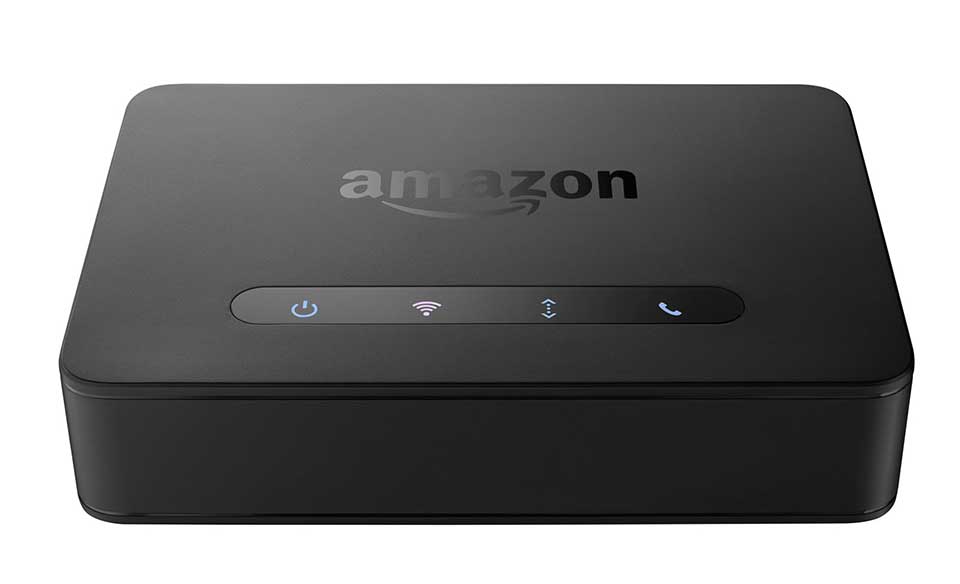
Amazon announced at a press conference that the Echo Connect, a device that uses Alexa – Amazon’s voice-activated digital assistant – can turn your home phone into a smart, hands-free speakerphone that can call any landline number or contact from your phone. It also allows you to call 911 for emergencies using only your voice. According to the online retailer, the Echo Connect will work with your existing home phone service, whether it’s landline or VoIP, but you must have an Echo speaker in addition to the Echo Connect. The Echo Connect plugs into a standard phone jack or VoIP adapter and connects wirelessly to your Echo device. Once it is all set up through the Alexa app, you can use your Echo speaker to ask Alexa to call anyone from your contacts list, and they will be able to see your home phone number on their caller ID. Likewise,…