

This article has been updated. Here is the updated version: Can Blockchain Globalize Number Portability?

Fundamentally, Lina Zaboras is a people person. First thing every morning, the CEO of DIDWW devotes her time in walking through the company offices and taking the pulse of the team, because, as she says, “to us, relationships are everything, and only by developing personal connections, can we make a difference.” DIDWW views its staff as the distinction that makes the company successful. “We don’t see ourselves as producing products; rather, our people develop solutions,” Zaboras points out. “Almost every customer has very individual requirements, and it’s only by having dedicated and knowledgeable staff who can properly understand their challenges, that they can be confident of receiving a communications solution that will meet their needs.” Lessons learned outside the business Lina Zaboras’ appointment as the CEO of DIDWW was somewhat unusual. While she had ample skills and determination to take the business forward, her professional background in languages and education was very far…

Softphones have become very popular across the world due to its cost-effectiveness, the multiple features offered by the software and the ability of the device to offer unified communications, including voice, video, instant messaging and fixed-mobile convergence. The 6 Benefits of Using Softphones: Cost of softphones Softphones are inexpensive and many products are available free of charge. In addition, softphones allow expensive desk and SIP phones to be replaced, and the cost of maintaining this hardware is no longer a consideration. Any upgrades to the softphone are generally free-of-charge and are easily installed without requiring expensive technical assistance. Save on calls In general, VoIP-to-VoIP calls are completely free. International and long-distance rates are much lower when using a VoIP softphone versus traditional telephony, so those making regular or frequent calls out-of-state or country can effect significant cost savings. Also, traditional landlines require a high general operating fee in order to…
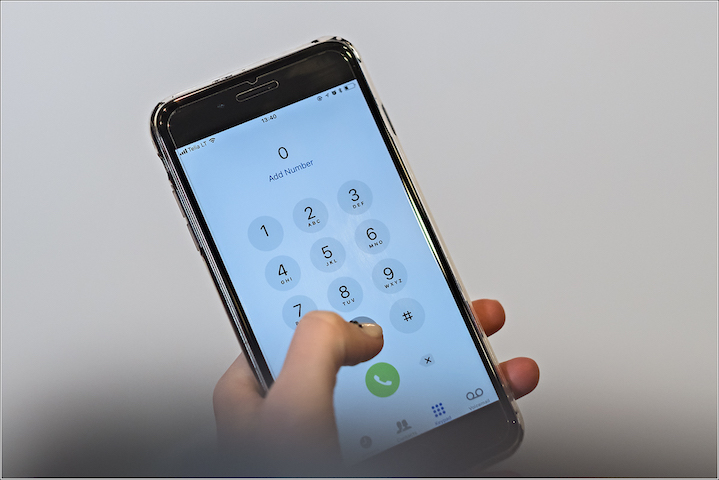
With the rate at which the VoIP industry is expanding, there is no doubt that everyone has heard of the term softphone in recent years. Even though most people might not even know what it is, they are certainly aware of the word. They might even be using one already without realizing it. So What is a Softphone Exactly? A softphone (software telephone) is a software program for making phone calls over the Internet using a computer, tablet or smartphone rather than using dedicated hardware. It is often designed to look and behave like a traditional telephone, with a display panel and buttons for the user to interact with, much like a standard phone interface. Most softphones work in conjunction with a headset and microphone that is connected to the computer. Softphone applications can be downloaded from a wide variety of providers and are available for a range of operating systems such as Windows,…

It would seem quite strange if, by now, you haven’t heard the term VoIP or VoIP technology before, considering it has been named nothing less than the most successful technology of the last decade! If you indeed aren’t familiar with it, chances are big you’re already using it without knowing. And if you are aware of the term, but don’t know what it is or what it means, you’re in the right place. Meaning Voice over Internet Protocol, VoIP is a revolutionary technology that delivers voice communications and multimedia sessions over Internet Protocol (IP) networks, such as the Internet. In more simple words, it is an alternative and cheaper way of making and receiving phone calls. Other terms such as Internet telephony, broadband telephony, and broadband phone service specifically refer to the supply of voice, fax SMS, voice-messaging and other communication services over the Internet, instead of via the PSTN (public switched telephone network). How does VoIP…

Most businesses today have several incoming telephone numbers, each one used for a different purpose or department such as customer service, sales, marketing etc. Some companies even have the ability to assign a personal phone number to each employee without requiring multiple physical phone lines, making it possible for telephone traffic to be split up and managed more easily. This powerful framework is only achievable using Direct Inward Dialling (DID). DID, also known in Europe as DDI (Direct Dial-in), is a service offered by telephone companies, that allows organizations, who operate a private branch exchange (PBX) system, to have multiple telephone numbers lines connected to one or more analog or digital physical circuits to their PBX. The system sends the dialed telephone number to the PBX so that an outside caller can have direct access to the PBX extension, possibly avoiding an auto-attendant. In a business with DID, the telephone…

“This call may be monitored and recorded for record-keeping, training and quality-assurance purposes,” is a message that probably all of us have heard before when calling a contact center. But once an agent answers the phone, we immediately forget that we are being recorded, after all, we will most likely never hear that call recording. For the Contact Center, on the other hand, that recording is extremely useful. It allows business to collect and analyze a set of data that enables them to improve and optimize their service. However, there is much more to call recording than the eyes can meet. Steve Kaiser, Co-founder and CEO of OrecX Open Source Recording, shows us that it is not only a great feature available thanks to Business VoIP and the Cloud, but a powerful tool to boost your business. Why do businesses use call recording? Businesses are aware that nowadays customer experience…

According to Technavio’s analysts, the Session Initiation Protocol (SIP) Trunking market is expected to grow at a compound annual growth rate of 18.23% by 2021. SIP Trunking is an Internet-based service that allows businesses to extend VoIP (Voice over Internet Protocol) telephony beyond the organization’s firewall without the need for an IP-PSTN gateway. It allows VoIP users to stay connected in local and long-distance calls to and from endpoints in the traditional phone network. The report ‘Global Session Initiation Protocol Trunking Market 2017-2021’, was based on detailed and reliable data gathered from an extensive research and an in-depth market analysis with inputs from industry experts. It provides a complete market and vendor landscape as well as a SWOT analysis of the key vendors and major factors that influence the market such as drivers, opportunities, and challenges. Session Initiation Protocol Trunking Market Driver: – The increasing adoption of cloud-based solutions is…

The first VoIP (Voice over Internet Protocol) services were launched in 2004, and since then the technology has come a long way with new VoIP features being added each year. VoIP allows users to make and receive free voice and video calls from and to anywhere over the Internet. In recent years VoIP providers have discovered increasingly innovative uses for VoIP technology that are helping all size businesses to be more productive, scalable and cost-efficient simultaneously. Here are the five innovative VoIP features that your business should consider: 1. Interactive voice recognition Whenever you call a company and are greeted by a pre-recorded voice asking you to select the reason for your call, it means company uses an interactive menu based on a VoIP system. Interactive VoIP menus have integrated this voice recognition software to provide a more intuitive means for users to choose options. Very soon, you will be…

The term net neutrality, which pops up in Internet debate every few years, is the belief that all data on the Internet should be treated the same way by the Internet service providers (ISPs) and governments that regulate most of the Internet. The term suggests that there should be no discrimination and prices should not depend on user, content, website, platform, or application. There is always an uproar about the subject every time the Federal Communications Commission (FCC) submits a new rule on the topic, but then the matter quickly fades away. This ongoing cycle has resulted in tired businesses and consumers that have become insensitive towards the issue. However, they must not forget that most businesses now rely on the Internet for various workflows, and therefore any changes in the rules of net neutrality can significantly affect the VoIP industry and way companies function, particularly VoIP providers, since they…
