Leading the way in private network establishment, the U.S. capitalizes on unique advantages from Citizens Broadband Radio Service (CBRS) and its innovative three-tiered spectrum approach. This nonpareil blueprint fosters efficient allocation of limited spectrum resources, empowering the expansion of private 5G networks. Riding this wave, companies like Quanta Cloud Technology and Intel synergize to create future-focused solutions, navigating challenges and setting the stage for 5G’s transformative potential.
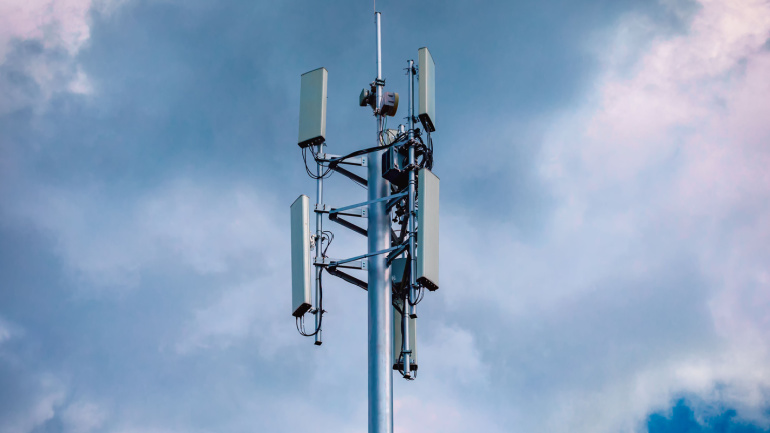
Denmark’s leading telecommunication firm, TDC, is performing an internal review after fears of overleverage and slipping cash flow puts its credit rating at risk. The investigation is in early stages, with outcomes and possible transactions still unclear. However, TDC’s majority stakeholder, Australian firm Macquarie, will be watching closely. Despite a strategic split into separate business units last year aimed to accelerate growth, both have shown mixed financial results. Amidst increasing competition, TDC’s future is set against the backdrop of evolving telecommunications business models and industry debates.
Generative AI’s capacity to curate fresh content is piquing interest within the telecommunications domain with predictions of significant growth. A recent Altman Solon survey revealed that nearly half of the experts in this field are gearing towards adopting this technology within the forthcoming two years. Telecommunications companies are seen to utilize AI power initially to refine customer experiences. Alterations of these AI models to align with specific objectives and eventually, creating new industry-focused models are the subsequent phases. However, data protection concerns circulate around its adoption. Thus, an intricate balance must be reached in refining AI applications and ensuring data safety.
Summoning a significant tide in the telecommunications sector, 20 notable European telco CEOS, under the GSMA, urge EU policymakers for a comprehensive revamp of the present regulatory environment. They key point is the mounting need for major tech corporations to contribute to telco infrastructure costs in the midst of a data traffic surge. However, critics argue such proposal infringes upon net neutrality principles and imposes a dual-end payments system.
Strengthened by two pivotal elements, technical prowess and spectrum liberalization advancements, 5G cellular technology emerges as a game-changer. Its reliable performance makes it a preferred choice, enriching private 5G networks globally; a feat powered by QCT and its OmniPOD solution. In the telecommunications horizon stands ‘Network X’, a groundbreaking initiative merging wireline and cloud under the 5G umbrella. Slated for October 2023 in Paris, it aims to propel progress in product innovation and network modernization. Indeed, the 5G revolution is unmissable for businesses and individuals alike, with platforms like Network X offering invaluable insights.
The recent signal disruptions experienced by Sky Mobile users in the UK have been linked to the government-mandated removal of Huawei equipment from the network, fuelling concerns over national security. Network operators have voiced scepticism, predicting significant disruption, increased expenses, and potential delay in the rollout of 5G infrastructure. Sky Mobile, however, assures compliance with the directive and minimal impact on their customers.
The emergence of 5G has ushered in a profound transformation in the telecom industry’s approach to charging, surpassing former phased shifts in monetization. It’s crucial for CSPs to establish a flexible charging system in tune with the fast-paced evolution of services, extending from 3G, 4G to fixed-line and 5G. Essential features of an effective charging mechanism certainly include flexibility, but also scalability and adaptability, to incorporate a range of services and adapt to continuous changes in service offerings. Network X, a standout telecom event, dedicates itself to exploring these issues and equipping attendees with strategic knowledge.
CNAM, or Caller Name Delivery, goes beyond Caller ID by revealing the caller’s name associated with their phone number. It enhances call identification, trustworthiness, and streamlines communication. Users can quickly recognize callers and identify potential spam calls, making it invaluable in various communication platforms. Check with your service provider to embrace CNAM’s power.
The telecommunications realm of Sweden and Denmark is on the brink of a substantial transformation, with Stonepeak’s impending acquisition of a 49% stake in Cellnex Nordics. Despite alterations in ownership, operational management remains with Cellnex. However, the agreement awaits regulatory approval, with full expectancy of completion by Q1 2024. The funding injection is anticipated to bolster Cellnex’s debt reduction strategy, aiming for a coveted S&P investment grade credit rating. Both parties share a positive outlook, viewing this step as critical in Cellnex’s broader shift towards consolidation.
Diving deeper into spatial computing realms, Qualcomm releases Snapdragon XR2 Gen 2 and Snapdragon AR1 Gen 1 platforms, enhancing user immersion through improved GPU performance, AI, and concurrent camera capabilities. Snapdragon XR2 aims at efficient virtual reality navigation while AR1 offers advanced features for smart glasses. However, despite the technological leap, the mass-market embrace of AR/VR innovations stays at bay. The question remains: will Qualcomm’s efforts be enough to spur the demand boost the industry awaits?