

The $24 billion merger between T-Mobile and Sprint drastically reshaped the US mobile landscape, reducing the country’s major operators. To counterbalance this change, Dish Network intended to purchase T-Mobile’s 800 MHz licenses.

The $24 billion merger between T-Mobile and Sprint drastically reshaped the US mobile landscape, reducing the country’s major operators. To counterbalance this change, Dish Network intended to purchase T-Mobile’s 800 MHz licenses.

The radio access network (RAN) equipment market experienced a significant downturn last year, as highlighted by recent reports from Omdia and Dell’Oro. These reports, drawing from detailed market analysis, reveal a challenging period for the industry, with global RAN revenues dropping by 11% to just over $40 billion.

TELUS, in partnership with Samsung Electronics, has unveiled plans to initiate Canada’s inaugural commercial virtualized and open radio access network (RAN), marking a significant leap forward in the telecom industry. This next-generation network technology aims to elevate performance, flexibility, energy efficiency, and automation, setting a new standard for mobile connectivity across Canada.
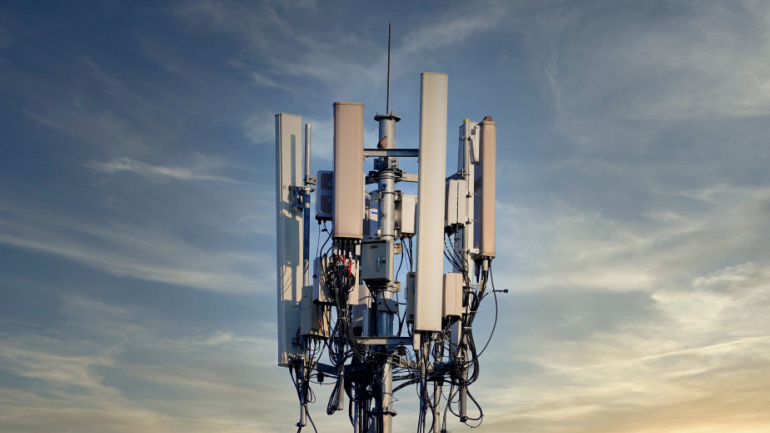
In an ambitious move to counteract the issue of network congestion within city environments, UK mobile operator Three has initiated a pioneering project in Glasgow, employing the advanced technology of Mavenir. The initiative focuses on the strategic placement of small cell units across the city to enhance urban connectivity, particularly in areas where 5G coverage is inconsistent.

DTST successfully merges Flagship Solutions Group and CloudFirst. Senior Technology Analyst Anisha Bhatia underscores the game-changing impact of Samsung’s Galaxy S24 series. NTT DoCoMo utilizes AI to generate diverse NPCs in metaverses, extends genAI initiatives to predict and visualize changes in the human brain. South Korean President Yoon Suk-yeol unveils a $471 billion initiative by 2047 to establish the world’s largest semiconductor cluster.
Amid challenging market conditions, Nokia emphasizes preserving patent portfolio value over timelines. Despite an optimistic outlook, their declining Q3 net sales and plans to curtail costs speak volumes. Nokia’s pivotal contracts loss to Ericsson hits hard, showcasing the constant flux in the telcos sphere.

Ericsson, Vodafone, and Qualcomm Technologies recently pioneered data transmission via RedCap on a European network for the first time, unlocking a more streamlined, efficient mode of connectivity for IoT and other devices. Tested on Vodafone Spain’s 5G platform, the Ericsson’s RedCap technology enhances connectivity potential while providing economic and efficient data transmission. Furthermore, the demonstration introduced a new technology, New Radio Light, for extending battery life of customer devices.

Telecom News | Week #44: T Challenge, End of Vodafone Spain, Nokia’s Technology Strategy 2030, Samsung and O2 testing vRAN.
DISH Wireless, in partnership with Samsung and Qualcomm, has achieved groundbreaking 5G carrier aggregation milestones. Notably, peak uplink speeds of 200 Mbps and 1.3 Gbps downlink speeds were realized with minimal spectrum usage, marking a significant advance in 5G capabilities. Boost Mobile subscribers can anticipate faster download and upload speeds.

The European Commission is urging member states to conduct shared risk assessments in key tech realms including advanced semiconductors, AI, quantum tech, and biotech. Amidst the cloud of geopolitical tech skirmishes, EU stands poised to protect sensitive technologies and is resolved not to preemptively decide on any corrective measures. Only time will reveal the Commission’s next steps after risk assessments.
