Do you want to change your telecommunication service provider, but need to keep your current phone number? This process is called number portability, and defines the mechanism and procedures that allow you to switch from one phone network service provider to another in any Licensed Service Area (LSA), while maintaining your existing number. Number portability offers customers the right to exercise their choice in selecting a service provider and, at the same time, avoid the inconvenience of being allocated a new phone number. This important facility provides the customer with freedom-of-choice and, as a result, generates competition among service providers encouraging lower tariffs, improved services and enhanced Quality of Service (QoS) of the networks. It is important to note that the portability feature only concerns the phone number, and is not applicable to services. In this article we focus on the complete porting process from start to finish and, at…
ZTE Corporation and Intel have jointly launched the Light Cloud platform for access networks at the 5G Summit being held at Mobile World Congress 2019 in Barcelona. The Light Cloud solution is based on Intel’s innovative Edge products, impeccably integrated into ZTE’s flagship optical fiber access platform, Titan, thus merging Multi-access Edge Computing (MEC) and Network function virtualization (NFVI). The solution employs lightweight blade servers equipped with Intel Xeon D processors. When embedded in an OLT or BRAS device, the blade servers transform it into lightweight cloud infrastructure, thus reducing high capital costs and making a positive environmental impact. The infrastructure opens up computing and storage possibilities based on telecom access equipment, and allows the deployment and distribution of application-sensitive services. The access layer with cloud features is supported by built-in blade servers, and facilitates the ability to offer a wide range of cloud applications and services, including…
The global organization representing the interests of mobile network operators, GSMA, has called for European governments to “safeguard network security and competition” in the telecommunications infrastructure industry. The association has issued a warning to Europe to refrain from activities that would obstruct the use of certain equipment necessary for 5G mobile network development. According to the GSMA, “Actions that disrupt the equipment supply for the various segments of the network (access, transport and core) will increase costs to European operators, businesses and citizens; delay 5G deployment by years across Europe and potentially also jeopardise the functioning of existing 4G networks upon which 5G is intended to be built.” Although no specific company names are mentioned in the statement, the GSMA initiative highlights the industry’s significant endeavor to prevent the application of additional sanctions, similar to those announced by the United States and Australian governments on Chinese vendors Huawei…
Telstra, the largest Australian telecommunication company, has announced the launch of a new rapid restoration service for one of its busiest subsea cable routes in Asia. The company has joined forces with Ericsson and Ciena to ensure that their customers stay continuously connected. The solution offers carriers and cloud service providers increased network visibility, flexibility and reliable data access. Nadya Melic, Telstra’s head of Connectivity and Platforms, said the new service is now available on three of its intra-Asia routes, following the successful tests carried out in December 2018. “The Asian region presents one of the most challenging environments for subsea cable systems. Busy and shallow shipping ports in Hong Kong and Singapore, high-levels of fishing activity and an ecosystem prone to natural disasters, all threaten to disrupt or damage underwater infrastructure,” said Melic. The new rapid restoration service on the subsea network will be provided using…
The networking and telecommunications company Ericsson and Germany’s largest network provider Deutsche Telekom, have announced that together they are the first to successfully demonstrate a wireless transmission on the mmWave spectrum, that can transfer data four times faster than currently existing services. The achievement of the data transmission rate of 40 Gbps with a latency of under 100 microseconds is a considerable advancement towards the fulfilment of stringent latency requirements of 5G, and the anticipated 100 Gbps backhaul networking. Per Narvinger, Head of Product Area Networks, Ericsson, said: “Microwave continues to be a key technology for mobile transport by supporting the capacity and latency requirements of 4G and future 5G networks. Our joint innovation project shows that higher capacity microwave backhaul will be an important enabler of high-quality mobile broadband services when 5G becomes a commercial reality.” A backhaul is an intermediate link between the core network and…
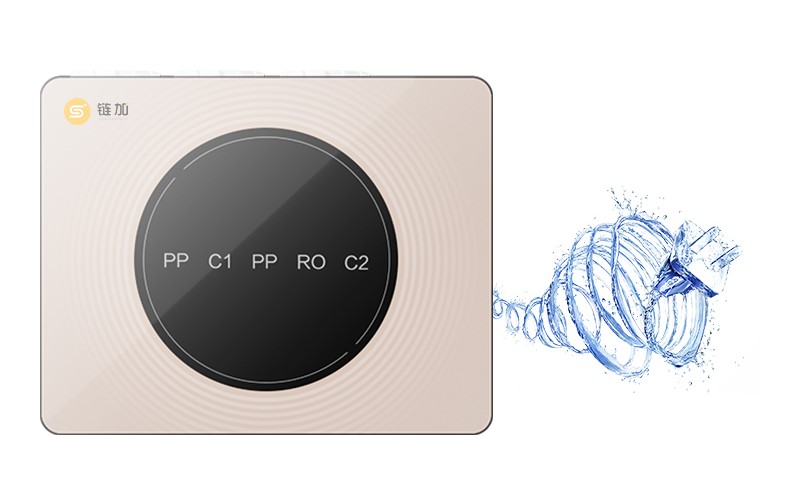
China Mobile, one of the largest state-owned telecommunications companies in that country, has designed a water purifying device powered by blockchain, thus making an explicit statement that blockchain technology is not something extraneous and out of this world, but is a beneficial high-tech solution that may be advantageously applied to ordinary household appliances. The Product Market Director at China Mobile IoT, Xiao Yi, stated: “Our goal is to also attract those who are not in the cryptocurrency or blockchain community, who may have heard of this technology but not necessarily understand it. To embrace a more mainstream adoption, we need to turn something that appears professional into something that’s very ordinary.” The Internet of Things (IoT) division within the company has developed a product with a built-in computing chip and an IoT module. This innovative gadget collects applicable user data related to consumer behaviour habits and shares it…
The 1st of January, 2019 saw the first live TV broadcast of the annual Bosingak bell-ringing New Year’s event over a 5G commercial network. SK Telecom, a South Korean wireless carrier, took advantage of the festive opportunity and offered a live, 11-minute broadcast of the country’s largest celebration in Seoul. High-definition footage on an entertainment channel XtvN showed the New Year’s countdown ceremony, the bell-ringing event and interviews. “With today’s successful live TV broadcasting over commercial 5G network, SK Telecom ushers in a new era of 5G-based media services,” said Choi Nak-hoon, Senior Vice President and Head of 5GX IoT/Data Group of SK Telecom. “In this new era, individual creators will be able to provide high-quality live broadcast anytime, anywhere, via 5G smartphones.” SK Telecom commercialised its 5G network in December 2018, accompanied by a ‘T Live Caster’ app. The solution was developed over a period of four…
The abbreviation API stands for Application Programming Interface, a phrase which is not particularly self-explanatory to those who have not yet had the chance to delve into the world of APIs. voip.review will provide a concise and easy to understand explanation of APIs for you. Basically, an API is a software-to-software interface that allows different computer systems and applications to communicate and share information, according to a set of rules embedded in the API. To put it another way, the API is a Programming Interface for developing Applications. The provider of the API publishes a set of rules defining how third party software programs should interact with their piece of software, listing a bunch of operations that developers can use, along with a description of what each operation will achieve. APIs deliver tremendous advantages to the technology industry, mainly because they allow for the rapid development of software products using…
A cloud-hosted, VoIP-powered PBX is an attractive and preferred option for a modern business telephone service. It is extremely cost effective, available for use anytime and almost anywhere, and requires none of the hardware investment that traditional on-premises systems needed in the past. With maturing technology and the desired convenience in business communication, now is the right time for change. Switching to a hosted private branch exchange (PBX) may sound complicated, however a well-thought-out transformational process can be smooth and hassle-free. Let’s discuss the main points to consider when moving from a traditional voice system to a cloud PBX. PBX systems – traditional vs virtual To begin with, it is important to understand the main differences between a traditional PBX and a cloud PBX. A legacy PBX is an enterprise phone system stored and hosted on the customer’s premises, and consists of specialized hardware, generally connected using circuit switched networks.…
Oculeus, an innovative telecommunications software provider from Germany, has announced the launch of a cloud-based fraud protection service. The new solution, branded with the name Oculeus-Protect, is designed to meet the growing needs for security in the enterprise telecoms industry. The new fraud protection service is supported by the company’s regional cloud environment, and is currently available throughout Europe, and North and South America. The software provider defines the new service as “a real-time telecoms fraud protection service that provides enterprises an intelligent and automated framework to efficiently prevent false charges resulting from unauthorized usage of enterprise telecommunication channels by cybercriminals and other perpetrators of telecom fraud”. They claim that the software is able of block fraudulent telecommunications traffic within milliseconds, and have positioned the service to be totally independent of user’s telecommunications service provider. “There is a clear and definite need for our new telecoms fraud protection service,”…