1373 Results

att

Search

The intriguing merger between Dish Network and EchoStar creates a powerful entity in wireless connectivity, poised to lead in both terrestrial and non-terrestrial realms. Fusing Dish’s comprehensive services with EchoStar’s satellite solutions promises robust connectivity options, utilizing a vast array of technology and expertise. Yet, beyond the marriage of technology, the merger is primarily a tale of economic survival and growth. The incorporation of EchoStar’s financial stability into Dish’s uncertainty may just be the lifeline


TDS, UScellular’s parent company, is reportedly reviewing strategic paths for the mobile operator, with market whispers around a possible sale or welcoming new investors, guided by Citi advisor. Currently the fifth-largest mobile service provider in the U.S., UScellular’s assets, including investment in 5G and numerous mobile towers, make it an attractive prospect for big-name telecoms like T-Mobile, Verizon, and AT&T. However, its segmented presence may pose challenges.

Cybersecurity landscape has been rapidly changing, as hackers abandon phishing for exploiting software vulnerabilities, a trend illuminated in a study by Akamai. The study revealed a dramatic 143% increase in victims during Q1, predominantly due to surging incidents of zero-day and one-day vulnerabilities. Surprisingly, smaller organizations, particularly those within manufacturing, business services, retail, construction, and education sectors are often targeted.

Avaya, a global leader in customer experience solutions, announced today that it has been awarded a cooperative purchasing contract in the Unified Communications and Contact Centre categories at Sourcewell ─ the leading Government Cooperative Purchasing Organisation in North America with more than 500 competitively solicited contracts to government, education, and nonprofit entities

A groundbreaking discovery at the University of the West of Scotland reveals a transformative way to convert human energy into electricity, powered by a 3D graphene foam material. Primed to revitalize the IoT industry, this research spotlights a pressure-sensitive mat that could generate power simply through human footfalls. Offering a unique solution to energy management, this technology could minimize the environmental impact, while fostering a new era of wireless connectivity.

Bringing 4G to the UK’s remotest realms, Three UK has established 100 dedicated sites through the Shared Rural Network (SRN). This initiative enhances coverage by around 2,800km2, reaching over 37,000 new premises. However, with the ambitious goal to extend 4G coverage to 95% of the country by 2025, one can’t help but ponder, is the UK on pace to meet this target? Participate in the discussion at the Connected Britain digital economy event.

As Three UK reports a 4% revenue boost, courtesy of an expanded active customer base, its operations cost, inflated by 19%, outpaces earnings, hinting at potential sustainability issues. In a different landscape, Telecom Italia shows a 5.5% Q2 profit increase, largely on Brazil’s performance, though competitive pricing in Italy has forced a hefty debt, leading TIM to consider selling its landline grid. At the same time, BT Group sees an uptick in revenue by 4%, attributed to raised prices and improved customer satisfaction. Contrarily, US-based Qualcomm, hit by reduced consumer spending, anticipates a similar upcoming quarter, resulting in a sharp fall in share price. Meanwhile, Bharti Airtel highlights a 14.1% YoY revenue increase, fueled by its growing 4G and postpaid customer base.

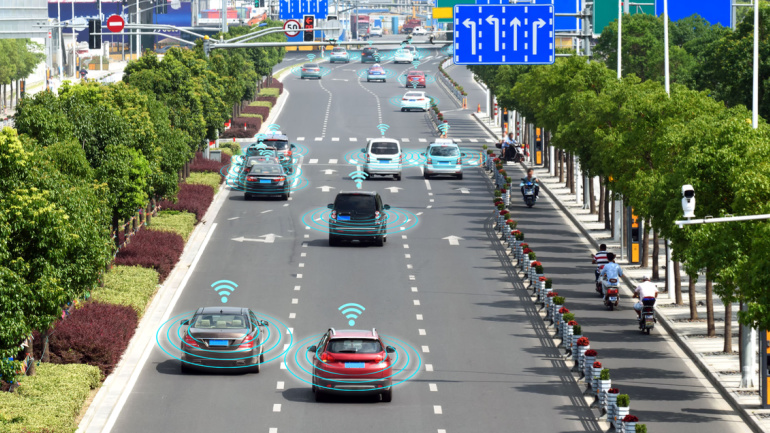
Deutsche Telekom and MIRA dive into an ambitious project crafting the ‘shuttle service of the future’ in Bonn, using the premise of teleoperation or remote driving. Facilitated by speedy 5G data transmission, this experiment highlights the necessity of ‘network slicing’ and ‘quality on demand’ for autonomous vehicles. Yet, governmental restrictions on remote-controlled travel present a hurdle. Despite the challenges, both firms remain hopeful, envisioning a driver-free automobile future.

The UK government’s ambitious Connectivity in Low Earth Orbit (CLEO) initiative aims to propel satellite communications development, backed by a sum of £160 million. With a main focus on Low Earth Orbit (LEO) satellite constellations, this programme holds potential to bridge the digital divide and boost economical growth. This initiative, however, still awaits the green light through regular approval processes.