Nokia’s AI infrastructure surge is reshaping VoIP, IP networking, and cloud communications demand as data centers accelerate optical investments. With Infinera boosting capacity and AI-RAN plans targeting 5G and 6G, Nokia’s growth looks powerful, but chip shortages, margins, and commercial execution will determine whether momentum becomes long-term telecom success ahead.
AT&T’s $3 billion Corning fiber deal strengthens US broadband infrastructure as AI data centers, 5G, 6G, VoIP services, and cloud connectivity drive bandwidth demand. With fiber usage soaring, the agreement supports faster internet, reliable business communications, and future-ready telecom networks for homes, enterprises, carriers, edge sites, and digital innovation nationwide.
NTT and Cailabs are advancing laser-based satellite communications that could bring fiber-like speed, lower latency, and stronger capacity to global networks. By linking optical ground stations, APN data centers, and space infrastructure, the partnership supports scalable VoIP, cloud, enterprise connectivity, telecom backhaul, and real-time communication services in hard-to-reach areas worldwide.
USTDA-backed THUS subsea cable could transform VoIP connectivity between Thailand, Southeast Asia, and the United States. By avoiding the South China Sea, the 18,500-kilometer route promises lower latency, stronger network resilience, secure cloud access, and expanded international capacity for carriers, data centers, AI platforms, and business communications across Asia-Pacific markets.
AI inference is moving to the network edge, reshaping telecom, VoIP, and cloud communications infrastructure. As real-time voice assistants, contact centers, and enterprise voice apps demand ultra-low latency, operators must expand metro fiber, edge data centers, and resilient optical routes to deliver reliable, high-performance AI-powered VoIP services worldwide by 2030
Duos Technologies is bringing GPU-powered edge computing to Tier 3 and Tier 4 markets, giving telecom carriers, VoIP providers, schools, healthcare, and businesses faster local processing. By pairing modular data centers with fiber and wireless networks, Doug Recker’s strategy could boost low-latency AI services, connectivity, and growth in underserved communities
Oracle’s reported layoffs signal a major AI infrastructure pivot with direct impact on VoIP, telecom cloud and business communications. As Oracle shifts billions toward data centers and AI capacity, providers face new questions about network resilience, cloud voice performance and the human expertise needed to keep VoIP systems running reliably
Bell is accelerating AI infrastructure with its Bell AI Fabric, new data centers, and expanding fiber networks, creating a stronger foundation for enterprise VoIP, cloud communications, cybersecurity, and data-sovereign AI services. With 335 megawatts contracted and major campuses underway, Bell targets next-generation connectivity for businesses and governments across North America.
Corning’s growing prominence in AI infrastructure, particularly within the hyperscaler community, signals a pivotal role in optical connectivity for next-gen data centers. With agreements alongside industry titans like Amazon and Meta, Corning spurs advancements in innovative optical networking. This positions Corning at the forefront of supporting tomorrow’s scalable data infrastructures.
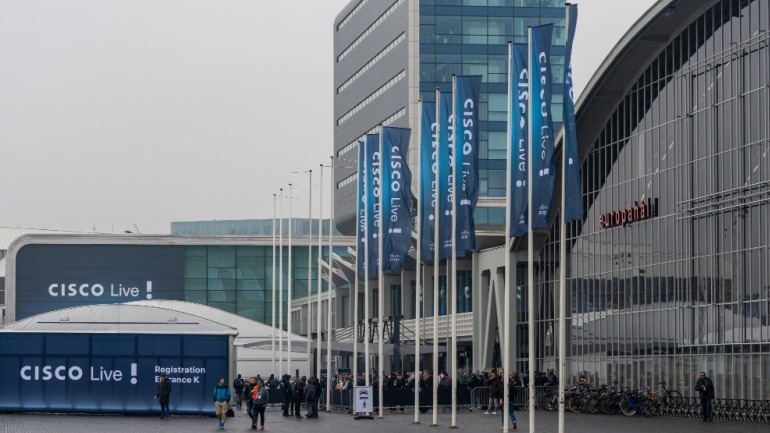
Cisco Live 2026 unveiled a transformative era for managed connectivity, spotlighting agentic networks powered by Cisco Cloud Control and AI-driven operations. Key takeaways highlight Cisco’s robust platform, combining AI-ready data centers, secure connectivity, and digital resilience. These advancements promise to reshape the VoIP landscape, offering enhanced security and streamlined operations for SMBs.