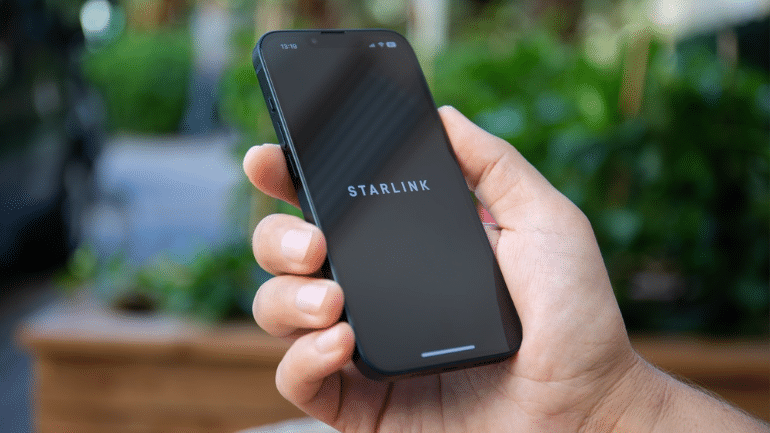
Amazon’s Leo satellite broadband setback could reshape the VoIP and telecom landscape. After a Vulcan rocket failure destroyed 40 satellites, Starlink’s lead widened. For VoIP providers, LEO networks remain vital for rural calling, 5G backhaul, emergency connectivity, and low-latency internet where traditional broadband still struggles to reach businesses and consumers.

Nokia, Telia, Nscale, Skeleton and Verda are advancing AI Gigafactory Northern, a Nordic-Baltic computing hub set to boost sovereign cloud, high-capacity telecom networks and VoIP innovation. As AI demand rises, operators could gain new edge computing, automation and enterprise connectivity opportunities across Europe’s regulated digital markets for scalable communications growth
AWS’s new Chile cloud region boosts Latin America’s digital infrastructure, giving VoIP providers, telecom operators, and enterprises lower latency, stronger data sovereignty, and faster access to cloud services. With major investment, local jobs, and regional reach, AWS Chile could accelerate edge communications, AI workloads, and next-generation business connectivity solutions nationwide.
Nvidia’s leadership shakeup could reshape AI data center financing, cloud capacity, and VoIP infrastructure planning. As GPU guarantees face scrutiny, telecom providers, neoclouds, and AI platforms may see pricing, access, and deployment timelines change. For VoIP businesses, compute funding now matters as much as bandwidth, latency, network reliability, and strategy.
SpaceX is accelerating Starlink Mobile’s push into wireless and VoIP-ready connectivity as the FCC reviews its Grain Management 800MHz spectrum acquisition. Low-band coverage could strengthen rural mobile service, indoor calling, satellite-to-phone access, and future VoIP communications, creating a hybrid network that may disrupt carriers and expand reliable broadband voice nationwide
Orange Business Services is advancing enterprise AI with a human-controlled approach reshaping telecom automation, VoIP operations, and cloud communications. From AI-assisted coding to secure on-premises models, Orange aims to speed service launches, protect revenue, and reduce risk, showing how operators can modernize workflows without surrendering control today
Telefónica Germany’s fiber expansion via Deutsche Glasfaser signals faster broadband for rural VoIP users, while VodafoneThree explores resilient subsea connectivity, TIM reports growth, Elisa targets drone security, and Virgin Media O2 challenges net neutrality. These telecom moves highlight how fiber, 5G, VoIP quality, and network sharing are reshaping Europe’s future.
VodafoneThree is exploring a Scotland-Shetland-Norway subsea cable to boost resilient connectivity, protect critical infrastructure and strengthen UK digital growth. The route could improve VoIP reliability, cloud services, AI workloads and enterprise communications, while adding vital North Sea network diversity and supporting billions in economic value over the next decade securely
DIDWW, a fully licensed global telecom operator connecting human and AI communications across 90+ countries, has partnered with Vocal Agent AI, a European company building AI voice agents for small and mid-sized businesses. Vocal Agent AI’s multilingual voice AI runs on DIDWW’s voice network and uses its phone numbers to answer and place calls. Working around the clock in each client’s language, Vocal Agent AI books appointments, takes orders, confirms deliveries and handles customer questions. Its system connects directly to the calendars, CRMs and online shops a business already uses. The company serves clients in Bulgaria and Cyprus and works with businesses in Greece and the Netherlands. Beyond these markets, it has partners in Romania and Moldova and a US branch, LyrAI. Vocal Agent AI runs multiple DIDWW numbers, each linked over SIP to a dedicated AI agent, so a patient calling a medical center is answered on an ordinary local…
Deutsche Telekom’s CEO is pushing back against tougher Huawei 5G restrictions as Europe weighs network security, vendor risk and telecom sovereignty. For VoIP providers, the debate matters: radio access decisions can affect latency, resilience, upgrade costs and future 6G readiness across Germany’s increasingly cloud-connected communications infrastructure and enterprise VoIP performance.