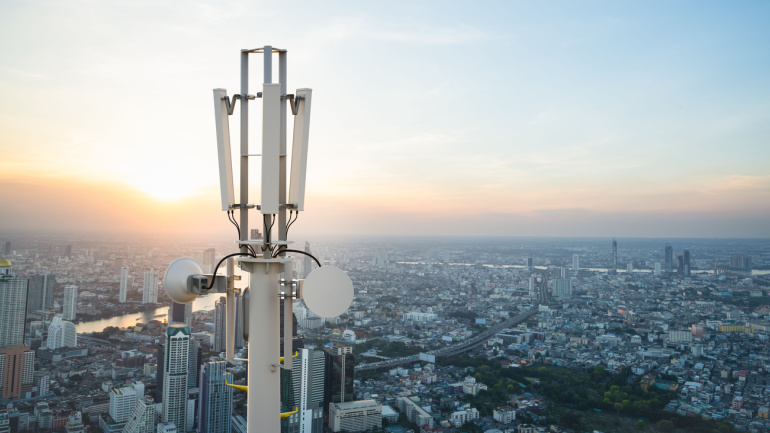
In a recently revealed Q2 report, Nokia showed flat sales at €5.7 billion year over year, suggesting reduced capital expenditure by operators. Interestingly, while a 5% sales growth in Nokia’s Mobile Networks unit occurred, a troubling 6% decline at the Network Infrastructure division offset this boost. With stark contrasts across regions, North American sales notably dropped by 42% as 5G deployments slowed, while energetic 5G deployments in India couldn’t adequately balance the losses. Mirroring these figures, Ericsson too reported a 9% year over year decrease in Q2 revenue. A gloomy yet realistic outlook from Nokia’s CEO Pekka Lundmark, coupled with analyst firm Dell’Oro’s forecast on the shrinking RAN predictions, suggests telecommunications could be in for a turbulent few years.

As the summer season begins in the northern hemisphere, severe heatwaves have already engulfed multiple regions worldwide, posing challenges to data center operators who grapple with internal heat generation. The experts at Vertiv, a global provider of critical digital infrastructure solutions, have released updated guidance to tackle the rising threats associated with extreme heat. Climate change, coupled with the El Niño weather pattern, has resulted in the past eight years becoming the hottest on record. This year, forecasts anticipate 2023 to witness record-
Samsung’s Unpacked event next week is set to introduce two highly anticipated foldable phones, the Galaxy Z Fold 5 and Z Flip 5. These devices are expected to offer exceptional entertainment experiences, innovative camera features, but also potentially hefty price tags and the persisting issue of fragility that has been a concern for foldable phones since their inception.
The UK’s newly established business council brings together heads of fourteen industry behemoths like AstraZeneca, NatWest Group, and Vodafone, offering insights to the Prime Minister on critical economic matters. It’s interesting that Google DeepMind is the only exception to the FTSE 100 list; also significant is the vocal Vodafone inclusion, led by CEO Margherita Della Valle, along with the impending departure of BT’s CEO Philip Jansen amidst a period of shrinkage. The absence of SME representation on the council has fueled criticism, underscoring the complexity and potential bias in shaping Britain’s economic future.
Spain’s government is pumping €448 million into the upgrade of over 8,000 isolated 5G base stations, an initiative set to stimulate economic and civil activity while bridging the digital divide. Interestingly, the bulk of the funds are being allocated to lesser-known entities, including wholesale and retail fibre providers Lyntia and Avatel. The rollout is part of Spain’s broader mission of delivering ultrafast broadband coverage by 2025, concurrently ramping up public access to high-speed connections. Furthermore, a €10 million fund invites proposals for innovative 5G projects in sectors such as agriculture and connected vehicles.
In a groundbreaking partnership, Spectrum Enterprise, a division of Charter Communications, Inc., has joined forces with the Texas State Aquarium, a nonprofit organization based in Corpus Christi, Texas. The aquarium has embraced Spectrum Enterprise’s advanced technology solutions to revolutionize its wildlife rescue operations and elevate its onsite veterinary care.Attracting over half a million visitors annually, the Texas State Aquarium is renowned for its captivating displays of mammal, bird, and marine life.
Outpacing the global auto industry, Zeekr, a subsidiary of Geely, has launched a groundbreaking 5G-enabled factory in Ningbo, China. Developed alongside China Unicom Zhejiang, this advanced facility leverages 5G for superior data processing, revolutionizing car manufacturing customizability. However, obstacles such as infrastructure robustness and data security come with the territory of employing 5G in production processes. Nonetheless, the potential of this intelligent blend of automotive and digital tech seems irresistible, prompting worldwide industry attention towards Zeekr’s trendsetting venture.
Taking a bold stride in data transfer innovation, the IEEE has sanctioned the 802.11bb standard, also known as LiFi. This game-changing technology uses light waves instead of radio frequencies, virtually turning an LED lightbulb into a data transmission hub. While promising high bandwidth and added security, LiFi does require line-of-sight connections, which may limit its practical applications. Industry leaders see this as more of an adjunct technology to WiFi rather than a direct competitor.
Vodafone is poised to offer enhanced streaming experiences to its European and African customers thanks to an edge-based content delivery network (CDN) solution. Developed in collaboration with partners Cisco and Qwilt, this technology simplifies CDN management and allows cached video content and applications to be more accessible to the end-user. The benefits? Responsiveness, agility, and improved access for content owners. The solution thrives on the Streaming Video Technology Alliance’s Open Caching Standard, merging multiple content caches to improve user experience.
As the UK’s fibre landscape intensifies with rising competition, leading players are racing to expand gigabit-capable broadband nationwide. Noteworthy, alternative network providers, referred to as “AltNets”, are displaying proactive strategies to swiftly deploy networks. On the other hand, traditional companies are recognising opportunities in fibre rollout, as seen in Openreach’s pricing approach of their wholesale lines.