Singapore has long been known as the south-east Asian center for network expansion, due to its booming data center industry. The technology giant Google has revealed plans to expand their network in the region by building a 3rd data center in Jurong West, thereby increasing their long-term investment in Singapore’s data centers to $850 million. Google’s first data center was built in Singapore in 2011, followed by the second in 2015, while the 3rd building is expected to be ready by 2020. “In the three years since our last update, more than 70 million people in Southeast Asia have gotten online for the first time, bringing the region’s total to more than 330 million–that’s more than the population of the United States,” commented the vice president of Data Centers at Google, Joe Kava. The newest facility will be built nearby the previous two, and will continue Google’s environmentally friendly approach…
Connecting to a public WiFi network at airports, hotels or even at a local coffee shop is not always as safe as one might think, as intercepting private information sent over a public network is quite easy even for inexperienced hackers. As a result, Verizon has decided to combat this security vulnerability by launching a VPN for their customers, Safe Wi-Fi. This new service protects personal data from prying eyes, and blocks advertisement trackers by using VPN encryption. Safe Wi-Fi is available on iOS and Android devices for a fee of $3.99 per month, and can cover up to 10 devices linked to a Verizon account. Considering how much the theft of personal information might cost a user, this is a small price to pay for keeping important data secure.
The global telecommunications solutions provider ZTE and the mobile operator Hutchinson Drei Austria announced another strategic step to expand their partnership in preparation for the 5G rollout in Austria. The cooperation between mobile operators and telecommunications equipment providers is fundamental for the implementation of this cutting-edge technology, and a Joint Innovation Lab initiative was launched to develop, test and optimize the latest 5G technology solutions. The ten-year partnership between ZTE Austria and Hutchinson Drei Austria has already shown great results in upgrading the network for higher quality standards and service improvements, as demonstrated in the most recent Pre-5G trials in Austria. “The first result of the joint innovation initiative was the successful evaluation of the Pre-5G technology, which enabled us to create a commercial Pre-5G in Vienna already at the beginning of this year. This move was a breakthrough in the European telecoms market, which made Austria a true 5G…
While 5G maintains its dominant position in telecom news headlines, Qualcomm has made a major move towards the realization of this disruptive technology with the announcement of the first fully-integrated QTM052 5G NR mmWave and QPM56xx sub-6 GHz RF modules for mobile devices. These antennas will be used in conjunction with the Snapdragon X50 5G module to achieve the stellar target speeds of 5G networks. “Qualcomm Technologies’ early investment in 5G has allowed us to deliver to the industry a working mobile mmWave solution that was previously thought unattainable, as well as a fully-integrated sub-6 GHz RF solution. Now, these type of modem-to-antenna solutions, spanning both mmWave and sub-6 spectrum bands, make mobile 5G networks and devices, especially smartphones, ready for large scale commercialization,” commented the president of Qualcomm Incorporated. Even though the mmWave signals can offer the critically higher speeds that are essential for this cutting-edge network, they can…
After the successful release of its flagship P20 series, the Chinese equipment manufacturer Huawei is set to overtake Apple as the second largest global smartphone vendor in 2018. As of July, Huawei had already shipped 100 million devices, and is on track to ship a total of 200 million devices by the end of the year, notably exceeding the number of 153 million of their smartphones shipped in 2017. Huawei, one of the world’s leading network equipment manufacturers, entered the smartphone race quite recently, and is aggressively competing with Samsung and Apple. However, the company has already managed to grow their smartphone business by 51 times since 2010, which is a sound proof of Huawei’s exponential expansion and its dominant position in the market. In addition to being the number three smartphone manufacturer globally, Huawei also holds the top position in China and is now focused on expanding their sales…
Europe’s leading Internet of Things event IoT Tech Expo Europe 2018 brought together thousands of enthusiasts and specialists from a variety of industries including manufacturing, transport, healthcare, logistics, energy and automotive to discuss the ever-increasing potential of IoT. Among the 300+ exhibitors at the event in Amsterdam, a rising star in the industry, monogoto, made a revolutionary move by launching its new flat rate data plans for IoT connectivity. “We are happy to introduce a ‘pay once and forget’ business model, where the IoT community can pay $10 and get a SIM card with a ‘lifetime’ 10 years of connectivity,” said Itamar Kunik, Chief Executive Officer at monogoto. “With this new pricing, appliance companies, OEMs and developers can now offer connected devices with pre-installed SIM cards, and not be concerned with high monthly recurring data costs.” monogoto is a one-stop shop that covers the complete range of IoT connectivity requirements,…
At the recent Sino-German Economic Forum, China Mobile and Nokia signed a one year framework agreement valued at 1.36 billion euro (9.927 billion yuan) to support the Chinese operator’s transition to 5G infrastructure, while maintaining seamless connectivity. Under this agreement, the Finnish corporation will be providing the Chinese telecom with cutting edge end-to-end technologies for the next generation network, in addition to mobile, fixed, IP routing, optical transport and customer experience management technologies along with their service expertise and support. The two companies have been in partnership since 1994, when Nokia supported the first GSM call on China Mobile’s network. In addition to collaborating on 5G, both companies are moving forward together and have agreed to conduct research and tests on artificial intelligence and machine learning. “This is a highly significant agreement with our longstanding partner that consolidates Nokia’s position as a leading provider of next-generation technologies and services in…
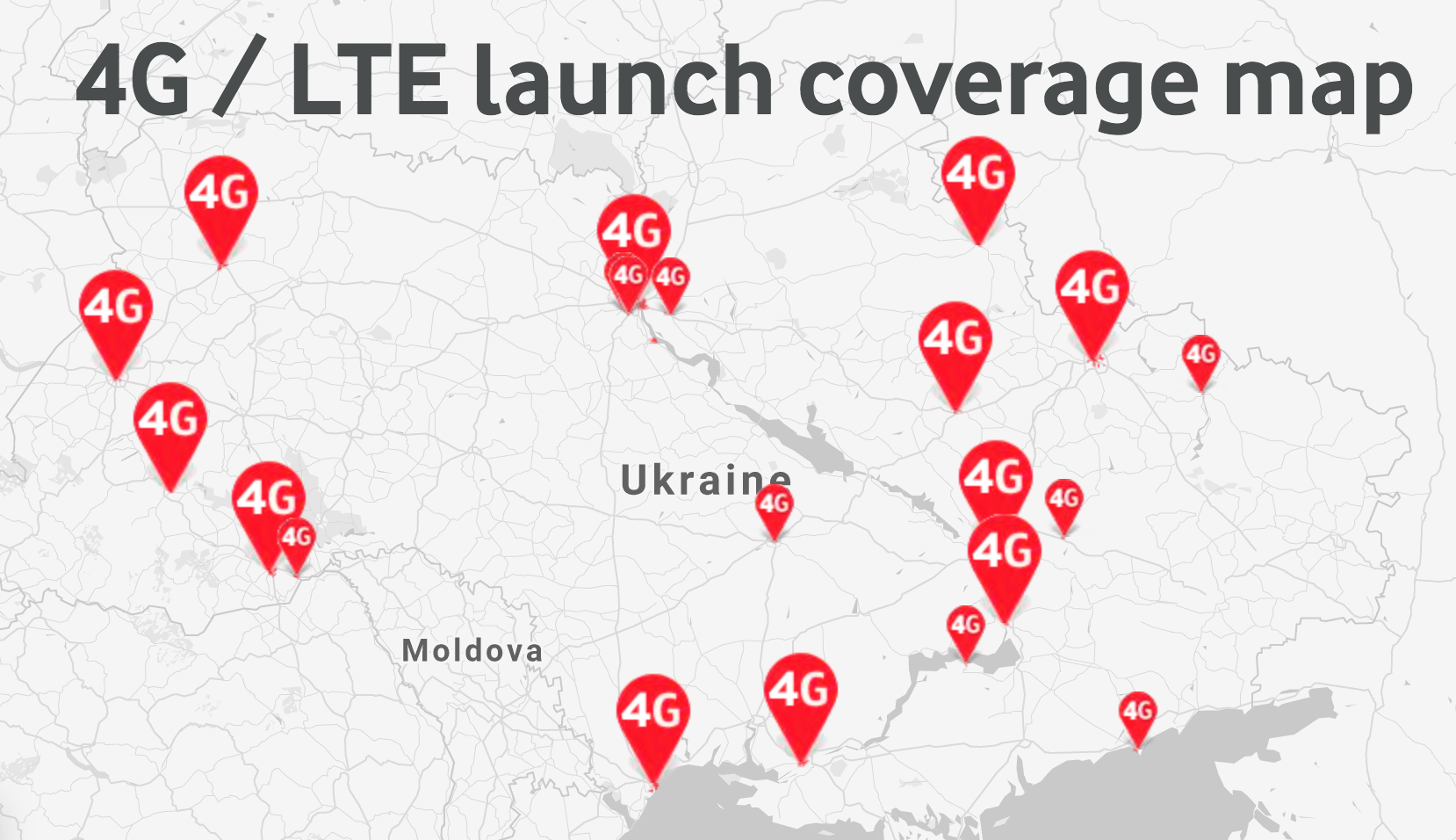
The mobile operator, Vodafone Ukraine, intends to launch their 4G network for the 1800 MHz band on 1 July, 2018. The expansion of the 1800 MHz band network will allow Vodafone to cover a wider territory, enabling access for millions of Ukrainians to 4G mobile Internet. This fourth generation service will be available in 50 settlements across 10 main regions of Ukraine: Kiev, Dnipropetrovsk, Kharkiv, Zaporizhzhia, Odessa, Mikolayiv, Poltava, Sumi, Kirovograd and Kherson. Besides the advantage of wider coverage, Vodafone is excited about the higher speed, improved connection stability and faster network response times for their mobile users. The other two major Ukrainian operators, LifeCell and Kyivstar, who won the 1800 MHz 4G LTE mobile license along with Vodafone at an auction held this March, will also be introducing similar services in early July.
M1 will start testing 5G small cells at the end of the year. Those trials will be conducted in partnership with the Finnish company, Nokia. The main goal of those tests will be to give informations on the best way to install 5G small cells for a commercial purpose in a “dense cell grid architecture” and to validate the efficiency of low-latency for the “Internet of Things”. Denis Seek, CTO of M1 stated, “The practical learning from early 5G field trial is critical for the success of developing high-performance and demand-driven 5G services for our customers in future and enables us to play a key role in Singapore’s Smart Nation initiatives.” If Nokia has been working with M1 on network trials since 2016, it won’t be the only company working with the operator. The Chinese tech giant Huawei will also run trials with M1 by testing the 28GHz mmWave spectrum…
While the storm caused by the GDPR coming into force on May 25th is quieting down, people are still concerned about the protection of their personal data, and privacy in general. In the current environment, the use of the word VPN is commonplace, yet not everyone understands this term and what it has to do with security. voip.review will provide some basic insights into VPNs. Simply put, the abbreviation VPN stands for Virtual Private Network, a connection method that helps users maintain security while connecting to another network over the Internet. The original idea for creating a VPN was to secure the private network of large corporations, where branch offices and employees need to connect to the network from remote locations. While connecting to the corporate network via cables installed in a local office is relatively safe, connecting to this private network through public networks can introduce security…