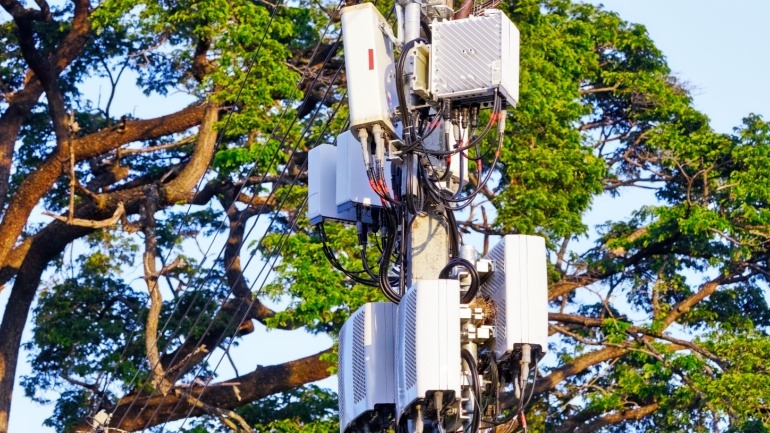
M1 has launched Southeast Asia’s first 5G RedCap network services, enhancing its role in the 5G-Advanced arena by integrating existing IoT technologies with comprehensive 5G solutions. RedCap offers lower latency and extended battery life.
EE is boosting 5G in central London with 80 small cells in Westminster, enhancing coverage through discreet installations on structures like lampposts. In partnership with Ontix, Nokia and Ericsson, this expansion supports EE’s goal of nationwide 5G by 2028 while improving performance in high-demand areas using advanced network analytics and cutting-edge standalone 5G technology.
U Mobile has partnered with Telekom Malaysia to accelerate 5G deployment using TM’s extensive fiber network. With Huawei and ZTE as key tech partners, U Mobile aims for rapid nationwide coverage, focusing on high demand areas while maintaining a wholesale access deal with DNB.
Vodafone Qatar collaborates with Nokia to transform its mobile network, focusing on faster and flexible 5G services. This partnership will boost network capacity and reduce latency, promoting secure, agile service delivery. As Qatar’s ICT sector grows, enhanced connectivity promises exciting prospects for businesses.
U Mobile plans to exit DNB and build its own 5G network, aiming to cover 80 percent of Malaysia’s populated areas within a year. Partnering with Huawei and ZTE, the company will focus on advanced 5G features and enhanced indoor coverage while continuing to offer 5G services through a wholesale agreement with DNB.
U Mobile is transforming Malaysia’s 5G landscape by partnering with Huawei and ZTE to deploy the country’s second 5G network. Aiming for 80% population coverage within a year, U Mobile emphasizes robust 5G performance. This strategic move aligns with government efforts to boost competition and service quality.
Ericsson is transforming enterprise connectivity with its wireless-first architecture, combining 5G, WiFi 7, and satellite support. Designed for AI-driven operations, the solution offers resilient, secure, and scalable networks. Centralized management simplifies complex setups, enabling businesses to harness AI.
The Global Mobile Suppliers Association (GSA) is championing the development of 5G Reduced Capability, known as RedCap, by forming a focused group. This initiative is crucial for propelling 5G’s ecosystem forward, backed by industry giants like Ericsson, Huawei, Qualcomm, and MediaTek.
Siemens is pioneering a unique solution by selling segments of O2 Telefónica’s public 5G network to water utilities in Germany. By leveraging 5G network slicing, Siemens aims to enhance connectivity for geographically dispersed operations. This strategic move promises efficient, secure integration, vital for the sector’s AI-driven automation goals.
Bharti Airtel and Ericsson are collaboratively advancing 5G Core networks in India, marking a significant step in the telecom sector. By integrating Ericsson’s dual-mode 5G core, Airtel aims to enhance network slicing-based services, API exposure, and 5G Standalone capabilities.