Author

Aiste Kryzanovske

Browsing

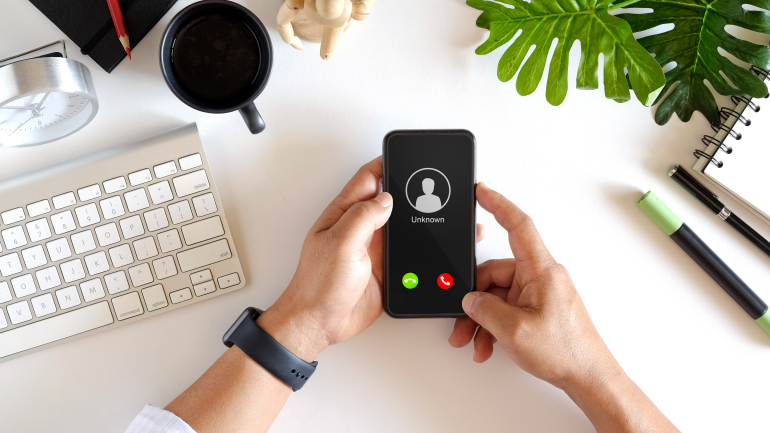
Illegal robocalls have been a major source of consumer complaints at the FCC. Hence, as of June 30, 2021, the Federal Communications Commission (FCC) regulations require that all inbound and outbound voice service providers operating in the United States implement STIR/SHAKEN standards in the Internet Protocol (IP) portions of their network in order to combat the plague that robocalls and spoofed calls have become.   Therefore, in order to comply with these FCC requirements and to maintain customers’ trust, DIDWW, a global telecommunications operator and provider of premium quality VoIP services, has announced the successful implementation of Caller ID authentication through the STIR/SHAKEN set of standards.   The industry-standard caller ID authentication framework STIR/SHAKEN is a set of technical standards and protocols that allow the authentication and confirmation of caller ID information when calling over Internet Protocol (IP) networks.   Caller ID authentication technology allows people to trust the caller…
GCI to expand capacity for rural areas GCI, an Alaskan service provider, has signed a $150 million contract with Intelsat to increase the telecommunications service capacity in rural areas. GCI has been providing geosynchronous (GEO) satellite communications for 35 years to supply the state with data, video and voice services. The latest transaction gives GCI continued access to C-band and Ku-band capacities, which are already a part of GCI’s satellite services portfolio, and also provides new access to state-wide Ka-band capacity. Furthermore, Intelsat will provide the multi-satellite solution through a new and improved managed station platform and C- Ku- and Ka-bands networks. Read more at: https://tinyurl.com/w52yht6u South Sudan launches Digitel Network South Sudan has announced the launch of Digitel Network, the country’s first telecommunications company, which was introduced to celebrate 10 years of independence of the country. South Sudan has so far had the services of only two international mobile…

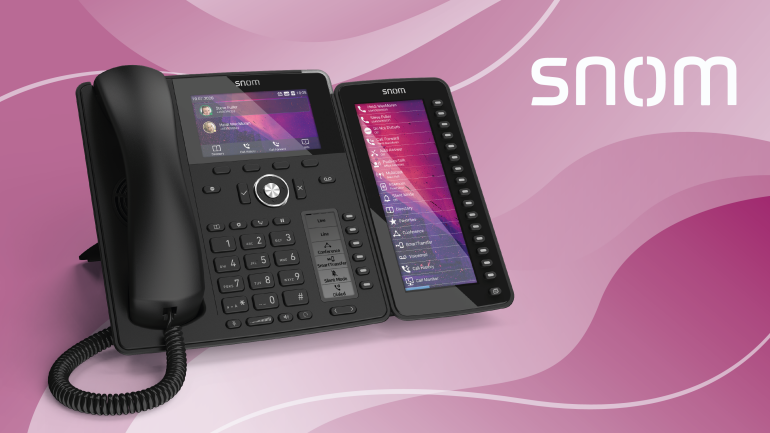
Snom, the top brand for modern IP telephony, has become the first end device manufacturer to integrate its own provisioning app into the new innovaphone PBX dashboard.   Configuration data for any Snom device docked at the innovaphone PBX can now be synchronised directly with Snom’s SRAPS (Secure Redirection and Provisioning Service) via a secure interface. Auto-provisioning files from the innovaphone PBX are stored there and made available for each port. This enables innovaphone’s administrators to operate Snom phones at a locally installed innovaphone PBX in ‘zero-touch’ mode using an app.   Innovaphone launched its new app store following the release of Version 13r2 of its internationally known PBX system. The store gives partners and customers direct access to useful apps and functions that are part of the communications platform – and is setting new standards for the integration of IP end devices like Snom’s.              In the sense of personalising…

The GSMA has announced that the mobile industry will need an average of 2 GHz mid-band spectrum to meet the data speed requirements of the UN International Telecommunications Union (ITU). The study evaluated 36 cities around the world and concluded that policymakers should license the spectrum of mobile operators in harmonized bands such as 3.5 GHz, 4.8 GHz and 6 GHz to meet ITU requirements by 2030. According to their claims, the additional spectrum will make it possible to use 5G to its full potential. As claimed by the global study, achieving this will reduce the environmental impact and costs for 5G users, as additional spectrum will lessen the carbon footprint of networks by two to three times, strengthening the sustainable development of mobile communications at the same time. In addition, the availability of mid-band frequency spectrum will also improve Fixed Wireless Access (FWA). The research shows that…

Nokia launches iSIM Secure Connect Nokia has released new software to help operators cope with the provisioning of cellular IoT devices and subscription management. The software, called iSIM Secure Connect, relies on embedded SIM (eSIM) and integrated SIM (iSIM) technologies combined with reliable digital identification, allowing telecom service providers to quickly and securely authenticate and manage cellular IoT devices. The software is vendor agnostic and can be installed in a variety of network and cloud environments, providing a myriad of IoT use cases and business models. Read more at: https://tinyurl.com/42kf2tu8 Lumen strikes a deal with Microsoft Lumen Technologies has announced that it has entered a long-term partnership with Microsoft to take advantage of the Azure cloud platform. The duo plans to integrate Microsoft’s Azure stack with Lumen’s bare metal edge computing service, allowing customers to run Azure-based applications wherever the edge network can reach. Lumen will also use the cloud…

PiPcall, a provider of hosted telephony services and solutions for businesses, has released the UK’s first mobile-only business phone system in an application optimized to be used on the personal mobile phones of employees.   The PiPoffice app allows users to work from anywhere, be that in an office, their home or even on the go. The telephone system frees the user from their work desk but keeps all the features of a traditional desk phone system. These features include call recording, conference calling, corporate voicemail, IVR, call groups, call tracking and call logging.   PiPoffice calls are made over mobile networks only. This technology separates business and personal activities on the device and ensures that call expenses are charged according to the organization’s service plan. When using the PiPoffice mobile app, the user does not incur any charges on its personal calling plan. In addition, PiPoffice states that its…

Orange, a French multinational telecommunications corporation, has extended its 5G test program in the 26 GHz band. This initiative was launched in 2019 to focus on testing the capabilities of frequencies for industrial use cases in France.   A consortium consisting of Orange, Nokia, the railway company SNCF and the academic facility Institut Mines – Telecom (MIT), has been given a grant from the French government to trial 4.0 industrial applications over 5G using the 26 GHz spectrum. The grant will allow the consortium to develop an existing pilot that Orange performed for eighteen months at the Rennes train station in France, while working with the French state-owned railway company SNCF and Nokia.   As part of the project, Orange will provide network services and Nokia will provide technological connectivity offerings, including private networks, while MIT will focus on data hosting using edge computing.   This project puts emphasis on…

It is imperative for every business to develop a marketing strategy that enables organizations to build long-term relationships with their customers. Developing and executing such a marketing strategy is not an easy task, especially in the ever-changing telecommunications industry. There are a myriad of  ways to create and design a marketing campaign, and even more ways to manage your entire marketing strategy.   To help you wade through the complex world of telecom marketing, we have searched far and wide to gather the top telecom professionals’ marketing ideas that will hopefully inspire everyone in their marketing path.Yaniv Masjedi, CMO of Nextiva, says being your own biggest competitor is the greatest motivation. “Being in such a competitive industry is a roller coaster, and at the same time, we like to see ourselves as our own biggest competitor. We aren’t striving to be like the other companies in our space because Nextiva…

In recent years, 5G technology has been deployed around the world at a staggering pace, and the rollout is predicted to continue in the upcoming years. Despite the fact that 5G technology is still in its early stages, the telecom industry is already envisioning and trying to define what the next generation of mobile technology, 6G, will look like.   The 5G Infrastructure Association (5GIA) has published a white paper with the title “European Vision for the 6G Network Ecosystem”, which covers key areas of 6G research from technical, societal, policy and business perspectives.   As stated in this white paper, 6G will participate in making headway towards achieving more united digital, physical and personal worlds. The key features of the next-gen technology include intelligent connected management and control functions, programmability, integrated sensing and communication, energy footprint reduction, reliable infrastructure, scalability and affordability.   5GIA says that 6G will usher…

Telefonica Deutschland has comprehensive plans for a sweeping shut down of its 3G network starting in July, making it the last operator in Germany to phase out legacy technologies in favor of 4G and 5G. Approximately 16,000 3G sites are scheduled to be shut down by the company.   The resources that were needed for 3G will now be repurposed for the 4G network by the end of the year. According to the operator, 4G will use the frequencies of current 3G transmitters at 2,100 MHz. This upgrade from 3G to 4G will benefit Telefónica Deutschland’s customers, as well as customers of its other brands, providing a better and faster network.   A full upgrade of the first 500 3G sites will begin on July 1st. An additional 1000 sites will be repurposed two weeks later. The regions where the upgrade will begin are Lower Saxony, Saxony-Anhalt, Brandenburg and Mecklenburg-Western…