



Google is ramping up its generative AI capabilities to enhance its search tool’s ability to decipher complex information often encountered on the internet. In a recent blog post, the tech giant showcased three novel features either already accessible or soon to be introduced in its Search Generative Experience (SGE). Currently in the realm of a Google Labs experiment, SGE integrates AI into the traditional search engine by providing summaries, sources, and follow-up questions related to the search topic.

Google has issued a firm reminder to its users regarding the fate of inactive accounts, announcing a new policy set to take effect from December 1, 2023. The technology giant recently dispatched emails to Gmail and other Google service users, notifying them of the policy’s rollout. According to the company’s latest guidelines, any Google account that remains dormant or unattended for a period of two years will be considered eligible for deletion.

In an unprecedented move, China has taken decisive action against personal data breaches, closing a staggering number of cases while also unveiling draft laws to regulate facial recognition technology. Over the past three years, Chinese law enforcement has effectively shut down 36,000 instances of personal data violations, leading to the detention of 64,000 suspects, as per the Ministry of Public Security. These efforts are part of a broader initiative launched in 2020 to govern online activities, resulting in the seizure of more than 30 million SIM cards and 300 million “illegal” internet accounts.

Nokia, TPG and Mediatek are collaborating to showcase the power of carrier aggregation technology in live-streaming 360-degree broadcasts, a key element for future metaverse applications. The demonstration at Nokia’s 5G Futures Lab used multiple sub-6 GHz frequency bands to maximize 5G uplink speeds, enabling real-time transmission of high-quality video. The technology could revolutionize the viewing experience for TV, movies, sports and industrial metaverse scenarios such as remote-controlled robots performing hazardous tasks.

The Q2 global market growth for cloud infrastructure services showed a flourishing trend, although at a slightly reduced rate from Q1. The noteworthy strides are largely linked to evolving spending habits, with AI expected to power considerable growth soon. Amazon and Microsoft demonstrate this shift, announcing AI-focused programs in response to the rising demand. Nevertheless, mastering AI implementation comes via strategic partnerships, open to those willing to forward AI applications.
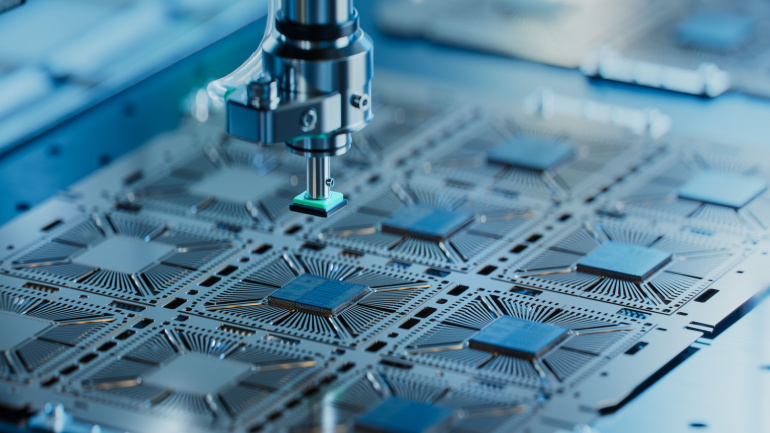
The Biden Administration’s ambitious $2 trillion infrastructure plan injects considerable capital into US chip production, with the aim of bolstering national security and reducing reliance on foreign manufacturers. Last year, the US produced only 12% of the world’s chips, highlighting a dependency on international manufacturers, primarily in Asia. Intel emerges as a key beneficiary of this investment, declaring over $43.5 billion towards manufacturing units across the US. Yet, for some companies, the journey remains fraught with caution as they await the federal funding.

In an audacious move against China’s tech supremacy, the U.S. has issued an executive order curbing American investment in several Chinese industries. Citing national security fears linked to the development of military, surveillance, and cyber technology in China, the U.S. declared a national emergency facilitating swift action. This could significantly impact sectors such as semiconductors and quantum computing, and might also influence global investment trend.

Intel and Samsung amplify their alliance to revolutionize virtualized Radio Access Network (vRAN) technology. With Intel driving RAN processes into a generalized realm and Samsung narrowing the divide with formidable RAN vendors, vRAN emerges as an attractive alternative to traditional RAN. But will the telecom industry celebrate this technological feat with the same fervor?

Delving into the biases within artificial intelligence (AI), a recent study highlights how large language models (LLMs) inherently reflect limited perspectives. This becomes particularly intriguing when considering the varying ethics exhibited by AI systems from OpenAI and Meta.

A groundbreaking discovery at the University of the West of Scotland reveals a transformative way to convert human energy into electricity, powered by a 3D graphene foam material. Primed to revitalize the IoT industry, this research spotlights a pressure-sensitive mat that could generate power simply through human footfalls. Offering a unique solution to energy management, this technology could minimize the environmental impact, while fostering a new era of wireless connectivity.
