


Prominent UK telecom companies like BT, VMO2, and Vodafone have been selected beneficiaries of government funding for research into Open RAN technology. Innovative projects, with a focus ranging from energy efficiency to security, will share in the £88 million ($121 million) funding. The main goal is to figure out whether Open RAN can rival traditional RAN, especially in high-traffic areas and rural deployments, in terms of cost, reliability and energy consumption.

Metazoa pioneers AI in Salesforce with their Intelligent Assistant, enhancing administrative capabilities. HP wows with its Spectre Fold, a versatile $5,000 three-in-one device. Japan’s blockchain AI market skyrockets, set to grow by 24.2% CAGR thanks to government support, business adoption, and venture capital investments. Lastly, Emoji 15.1 introduces fresh icons, including headshakes, a phoenix, and more.

Exploring efficient energy solutions, BT is turning to liquid cooling techniques to lower network switch power usage. Collaborations with Iceotope and Juniper hint at precision cooling for servers—a potentially industry-first initiative. Meanwhile, strategies with Immersion4, Nexalus, and Airsys run the gamut from full immersion to cooling-unit encased cold plates. Crucially, every energy-reduction experiment aids BT’s ambitious journey toward net-zero emissions by 2031.
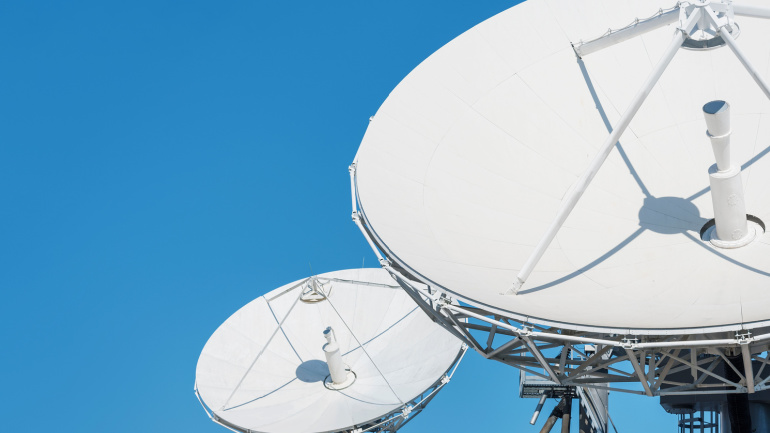
Intelsat’s recent partnership with Telespazio paints a promising image of the future of global network operations. With the inclusion of Telespazio’s premier teleport facility, Fucino space centre, into Intelsat’s network, seamless European connectivity is underway. Moreover, the alliance caters to the growing global demand for managed satellite services, elevating the standard for high-profile sectors, while improving geospatial communication. This precise move highlights the tremendous potential of combining flexible solutions for global positioning.

Dutch telecom company Veon is adjusting the course of its Russian sector, VimpelCom’s, management buyout, initially agreed for $2.1 billion. The transaction now fully hinges on VimpelCom absorbing part of Veon’s debt – a method born from necessity as sanctions hamper Russian financial institutions. This strategic exit is further complicated by EU sanctions on Russia’s National Settlement Depository inhibiting interest collection on Veon’s Eurobonds.

In a bold move set to enhance its spectrum capabilities, T-Mobile US is poised to acquire Comcast’s 600 MHz frequencies, in a deal worth up to $3.3 billion. With 39 million subscribers potentially impacted, this decision reconfirms T-Mobile’s commitment to streamlining its 600 MHz range, especially in key US cities. It’s worth noting that despite the ambitious agreement, Comcast retains the rights to exclude any licenses before completion. The deal serves both parties well, promising to augment T-Mobile’s already substantial frequencies and refresh Comcast’s spectrum focus on high traffic areas.

The surging interest in cloud-based applications represents a flourishing sector of the tech sphere, by providing an enhanced user experience and considerable savings on terminal investments. Telecommunication giant, ZTE, demonstrates this potential with their virtual STB (vSTB) solution in the television industry – a pioneering effort that bypasses traditional terminal downturns hampering TV service expansion. This solution effectively confronts challenges of limited service quality and hard adaptation processes linked with operator TV services, and eliminates sizable terminal outlays. Similarly, the cloud STB product presented by China Mobile and ZTE capitalises on China Mobile’s robust computing capacities and thus streamlines content broadcast to every terminal.

Discover how Belgium’s telecommunications giant Proximus has embraced 5G technology and AI-powered vision to resolve an age-old warehouse challenge – instantaneous inventory tracking. By using 5G-enabled drones, warehouse managers can have continuous oversight and control of stock levels. This advanced management system contrasts sharply with traditional methods of RFID tags and barcodes, that despite being effective, have notably limitations due to their laborious nature.

OneWeb’s constellation of low Earth orbit (LEO) satellites will enhance network coverage for Softbank, particularly in challenging regions. The move aligns with Softbank’s ‘Ubiquitous Network’ strategy, which unifies diverse non-terrestrial network (NTN) solutions to expand digital services. Besides its surprise partnership with SpaceX’s Starlink, Softbank continues to boost its stake in OneWeb, supporting its Japanese launch and integration into the Ubiquitous Network.

Telecom equipment expenditure in North America experienced an unexpected downturn in the first half of this year. Despite global telecom hardware revenues remaining steady, North America’s marked decline significantly impacted the total number. In contrast, other markets, particularly Asia-Pacific, showed robust growth. The reasons behind North America’s decline extend to slowing 5G expenditure and reduced spending on broadband access equipment. Looking ahead, no major global alterations are anticipated, though the volatility of the telecom industry hints at potential changes.
