The Global Satellite Operators Association (GSOA) is enforcing a behavior code for satellite operators, addressing the pressing issue of space debris caused by escalating satellite broadband services. The industry aims to advance its responsibility through shared best practices to preserve space access. This action, however, fuels debate over unendorsed practices, potential impacts on astronomy, and the proposed spectrum restraint at the upcoming World Radiocommunication Conference.

The future of high-quality broadband access hinges on fiber investment, with interest spanning government, media, and network operators. Its value is in optimization, sustainability, and compatibility with the future. This technology could reshape industries, from education to smart city initiatives. The European Commission’s ambitious Digital Deco 2030, aiming to extend gigabit services to its entire populace by 2030, reflects global recognition of broadband’s potential in economic growth. Nevertheless, the disparity in gigabit-digital access remains a concern, prompting a focus on all-optical fiber networks. This reality becomes evident with Omdia’s Fiber Development Index (FDI), offering a diverse range of fiber investment metrics.
President Biden’s administration has launched an extensive review of over 2,700 megahertz of spectrum, perceiving its significant role in the nation’s technological leap. The initiative intends to implement a well-grounded American spectrum strategy, focusing on fostering tech advances, heightening public understanding about its economic role, and fostering a cooperative national framework.
Just under a year ago, the tech world buzzed with anticipation over a new partnership between chip mogul Qualcomm and satellite firm Iridium. The aim? Integrating satellite-to-phone services via Snapdragon Satellite and Iridium’s resources. However, a recent shift in direction caught the industry’s attention. Despite a successful demo, smartphone manufacturers didn’t opt to incorporate this feature, leading Qualcomm to end the agreement. Yet, in the face of disappointment, Iridium remains optimistic, envisaging an industry veering towards greater satellite connectivity. As earthquakes ripple across the telecoms landscape, all eyes await what’s next.
Taking the spotlight in the telecom industry is the revolutionary digital operations framework, a strategic game-changer, that aligns and simplifies Quality and Maintenance aspects of IOH via a cutting-edge converged data platform. This invention notably allows those with minimal coding exposure to develop essential digital resources, paving the way to an automated potential. Besides bolstering operative efficiency and competitive edge, it also gives the industry the tools needed to navigate the digital age challenges effectively.
An enthusiastic exploration of advancing telecommunication technologies, particularly 5G and its bigger sibling, 5.5G, was recently exhibited by Huawei’s Antenna Business Unit President, Eric Zhao. Eric emphasizes how competent R&D pursuits are imperative to propel antenna performance, a critical aspect in 5.5G proliferation. He highlights the enhancement of user experience, operational efficiency and service extension as key objectives. Moreover, Huawei’s strides in working towards the goals of unrestricted deployment, zero signal loss, and ‘zero touch’ O&M demonstrate their ambition. Yet, the journey towards these ambitious targets is far from over.
As 5G Fixed Wireless Access (FWA) evolves with its next phase, 5G Advanced, worldwide research indicates growth and potential for higher speeds and reduced latency. The Middle East currently showcases impressive progress with over 1.6 million 5G FWA users. Yet, debates exist over its future, exploring whether 5G FWA will remain an affordable alternative to fixed broadband or tap into its speed for new applications. Moreover, cost is a concern for Customer Premises Equipment (CPE) devices, considered a current hurdle in advancing 5G FWA.
The Global Coalition on Telecommunications (GCOT), launched by the UK, Australia, Canada, Japan, and the US, intends to revolutionize telecommunications through joint R&D, funding alignments, and standard development. Offering insights into the initiative’s broad scope, TMT partner Julian Cunningham-Day highlights the coalition’s focus on supply chain diversification and market competition through Open RAN. Despite the promising advantages, potential vulnerabilities may arise from industry-wide open standards. Additonally, GCOT’s emphasis on yet to be realized 6G technology signals its proactive stance towards future complexities.
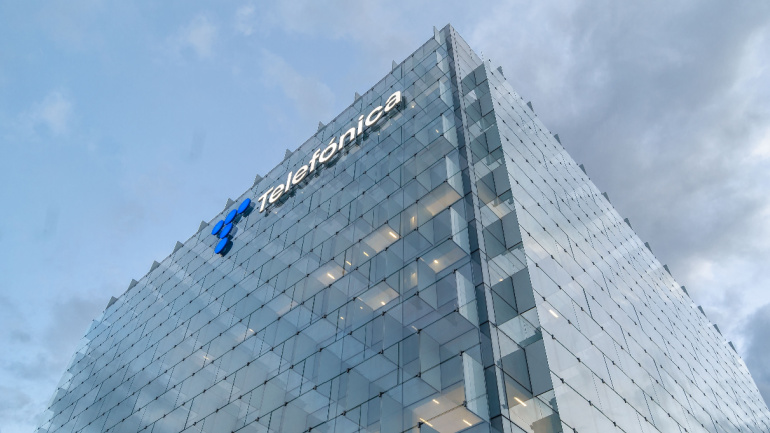
Telefónica, a Spanish operator group, is set to acquire the remaining shares of Telefónica Deutschland, taking a decisive leap in consolidating their place in the European telecom sector. This bid, however, isn’t without its potential hurdles. For stakeholders to see potential, they need to be convinced the company’s predicted growth won’t overshadow the offered price. Meanwhile, a surprising twist comes into play as Saudi operator group, STC, expresses its interest to buy a stake in Telefónica, triggering a wave of political interest in Spain.
Marlink has teamed up with Eutelsat OneWeb to bring satellite connectivity to the luxury icebreaker cruise ship, Le Commandant Charcot. Their innovative hybrid network enhances both operationally and leisurely experiences, using layered, encrypted technology for robust security. Remarkably, it allows for separate crew and operational systems on one terminal and ensures unprecedented internet access in remote locations.