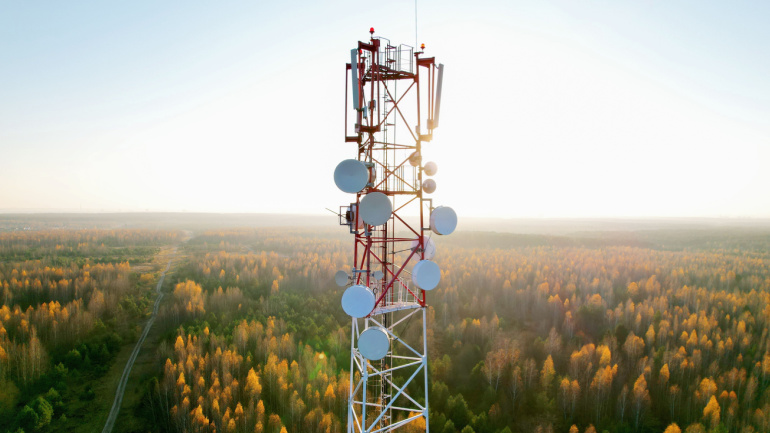
SK Telecom’s collaboration with AI pioneer Mars Auto, brings forth a compelling vision for autonomous trucking, leveraging SKT’s 5G prowess and Mars Auto’s AI system. With Mars Auto’s AI armed with extensive roadway data from SKT, there’s a promise of safer, more efficient self-driving services. SKT’s continued strides in telecom, signified by the company’s alliance with Deutsche Telekom and massive investment in AI firm Anthropic, show signs of transformative potential for the telecom sector.
5G and AI are more than just buzzwords; they’re shaping up to become the backbone of technological breakthroughs. Their ultra-fast capabilities are key for advancements including IoT and intelligent automation. However, with high speed comes high stakes, particularly in the domain of cybersecurity. Yet, despite potential risks, the limitless possibilities offered by 5G and AI, whether it’s efficiency gains or real-time interactivity, are compelling. This combination is set to revolutionize industries, driving anticipation for what lies beyond the tip of this transformative iceberg.
Anticipation builds as the international telecommunication industry readies for the 2023 Global Telecoms Awards, offering a glimpse of the brightest advancements in the sector. This year’s fierce competition promises a thrilling revelation on November 30th, stretching from top-shelf 5G innovations to groundbreaking strides in AI and sustainable telecom solutions. Coinciding with the awards, the Future Vision Executive Summit promises to stimulate discussion on pressing telecom industry topics. Don’t miss out, the future of telecommunications unfolds here.
An ambitious €1 billion initiative is underway in Spain to narrow down the digital divide in rural areas, spearheaded by the Ministry of Economic Affairs and Digital Transformation. The project focuses on escalating the presence of 5G technology, committing an impressive €544 million towards standalone deployments. Aimed at areas unlikely to be targeted by private sector network deployments, it accentuates the government’s determination to extend tech revolutions to the unserved regions. With potential applications to various sectors, Spain’s pathway to complete 5G integration could serve as an inspirational model for others in this era of digital transformation.
Vodafone is expanding its devotion to Open RAN technology, joining forces with Nokia in a progressive venture in Italy. The initiative aligns with Vodafone’s Open RAN directive, largely centered in the UK, and extends influence to the Italian telecom landscape. With this first commercial 5G Open RAN pilot in Italy, they aim to prove Nokia’s Open RAN solution matches the functionality and quality of traditional RAN. With an eye on promoting automated, adaptable networks for the ever-growing demand of responsive 5G services, such innovation bolsters the EU’s digital sovereignty and global competitiveness.
Colt Technology Services’ Annual Digital Infrastructure report reveals growing business prospects for partners, especially in AI-compatible tech like 5G, agile connectivity, and edge. Amid global uncertainty, there’s a solid market for partners providing consumption-based networks. However, tensions exist between IT chiefs and partners over integration and lack of APIs. This study highlights the evolving role of partners, suggesting this could be an opportune moment to overcome challenges and embrace the digital revolution progress.
As Nokia unveils its latest collaboration with Brazil’s Jacto for a new private network, we see industry lines blur, with telecom revolutionizing agriculture. As expected, automation will dominate, revolutionizing production lines in Jacto’s massive smart factory. A key player in this transformation – 4.9G/LTE and 5G connectivity, allowing various aspects of manual labor to be automated. A ground-breaking stroke, this could signal the advent of a new era in Latin America’s agriculture-tech crossover. Moreover, Nokia’s innovative compact DAC private wireless offering reveals the company’s flexibility and adaptability.
In collaboration with technology giants like HPE, Casa Systems, Mavenir and Dell Technologies, Orange Spain launches Open RAN nodes allied with a cloud-native 5G SA core network. This pilot project notches a triumph in network deployment within an hour, brandishing the power of automation in modern technologies. While this showcases POTENTIAL for end-to-end virtual networks management and elevates energy efficiency, a sense of guarded optimism is needed, given a drop in Open RAN and vRAN revenues in Q2 2023.
HMD Global sets a new bar in smartphone manufacturing with the Nokia XR21, claiming ‘military-grade durability’ and localized data storage for improved security. Remarkably, this sturdy device boasts a chassis made from 100% recycled aluminium, affirming the company’s commitment to sustainability. As an added boon, it has moved its manufacturing to Europe, enhancing the product quality control. This move hints at the potential appeal of a ‘Made in Europe’ smartphone in an overwhelmingly Asian-dominated market.
Generative AI’s capacity to curate fresh content is piquing interest within the telecommunications domain with predictions of significant growth. A recent Altman Solon survey revealed that nearly half of the experts in this field are gearing towards adopting this technology within the forthcoming two years. Telecommunications companies are seen to utilize AI power initially to refine customer experiences. Alterations of these AI models to align with specific objectives and eventually, creating new industry-focused models are the subsequent phases. However, data protection concerns circulate around its adoption. Thus, an intricate balance must be reached in refining AI applications and ensuring data safety.