In response to the rapid growth of the metaverse and generative AI sectors, the European Commission (EC) is conducting a comprehensive evaluation of the competitive landscape. Margrethe Vestager, the Executive Vice President of competition policy, has issued Requests for Information (RFI) for both markets, urging stakeholders to share insights on competition levels and propose ideas on how antitrust regulations can sustain competitiveness.

The potential partnership between HPE and Juniper is a strategic move that might redefine HPE’s journey towards high-growth solutions, specifically accentuating its high-margin networking business. The collaboration is timely as the demand for secure, unified tech solutions spirals due to AI and hybrid cloud businesses’ exponential growth. Leveraging on the strength of each company’s portfolio, the alliance aims to revolutionize networking for hybrid cloud and AI, potentially setting a new industry standard and bolstering innovation for enhanced user experiences.
Aiming to diminish the climate impact of legal proceedings, a group of dedicated lawyers is advocating for sustainable litigation practices across England and Wales. Aligned with the 2015 Paris Agreement, the initiative pleads with organizations striving for Net Zero emissions to adopt the Greener Litigation Pledge. VMO2 plays a key role in this movement, with ambitious plans to reduce its emissions by 90% by 2040.
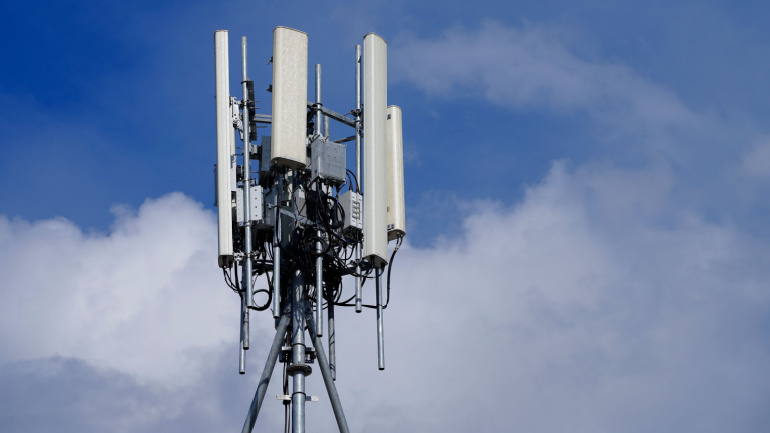
Verizon has inked a new deal with the US Department of Defense (DoD) to install a 5G tower on Oahu, Hawaii. The $1 million project aims to address the longstanding issue of poor connectivity in the area surrounding the Army and Air Force Exchange Service’s (Exchange) HMR Express.
In the ongoing technological rivalry between the United States and China, Huawei has emerged as a significant beneficiary, particularly in the realm of artificial intelligence (AI). The U.S. government, in its persistent efforts to hinder China’s progress in AI development, has implemented various bans on the sale of certain products from American companies to their Chinese counterparts. The focus of this battle shifted notably to AI over the past year, with China positioning itself as a frontrunner in AI, albeit still relying on U.S. company Nvidia for crucial high-performance chips.
Exploring fresh avenues in cybersecurity alliances, Ukraine and Romania envision bolstering digital frontline with an impactful pact. The focus pivots around supercharging cybersecurity, enabling 5G technology, and rehabilitating Ukraine’s connectivity infrastructures in light of recent cyber breaches. Spearheading distinctive initiatives, the collaboration plans to fortify national networks, establish a cloud-based public e-service platform and popularize 5G technology across Ukraine.
Navigating the shift from traditional to cloud-based communication systems amidst a growing hybrid work culture, HCS steps up to provide sustainable solutions. With a new division dedicated to this transition, the telecom giant anticipates significant returns and business expansion.
In a strategic move, Intel has partnered with private equity firm DigitalBridge to introduce Articul8, a new company set to bring enterprise-grade generative AI technology to the market. Articul8 aims to provide corporate customers with a secure and vertically-optimized genAI software platform, designed to run seamlessly on Intel hardware, including Xeon processors and Gaudi AI accelerators.
Hyundai Motor and Kia are revolutionizing the amalgamation of mobility and living spaces by proposing the consolidation of home and car services. Assisting in this groundbreaking initiative is Samsung Electronics, providing the potential to transform our relationship between home and car via ‘Car-to-Home’ and ‘Home-to-Car’ services. This change promises remote control over various appliances through voice commands, as well as the ability to monitor and manipulate vehicle functions from home.
With the advent of 5G and Wi-Fi 6, cellular connectivity offers an enticing alternative to Wi-Fi, especially in enterprise set ups. These advances, along with new approaches to spectrum policy, have spurred the expansion of private cellular networks (PCNs), giving companies more control over their connectivity. A deeper analysis reveals that despite its accessibility, Wi-Fi faces challenges like signal interference and limited coverage, where private 5G networks, underscored by robust security and higher capacity, outperform.