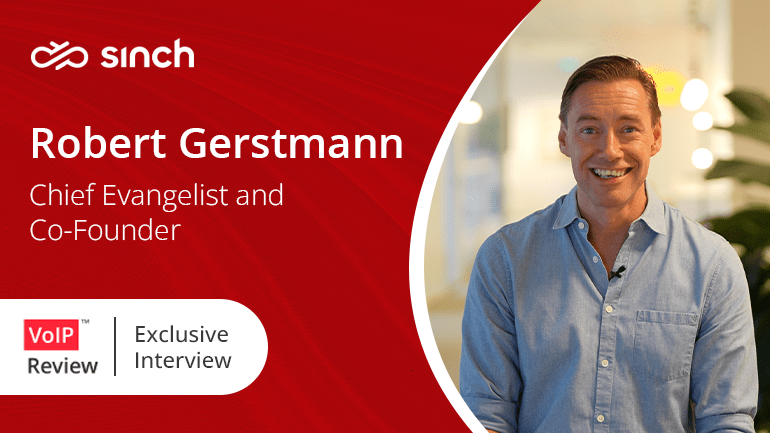
Apple’s recent decision to adopt Rich Communication Services (RCS) has sent shockwaves through the messaging landscape, driving broader RCS adoption. RCS, an upgrade from traditional SMS, promises richer, more interactive messaging features that allow users to send high-quality media, see read receipts, and enjoy smoother conversations across devices. In this exclusive Q&A, we speak with Robert Gerstmann, Chief Evangelist and Co-Founder of Sinch, to delve into Apple’s adoption of RCS. Known for pioneering advancements in mobile enterprise communications, Gerstmann has played an instrumental role in shaping the Sinch brand and its global strategy. With over 15 years of experience, he offers an insider perspective on how Apple’s embrace of RCS could reshape messaging dynamics, bridge compatibility gaps between iOS and Android, and open new avenues for business communication. Read on as Gerstmann unpacks the opportunities and challenges of this pivotal shift in mobile messaging, offering a blueprint for businesses keen…
Virgin Media O2 introduces Daisy, an AI-driven virtual assistant, tackling phone fraud by engaging scammers in conversations for up to 40 minutes. Part of the “Swerve the Scammers” initiative, this tool combines AI with insights from YouTube scambaiter Jim Browning to protect potential victims effectively, ensuring scam prevention.
Siemens’ new Industrial Copilot, a generative AI tool for automation engineers, enhances productivity and addresses labor shortages with on-premises deployment for added security. Adopted by ThyssenKrupp, it aids in code generation, error resolution, and multimodal data analysis.
Datadobi’s launch of StorageMAP 7.1 revolutionizes VoIP data management with enhanced scalability and performance. The Unstructured Data Mobility Engine tackles large data volumes effortlessly, while the HDI Archive Appliance Bypass accelerates data migration.
In the race towards innovative technology, LG Uplus in Korea leads with energy-efficient solutions for future 6G networks. By testing an All-Photonic Transport Network with partners like Infinera, they aim to drastically reduce power consumption, ensuring a sustainable approach.
Nokia’s acquisition of Rapid’s assets marks a strategic enhancement of its network API portfolio, crucial for advancing Nokia’s position in the 5G landscape. This move accelerates software development and boosts interoperability, enabling telecom companies to maximize returns.
Verizon has extended its Global Network Solutions contract with the Department of Defense, enhancing secure communication networks in Southwest Asia. This vital partnership reflects Verizon’s pivotal role in evolving communication technology.
VDURA’s advancements in data infrastructure have enhanced its platform for AI and high-performance computing. Featuring a modern microservices-based architecture and innovative tools like VeLO and VPOD, VDURA leads in managing complex environments across on-premises, cloud, and hybrid systems.
The escalating energy consumption by data centers poses critical challenges, with cooling systems driving immense power usage. As data centers expand, particularly to support emerging technologies like generative AI, power demands are mushrooming.
Gartner predicts AI data centers may hit operational limits by 2027 due to power shortages, driven by surging AI and GenAI energy demands. As electricity needs rise, organizations must adapt by securing long-term power contracts and exploring efficient alternatives.