94 Results

FWA

Search

In a robust move, Nokia is set to enhance 5G Fixed Wireless Access (FWA) with the unveiling of FastMile, two innovative solutions aimed at boosting indoor and outdoor coverage. This stride could revolutionize the industry, especially when considering wall attenuation effects on network capacity. FastMile’s outdoor solution cleverly sidesteps signal loss due to wall materials, while an intuitive mobile app assists users in determining the best placement for their receivers—shaping a route towards an optimal user experience in telecommunications.


In a game-changing move, Voneus aligns with Broadway Partners, Cadence Networks, and SWS Broadband, facilitated by Macquarie Capital, IIF, and Tiger Infrastructure Partners, alongside a hefty £250 million investment. Known for boosting superfast broadband in underserved UK rural areas, Voneus’ ambitious scope partnered with Project Gigabit has proven an investment magnet. Phantom impacts of this colossal merger are yet to unfold, but Voneus sets its sights on servicing 350,000 premises across the UK in a dynamic shift in the telecommunications sector.

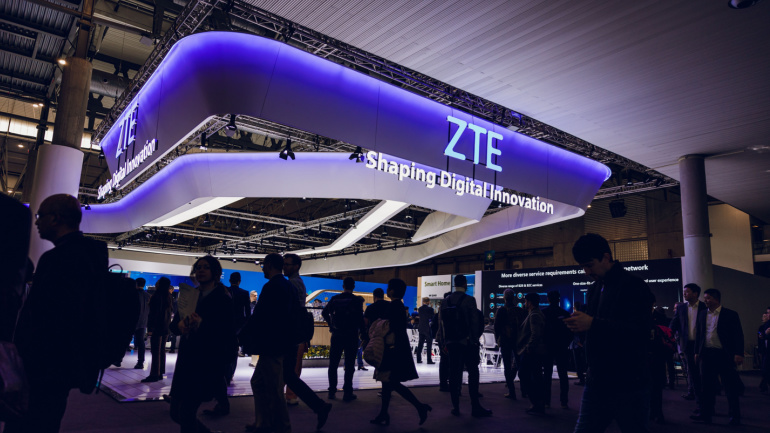
The surging interest in cloud-based applications represents a flourishing sector of the tech sphere, by providing an enhanced user experience and considerable savings on terminal investments. Telecommunication giant, ZTE, demonstrates this potential with their virtual STB (vSTB) solution in the television industry – a pioneering effort that bypasses traditional terminal downturns hampering TV service expansion. This solution effectively confronts challenges of limited service quality and hard adaptation processes linked with operator TV services, and eliminates sizable terminal outlays. Similarly, the cloud STB product presented by China Mobile and ZTE capitalises on China Mobile’s robust computing capacities and thus streamlines content broadcast to every terminal.

In a major technological achievement, over half of UK homes now enjoy full fibre broadband access, marking a significant increase from the beginning of this year. This growth reflects the collective effort of both large infrastructure operators and smaller, regional organisations. Surprisingly though, coverage varies across regions, with Northern Ireland leading while Scotland slightly lags behind. Even more exciting progress has been observed in access to Gigabit-capable broadband.

Kcell, Kazakhstan’s leading operator, is set to revolutionize the nation’s telecommunications landscape by launching a colossal seven-year 5G rollout plan with Ericsson at the helm. The mission includes a considerable shift towards a united Radio Access Network strategy merging 5G with existing networks, which proves to offer optimize utilization and smoother transition to advanced technology. Furthermore, this project incorporates Fixed Wireless Access, providing internet solutions in challenging terrains.

Nokia’s revamped home wifi software suite, now known as Corteca, promises to revolutionize in-home connectivity management and user experience. This holistic solution boasts advanced features like Corteca Cloud for network management and Corteca Device Software for device administration. More intriguing is the upcoming Corteca Marketplace, offering ‘try-before-you-buy’ applications, potentially opening new revenue horizons. Despite the anticipation, the question remains – will this alleviate users’ connectivity woes and truly enhance their in-home broadband experience? Stay tuned as the story unfolds.

T-Mobile’s fruitful Q2 performance exhibits impressive growth with an increase of 760,000 postpaid phone customers and 509,000 Fixed Wireless Access home Internet customers. On the financial front, a 2.8% YoY service revenue hike pushed their accounts to $15.7 billion, despite a minor 2.6% dip in overall revenue. The telecom giant further asserted its prowess with a record low postpaid churn of 0.77%, prompting an upward revision of its yearly customer addition expectations.

In an exciting leap forward for 5G technology in Europe, Ericsson and O2 Telefónica in Germany have joined forces to accomplish a remarkable feat in the development of 5G Cloud RAN technology. Their groundbreaking Proof of Concept (PoC) deployment at O2 Telefónica’s Wayra innovation hub in Munich showcased the immense capabilities of Ericsson’s first 5G Cloud RAN installation on the continent. The PoC utilized cutting-edge mmWave frequency and a centralized control unit (CU), achieving an impressive end-to-end speed of over 4 gigabits per second.

As companies globally adopt innovative strategies, leveraging considerable commercial benefits from their 5G investments is at the forefront. Pioneered by Chinese service providers, the paradigm shift towards traffic value-based operations has significantly enhanced revenue. Unique 5G experiences such as ultra-high speed and low latency have unlocked new function scenarios, exemplified by the booming live broadcast industry in China. Meanwhile, European and Middle East counterparts effectively implement rate-based charging models, showcasing the versatility of the 5G platform. This status quo suggests that as we advance, the necessity to adapt traffic value-oriented operations for effective monetization becomes paramount, opening new revenue vistas and novel business models.

Breaking speed boundaries, Ericsson and MediaTek recently achieved an impressive 565 Mbps upload speed within the consumer 5G sector, sparking excitement about the potential of fixed-wireless access (FWA). This feat was made possible through the integration of two of Ericsson’s software features and MediaTek’s T830 chipset for 5G FWA routers. The growing importance of upload speed on multiple applications including online gaming, video streaming, and cloud storage is nudging broadband consumers into creators, underscoring the significance of this development.