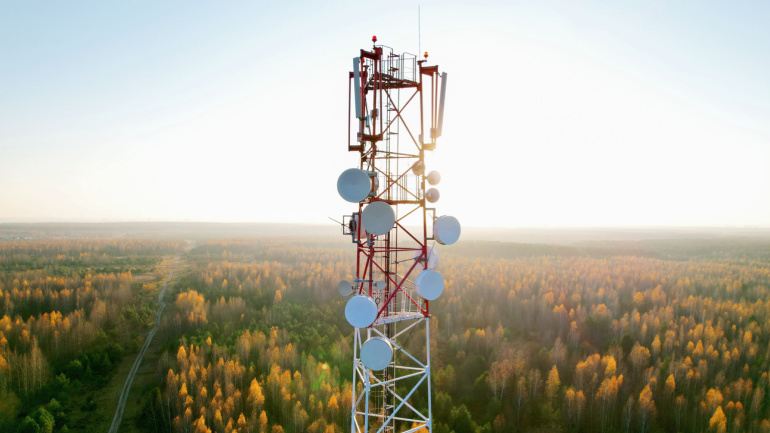
Spain’s government is pumping €448 million into the upgrade of over 8,000 isolated 5G base stations, an initiative set to stimulate economic and civil activity while bridging the digital divide. Interestingly, the bulk of the funds are being allocated to lesser-known entities, including wholesale and retail fibre providers Lyntia and Avatel. The rollout is part of Spain’s broader mission of delivering ultrafast broadband coverage by 2025, concurrently ramping up public access to high-speed connections. Furthermore, a €10 million fund invites proposals for innovative 5G projects in sectors such as agriculture and connected vehicles.
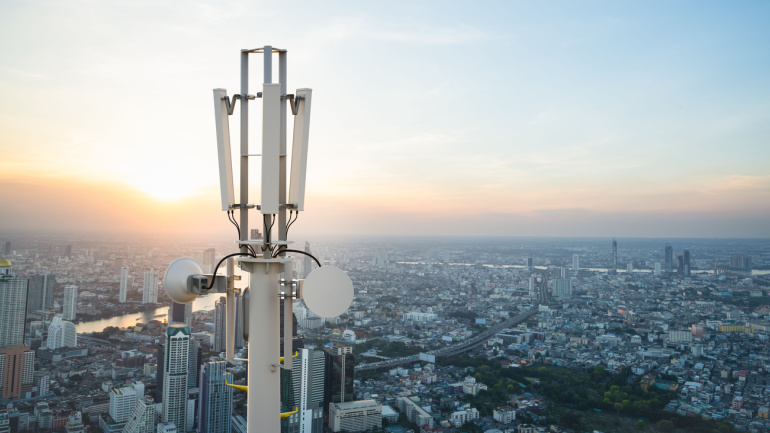
Germany’s Bundeskartellamt investigates Vodafone’s Vantage Towers for potentially obstructing 1&1’s 5G rollout, raising questions on fair competition and business practices in the telecommunications industry.
Verizon’s innovative deal with infrastructure specialist Vertical Bridge promises accelerated 4G and 5G deployment in the US, showcasing a unique tower leasing model that fosters collaboration and transforms mobile tower management.
BT putting its digital voice service rollout on halt Last year, BT began rolling out Digital Voice, which is a VoIP solution that works over the company’s broadband network rather than the old analogue network, as the name implies. This service is an essential improvement, as BT points out, to replace analogue technology, which is rapidly becoming outmoded. The operator is, however, delaying the Digital Voice switchover for consumers who do not wish to switch right away. BT did not specify how long the halt will occur, nonetheless, it is confident that the switchover will take place soon. Read more at: https://tinyurl.com/mt23py8u DigitalBridge enters into mobile infrastructure deal with Telenet Telenet has agreed to sell all of its mobile telecommunications towers in Belgium to DigitalBridge, a US-based real estate investment trust and a subsidiary of the DigitalBridge Group. The investment firm has agreed to pay $820 million for Telenet’s 3,322…
Vodafone and Iliad are in negotiations to merge their respective businesses in Italy. Such a merger would provide advantages for both corporations in one of Europe’s most competitive markets and should be positive for the industry in general. Discussions between the two corporations are ongoing, and both sides are actively looking for ways to connect their separate businesses together in Italy. If the merger is approved, it will create a telecommunications giant with over 36% mobile market penetration and combined sales of nearly $6.80 billion. Vodafone and The Iliad both declined to comment on the negotiations. The talks take place as the local incumbent, Telecom Italia, continues to evaluate a $12.25 billion acquisition offer from US investor KKR aimed at taking Italy’s largest phone business private. Industry leaders have frequently recommended the pursuit of four-to-three telecom mergers, which may generate cost synergies and boost margins by reducing…
Google and Intel team up on 5G and edge network solutions Google Cloud has announced that it is working with Intel to establish reference architectures and integrated solutions for communications providers to help them deploy 5G and edge network solutions. To achieve the cloud native 5G goals, the partnership encompasses a full suite of telecommunications, along with application providers, carriers and communications service providers, hardware vendors and global telecommunications networks, with the goal of the cost and time to market required by the telecommunications industry. Intel is already the most powerful participant in the data center hardware market, but is keen to repeat that success with edge infrastructure. Read more at: https://tinyurl.com/34fv5aps Deutsche Telekom tests solar panels to power mobile sites Deutsche Telekom (DT) has announced that in the second half of 2020, the company was testing the use of solar panels to power its mobile infrastructure. In a new…
Tele2 and Nokia to provide SA 5G core network Tele2 has partnered with Nokia to provide its domestic market with a standalone (SA) 5G core network prior to the country’s spectrum auction, which prohibits operators from using ZTE or Huawei infrastructure. Nokia’s triumph over Ericsson’s comes as the company undergoes a comprehensive restructuring in order to focus on key business areas and get back in the global 5G retail market. The operators stated that the contract also covers the installation of the SA 5G core and the facilities for the transmission of voice-over-5G in Latvia, Lithuania and Estonia. The deployment of the infrastructure is expected to start later in 2021. Read more at: https://tinyurl.com/y5pxfu4l Telefónica has agreed to sell its tower portfolio The Spanish telecommunication giant Telefónica has come to the decision to sell its tower portfolio in Europe and Latin America to passive infrastructure specialist American Tower for €7.7…
Cellnex Telecom, a Spanish wireless telecommunications infrastructure and services company, and Everynet, a leading LPWA pioneer and network operator, have signed an agreement to deploy IoT networks in Italy, the UK and Ireland based on LoRaWAN technology. The IoT networks will utilize the Cellnex infrastructure in these three countries, and will be dependent on the Everynet network solution. Cellnex not only provides towers, but also has its own IoT management platform. For data collection, Cellnex will provide an integrated IoT platform for real-time management and diagnostics, and the platform also includes the ability to immediately act predictively or preventively, manually or automatically. In addition, Everynet will be responsible for providing and managing the LoRaWAN network infrastructure. Both companies have stated the network will be available for a wide range of IoT devices and use-cases, including industry 4.0 services for asset tracking or monitoring, as well as smart cities…
5G has been a target of conspiracy theorists for as long as it has been around, just as with 4G and 3G before it. It is not the first time, and it will not be the last, that technological progress has caused fear generated by uncertainty about the risks of new technology. The remarkably disruptive COVID-19 pandemic, which has coincided with the worldwide introduction of 5G, the latest standard in wireless networking technology, has exacerbated the situation. People have begun to link 5G to COVID-19 in various ways, saying that the technology weakens the immune system, that it is responsible for the direct transmission of the virus, or that the lockdown is a cover-up for deploying even more 5G towers. Let us take a look at some of the theories out there. 5G is the cause of COVID-19 Back in March of 2020, a video of a US…