Swedish telecom giant, Ericsson, navigates uncertain market conditions as shares nosedive due to less-than-stellar sales and the aftermath of Vonage acquisition. CEO Börje Ekholm’s outlook paints a cautious but proactive stance into 2024, with reiteration that long-term EBITA margin targets remain unaltered. Despite this, debates swirl around the company’s decision to acquire Vonage and its impact on the downturn. Could potential partnerships and strategic moves towards Open RAN and Cloud RAN be the missing puzzle pieces to Ericsson’s comeback?

Telecommunication giant BT, in collaboration with Nokia and MediaTek, is exploring the potential of 5G Reduced Capability (RedCap) for Internet of Things (IoT) applications. Recently conducted trials at BT’s research centre aimed at uncovering new use-cases for this technology, which, simplified and less complex than 4G, promises a more efficient IoT ecosystem. As suggested by BT’s Chief Networks Officer, Greg McCall, the RedCap technology could “unlock a new wave of innovation” within the 5G landscape.
Nokia takes a significant leap in telecom landscape with a unique Cloud RAN trial, persistently striving to achieve parity between Cloud RAN and purpose-built RAN. This strategic move, involving Elisa, explores In-Line acceleration potential, positioning Nokia in a subtle competition with Ericsson’s ‘Look-Aside’ approach. The latter’s reticence adds intrigue to this telecommunication rivalry. However, will Nokia’s In-Line strategy prove to be the more efficient route?
VoIP readiness assessment is vital for cost-effective business communication. Define objectives, assess costs, scalability, integration, infrastructure, equipment, security, and training. Pilot testing and vendor selection are key. Develop a migration plan for a smooth transition, resulting in enhanced communication, productivity, and cost savings.
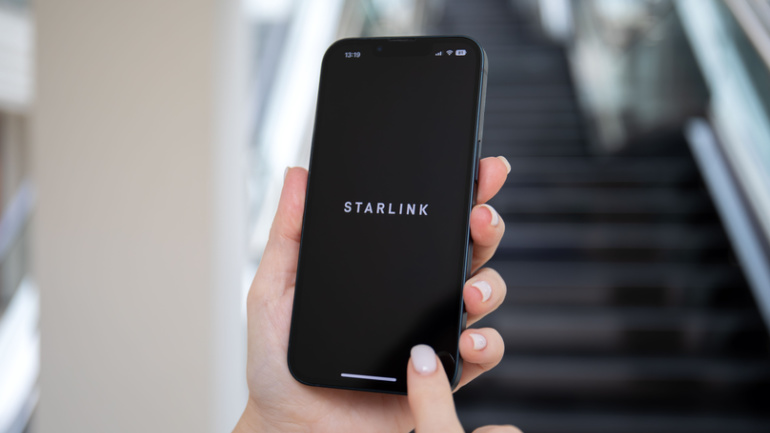
Intriguingly, SpaceX’s Starlink offers an innovative Direct to Cell feature allowing existing LTE phones to function even in remote locations – a potential boon for those often out of terrestrial coverage. With a rollout plan targeting texts by 2024, and full voice, data, and IoT compatibility by 2025, Starlink seems poised for a breakthrough. While the proposition seems formidable, concerns around possible limitations of Starlink’s proprietary technology remind us advantages of relying on industry best practices. Without disclosed pricing details, we can only anticipate how this venture will fare against other satellite connectivity contenders.
Huawei champions the development of 5.5G technology, anticipating significant steps in network infrastructure. Advocating for evolution and readiness, Huawei focuses on 5G-Advanced as a cornerstone of future telecom progression. However, global implementation poses challenges, with promising 5G speeds needing considerable network densification and negative trends in capital expenditure. As such, Huawei and other vendors are pivoting to cater to the enterprise market, favouring an immersive approach in changing market needs, instead of simply relying on network infrastructure investment.
As the Competition and Markets Authority gears up for an official investigation about the planned merger between Vodafone and Three, concerns such as reduced consumer choices, price hikes, and changing market dynamics are cropping up. Simultaneously, anticipation builds over potential improvements and expansive opportunities the merger might usher in for the UK’s mobile network scene.
DIDWW, a global provider of premium quality VoIP communications, two-way SIP trunking and SMS services for businesses and telco carriers, has established its new Point of Presence (POP) in Amsterdam. This latest addition is now ready to deliver robust performance, efficiently handling customer voice traffic and ensuring enhanced connectivity.
As Malaysia deliberates on Huawei’s engagement in their projected second 5G network, international eyebrows are raised. Clamor for transparency grows louder as the telecom world anticipates waves of change from this decision’s rippling effects.
Colt Technology Services’ Annual Digital Infrastructure report reveals growing business prospects for partners, especially in AI-compatible tech like 5G, agile connectivity, and edge. Amid global uncertainty, there’s a solid market for partners providing consumption-based networks. However, tensions exist between IT chiefs and partners over integration and lack of APIs. This study highlights the evolving role of partners, suggesting this could be an opportune moment to overcome challenges and embrace the digital revolution progress.