VoIP and UCaaS projects often stall not from poor collaboration, but unclear ownership. When network, security, finance, and vendors share responsibility without one accountable leader, migrations slow and risks grow. Discover why enterprise communications success depends on clear decision rights, smarter handoffs, and accountability beyond meetings, tools, or AI workflows

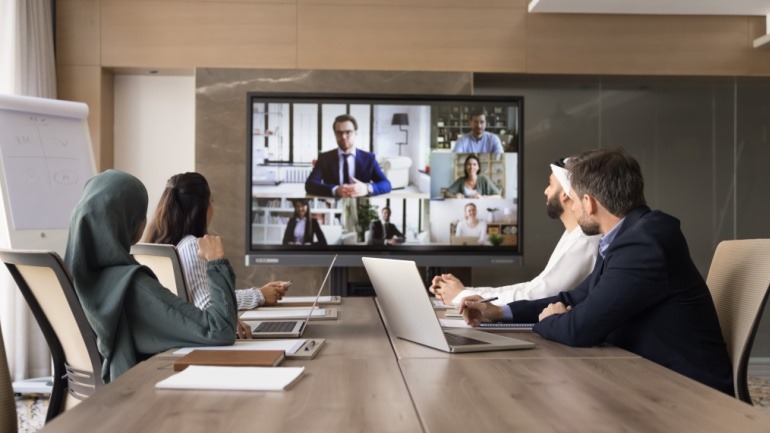
AI-powered meeting rooms are reshaping VoIP, unified communications, and hybrid collaboration. Smart cameras, beamforming microphones, transcription, and workflow automation help remote teams engage more naturally. But enterprises must balance better audio, speaker attribution, privacy, and trust to unlock reliable, intelligent meeting experiences across modern workplace communication platforms and VoIP systems.
Anthropic’s Claude Tag for Slack brings AI-powered collaboration into team channels, helping VoIP and unified communications teams assign tasks, capture project context, and automate follow-ups. With shared memory, admin controls, and asynchronous execution, Claude could reshape enterprise communications workflows while raising new questions about security, costs, vendor lock-in risks.
Vodafone Germany is strengthening its telecom turnaround as CEO Marcel de Groot secures a three-year extension and Michael Bird joins as finance chief. With broadband ARPU rising but customers declining, the operator’s value-focused strategy will shape mobile, broadband, and VoIP service growth in Europe’s most critical communications market this year.
Meeting room interoperability is reshaping enterprise VoIP communications as Cisco, Zoom, Microsoft, Google and Logitech push beyond closed ecosystems. Businesses now demand video conferencing rooms that join any meeting link, deliver native controls, support AI features and simplify IT management, creating smoother collaboration across Teams, Zoom, Webex and Google Meet.
Smart meeting rooms are reshaping VoIP and UC security as AI cameras, microphones, sensors, and cloud tools become enterprise endpoints. Hybrid workplaces gain productivity, but unmanaged meeting room devices create risks around firmware, data governance, compliance, and network access. IT leaders must secure, monitor, and segment every room system proactively.
Nokia and Google Cloud are bringing Gemini-powered AI agents to Nokia Assurance Center, promising faster VoIP network operations, smarter service assurance, and transparent automation. With triage, anomaly detection, remediation, and human-approved controls, operators could cut outage investigations dramatically while improving reliability for telecom, cloud communications, and enterprise voice services worldwide
Cisco and Zoom are reshaping enterprise VoIP collaboration with native Zoom Rooms on Cisco devices. The launch helps IT teams modernize meeting rooms, improve video conferencing experiences, and unlock AI-powered workplace analytics while preserving premium Cisco hardware. As hybrid work grows, room technology becomes critical communications infrastructure for business calling.
In the evolving landscape of sovereign AI strategies, nations are eagerly harnessing VoIP technologies for enhanced communication efficiencies. As they integrate power, infrastructure, and regulatory controls, countries like France and Japan illustrate varied models of AI advancement. With VoIP’s scalability and cost-effective nature, it becomes indispensable.
The evolving landscape of project management tools is redefining VoIP solutions. Platforms like Slack and Microsoft integrate effectively with popular tools, enhancing collaboration efficiency. Integrating AI within these platforms shows promising potential, as unified communication facilitates task management across various platforms. However, traditional project management tools still offer unmatched functionalities for complex enterprise needs.