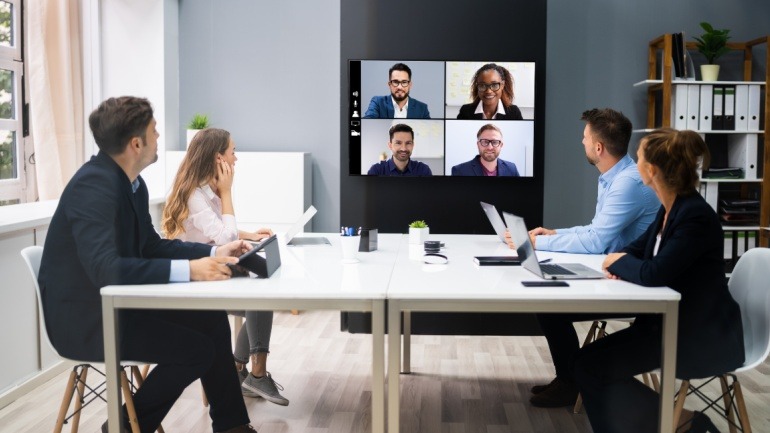
Smart meeting rooms are becoming powerful workplace systems, not simple conferencing spaces.
Cameras follow speakers. Microphone arrays capture every word. Sensors count attendance. AI tools summarize meetings. Cloud portals manage the whole room.
This evolution helps hybrid teams work faster and share richer context. It also creates a new security surface inside enterprise networks.
That shift matters for VoIP, UC, and IT teams. A meeting room now behaves like a group of endpoints. Each device may run firmware, store data, or connect to cloud services.
However, many companies still buy these tools through facilities or AV budgets. Security teams often discover them after deployment. By then, cameras and AI tools may already collect sensitive information.
Richard Huang, CEO and Founder of Reframe Space, described the issue clearly. “Smart meeting room devices are usually bought through facilities or AV budgets, not IT,” Huang says.
AI adds another layer of concern. Meeting summaries, transcripts, and speaker labels can all expose business data. Vendors may promise responsible AI. Yet contracts may not explain model changes, audit rights, or liability.
Julian Gage, Founder of Engage Compliance, highlighted that gap. “That isn’t often true,” Gage adds.
Once deployed, room devices expand the attack surface. A typical room may include a compute bar, camera, microphone, controller, sensor, and sharing system. Each element can create risk if unmanaged.
Wireless presentation devices can be especially exposed. Some rely on older protocols or outdated software. Many rarely appear in normal patching schedules.
Meanwhile, systems such as Microsoft Teams Rooms on Windows are full endpoints. They need monitoring, updates, and access controls. Treating them like appliances leaves avoidable gaps.
Christopher Meyer from Shure framed the challenge around scale and lifecycle management. “You can’t secure what the vendor no longer maintains.”
Firmware management remains another weak point. Devices can work perfectly while running unsupported firmware. That makes them invisible risks in boardrooms and meeting spaces.
Jennifer Williams of Secarma puts it plainly. “A meeting room device can still work perfectly while being a security problem.”
Data governance also needs sharper attention. Recordings may move into SharePoint or cloud storage. AI transcripts may include legal, financial, or health information. Occupancy sensors may create employee monitoring records.
This creates compliance pressure for regulated sectors. Financial services, healthcare, legal, and government teams must map these data flows. Rules like DORA and the EU AI Act will strengthen expectations.
The answer starts with clear ownership. IT should govern room systems with AV support. Every device needs inventory records, patch status, credentials, and replacement dates.
Network segmentation also offers strong protection. Room devices should sit on dedicated networks with restricted outbound access. Teams should monitor unusual traffic and retire unsupported hardware.
Finally, users deserve transparency. Meeting participants should know when AI, recording, or listening features are active. Trust depends on visible controls, not hidden policies.
Smart rooms can improve collaboration greatly. Yet they demand the same discipline as any critical endpoint estate. For UC leaders, that responsibility has now entered the room.