Few have contributed as greatly to the open-source world of VoIP and telecommunications as Mark Spencer. Faced with financial obstacles, he did what any good leader would and built his own solution that has since then benefitted businesses around the world. His open-source framework Asterisk has been able to disrupt the status quo of PBX or Private Branch Exchange, systems while giving business owners a way to inexpensively manage their telecommunications. Education and Beginnings Mark Spencer wasn’t a man who came out of nowhere and built this innovative program. He was enrolled at Auburn University as a computer engineer when the entrepreneurial spirit first hit him. While still a student and finishing up his degree, Spencer decided it was time to put his education to the test and found his own business. This culminated in Linux Support Systems, a company started in 1999 with the original aim of supplying Linux support…

Call centers are at the front line of customer service and are expected to run at peak efficiency while maintaining a high call volume. There are many challenges in managing and operating a call center, one of them being securing inbound calling services that meet both current and future needs. Voice support serves as the backbone for the call center, and it is short-sighted for a brand to risk their reputation by exposing consumers to a substandard voice product. Management is constantly concerned with basic communication issues. Are callers getting a busy signal? Are calls being dropped? Is the voice quality satisfactory? At the same time, the concurrent call requirements have to be managed, to ensure sufficient capacity without wasting money on excess channels. Furthermore, in recent years, organizations have seen their customer base contact them not only through more media channels but also from diverse locations around the globe.…
Well-designed software and plentiful features are essential to having the best softphone: effective and useful. This is especially true of the user interface (UI), where all the necessary functions must be displayed front and center, smoothly integrating voice operations with the workflow processes. In many cases, the softphone is designed to resemble a traditional telephone, with a display panel and buttons for user control, very much like a standard phone interface. Over and above the importance of the user interface, there are a number of factors to consider when choosing the right product. We will discuss these factors in order to assist you in making an informed decision in selecting the best softphone. Cost There is a wide range of both free and paid softphones. In many cases, vendors offer a free, limited-feature version of their paid products. If you wish to use the free version, then you should carefully evaluate this…
Most businesses today have several incoming telephone numbers, each one used for a different purpose or department such as customer service, sales, marketing etc. Some companies even have the ability to assign a personal phone number to each employee without requiring multiple physical phone lines, making it possible for telephone traffic to be split up and managed more easily. This powerful framework is only achievable using Direct Inward Dialling (DID). DID, also known in Europe as DDI (Direct Dial-in), is a service offered by telephone companies, that allows organizations, who operate a private branch exchange (PBX) system, to have multiple telephone numbers lines connected to one or more analog or digital physical circuits to their PBX. The system sends the dialed telephone number to the PBX so that an outside caller can have direct access to the PBX extension, possibly avoiding an auto-attendant. In a business with DID, the telephone…
“This call may be monitored and recorded for record-keeping, training and quality-assurance purposes,” is a message that probably all of us have heard before when calling a contact center. But once an agent answers the phone, we immediately forget that we are being recorded, after all, we will most likely never hear that call recording. For the Contact Center, on the other hand, that recording is extremely useful. It allows business to collect and analyze a set of data that enables them to improve and optimize their service. However, there is much more to call recording than the eyes can meet. Steve Kaiser, Co-founder and CEO of OrecX Open Source Recording, shows us that it is not only a great feature available thanks to Business VoIP and the Cloud, but a powerful tool to boost your business. Why do businesses use call recording? Businesses are aware that nowadays customer experience…
Since VoIP (Voice over Internet Protocol) technology has been commercially available, most of the marketing and promotion surrounding its features have been aimed at front-office staff and managers. However, back-office workers also greatly benefit from the VoIP business system, and although it’s not often stressed, it is also a solid selling point for VoIP. Back-office workers are the network engineers who design, install, support and maintain information-technology environments inside a business. So what exactly are the benefits for them and how do these advantages contribute to their efficiency and that of the business? Design Advantages When moving into a new facility the first thing technology engineers consider is the cable plant design. VoIP technology offers many options when designing and budgeting the process, such as letting you run one line to the phone. With a computer jack plugged in the VoIP phone, the connection to the computer is established, effectively reducing…
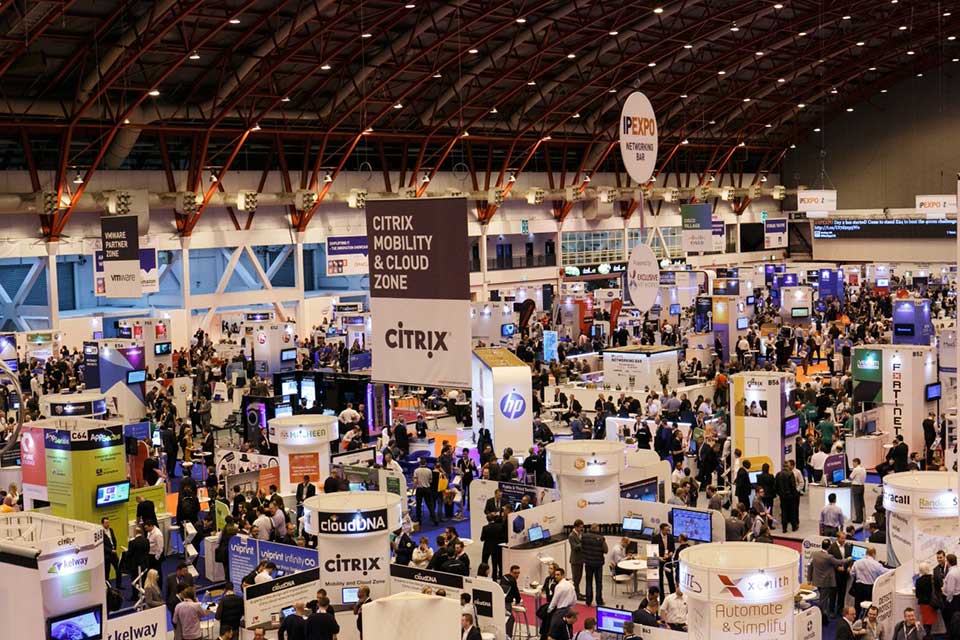
The 2017 IP EXPO Europe was the greatest IT conference of the year for CIOs, heads of IT, security specialists, heads of insight, tech experts and organizations looking to innovate and evolve through technology. Focusing on six IT themes, the event’s 12th edition brought together more than 300 exhibitors from different parts of the technology sector and 300 free seminar sessions at ExCel in London on 4 and 5 of October. Across both days, Artificial Intelligence (AI) was the main topic of discussion, with Stuart Russell, Professor of Electrical Engineering and Computer Sciences at UC Berkley and AI-pioneer providing powerful insights on the reality of AI and whether or not we, as humans, should be concerned about its evolution. “It seems very likely that at some point we will have machines that are more intelligent than human beings,” said Professor Russell in one of his presentations. However, AI wasn’t the…