The satellite broadband race delivered two very different signals over the weekend. SpaceX moved closer to reusable heavy-lift launches with Starship. Meanwhile, Amazon Leo lost 40 satellites after a Vulcan launch anomaly.
The contrast matters for telecom operators and broadband planners. Low-Earth orbit networks need frequent, reliable, and affordable launches. Without that capacity, service timelines can slip quickly.
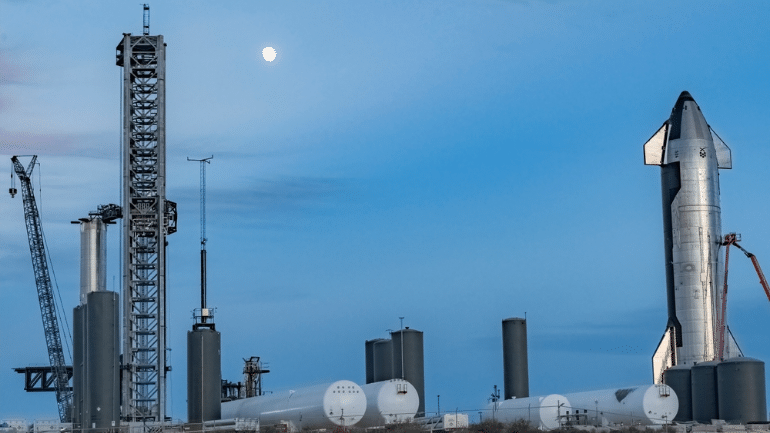
SpaceX achieved its first catch of Starship’s upper-stage “Ship” vehicle. The rocket returned to Starbase in Texas after nearly one day in orbit. It then moved into the arms of the Mechazilla landing tower.
The mission also deployed 26 high-capacity V3 Starlink satellites. These satellites support higher speeds and more network capacity. That matters as satellite broadband becomes more competitive with fixed networks.
“We caught Starship. Now, everything changes,” said Dan Huot, SpaceX’s communications manager.
Still, the mission did not meet every target. SpaceX planned a “double catch” involving both rocket stages. The Super Heavy booster instead landed in the Gulf of Mexico. Elon Musk said it was “slightly low on fuel.”
Even so, the upper-stage catch marks a major technical step. Reusing the upper stage remains harder than reusing boosters. If SpaceX shortens refurbishment time, launch economics could change sharply.
That could accelerate large satellite constellations for broadband and AI services. It could also support future lunar and Mars missions. However, repeated success still matters more than one milestone.
On the other side, Amazon Leo suffered a serious deployment delay. A ULA Vulcan rocket hit an anomaly about ten minutes after launch. The failure destroyed 40 satellites assigned to Amazon’s constellation.
Amazon Leo had planned initial commercial service later this year. The company already operates just under 400 LEO satellites. It also has thousands of customer terminals ready for use.
The problem increases pressure on ULA’s Vulcan program. Amazon has booked 38 Vulcan launches for nearly 1,500 satellites. That represents almost half of its planned network.
ULA said it will analyze mission data and identify the cause. “We will work closely with our customer and other appropriate organizations to find the cause, determine the appropriate corrective action, and return to flight as quickly as possible,” ULA said.
Before launch, ULA executive Chris Ellerhorst also noted the risk. “all missions carry some level of risk. That’s especially true for inaugural missions.”
For the wider telecom sector, the message is clear. Satellite broadband depends on launch reliability as much as spacecraft design. SpaceX now looks stronger in that equation.
However, market concentration brings its own questions. If SpaceX dominates launch supply, competitors may face difficult choices. Regulators may also examine access, pricing, and fair competition.
For now, Starship’s catch strengthens SpaceX’s momentum. Amazon Leo must recover confidence in its launch roadmap. The race for orbital broadband has become faster, riskier, and more strategic.