KT Corp aims to generate $773.1 million by 2025 from AI-based services, investing $5.4 billion by 2027. Focusing on robotics, healthcare, and education, their AI improvements include AI contact centers, logistics services, customized care plans, and the AI Food Tag, emphasizing the company’s innovative approach.
Nokia and Iceye are advancing sovereign satellite connectivity for Ukraine, strengthening secure military communications and resilient telecom infrastructure beyond Starlink dependence. The move reflects rising demand for protected VoIP networks, low-Earth orbit communications, subsea cable security, fiber innovation, and next-generation connectivity across governments, operators, and critical digital infrastructure worldwide today.
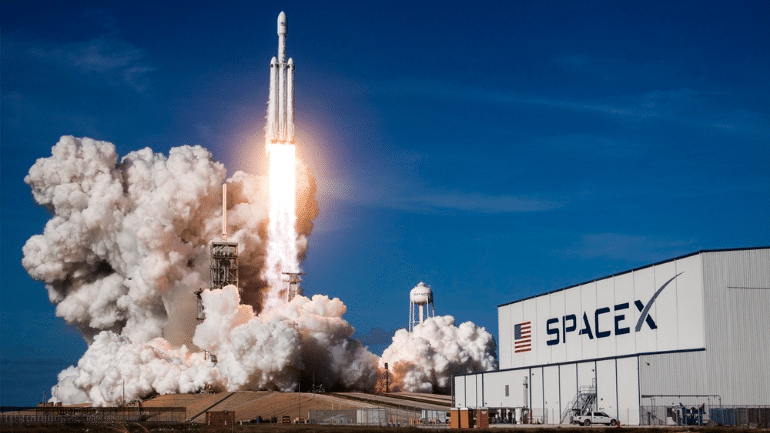
SpaceX’s Starlink Mobile plan could disrupt telecom and VoIP connectivity by combining satellite coverage, tower access and lowband spectrum. With talks targeting 80,000 US mobile sites, the strategy may reshape wireless networks, MVNO partnerships and VoIP reliability as demand from AI, cars and connected devices accelerates nationwide over coming years
UK plans tougher penalties for attacks on subsea cables and pipelines, strengthening protection for the infrastructure carrying VoIP, cloud, banking, and enterprise traffic. With prison terms, unlimited fines, and new operator duties proposed, telecom providers face higher security expectations as undersea networks become central to national resilience and digital communications.
Nokia’s AI infrastructure surge is reshaping VoIP, IP networking, and cloud communications demand as data centers accelerate optical investments. With Infinera boosting capacity and AI-RAN plans targeting 5G and 6G, Nokia’s growth looks powerful, but chip shortages, margins, and commercial execution will determine whether momentum becomes long-term telecom success ahead.
Europe’s satellite connectivity battle is heating up as SpaceX and Starlink target mobile spectrum for direct-to-device services reshaping VoIP, cloud communications, and telecom competition. European operators are racing to build alternatives, while AI networks, 5G sensing, and tower sharing redefine connectivity strategy for businesses, providers, and policymakers across Europe today.
Zayo is expanding fiber cautiously as AI workloads, cloud growth, and data center demand reshape telecom infrastructure. With Nvidia and Corning deals, the provider strengthens high-capacity networks vital for VoIP, unified communications, broadband, and cloud connectivity, while balancing permits, supply chains, investment risk, and human-led AI network operations at scale.
Deutsche Telekom is advancing agentic AI for smarter telecom and VoIP network automation, using RAN Guardian and MINDR to predict congestion, optimize capacity, and accelerate incident resolution. By combining radio, core, transport, and service data, the operator aims to improve reliability, reduce downtime, and support scalable autonomous network operations nationwide.
AT&T’s fourth-generation HSAN brings NBA and WNBA arenas a faster fiber-powered digital backbone, supporting low latency video, real-time stats and more than 118 live streams per game. For VoIP and telecom leaders, the upgrade highlights how sports venues demand resilient connectivity for broadcasts, fan engagement, operations and future communications networks
Ericsson defends its custom silicon AI-RAN strategy, showing how operators can boost spectrum efficiency and network capacity using existing baseband hardware. With AI-native link adaptation live across 60,000 base stations, Ericsson says telecom and VoIP networks can gain performance now while keeping future GPU-based deployment options open for service providers