2496 Results

TIM

Search

Development Capital has announced a €6 million investment in Internet Protocol Telecom Limited (IP Telecom), a leading Irish provider of cloud-based voice over internet protocol (VoIP) and unified communications telephony services to SME & Enterprise customers in Ireland. The minority investment will be used to accelerate the company’s organic and acquisitive expansion plans in the business telephony sector, with intention to increase annual revenues from a forecast of €6m in 2023 to €11m in FY2024. The investment in IP Telecom brings Development Capital’s total investments in Irish SME’s to €100m since 2013.

Nokia’s revamped home wifi software suite, now known as Corteca, promises to revolutionize in-home connectivity management and user experience. This holistic solution boasts advanced features like Corteca Cloud for network management and Corteca Device Software for device administration. More intriguing is the upcoming Corteca Marketplace, offering ‘try-before-you-buy’ applications, potentially opening new revenue horizons. Despite the anticipation, the question remains – will this alleviate users’ connectivity woes and truly enhance their in-home broadband experience? Stay tuned as the story unfolds.

Norway’s Telenor pushes forward with a dramatic leadership change aimed at augmenting its growth trajectory in line with its 2025 vision. Notable moves include former Head of Telenor Asia, Jørgen C. Arentz Rostrup, stepping in as Head of Telenor Nordics, while his predecessor Petter-Børre Furberg takes over his former position. Google Cloud’s ex-head of telecoms, Amol Phadke, also joins the team as EVP and group CTO, with a focus on technology transformation.

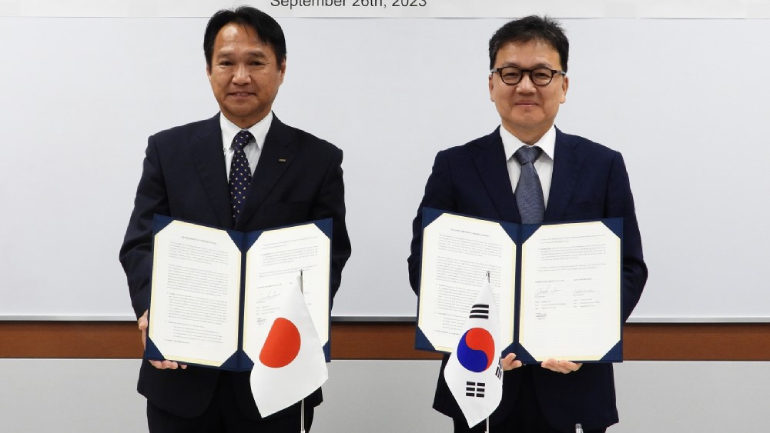
SK Telecom’s recent interest in burgeoning AI companies, especially in the AI Contact Center specialist, Persona AI, is undeniable. The partnership aims to revolutionize customer service through AI technology, reducing wait times and providing 24-hour service. However, challenges remain as AI tries to match the human knack for voice recognition and interpretation. SKT and Persona AI also plan to venture into voice recognition kiosks and voice-activated robots, capitalizing on a rapidly growing market.

In the short span since 5G’s inception, one of its most successful applications surprisingly isn’t smartphones, but Fixed Wireless Access (FWA) enhancing home broadband services. Currently dominating 90% of new US broadband subscriptions, this trend sparks intriguing implications. Yet, fiber broadband’s speed and dependability present a formidable challenge, set to increasingly permeate the market aided by ample public funding. Meanwhile, FWA’s flexible and user-friendly nature makes it a robust contender, particularly in areas where fiber is not feasible.

Ericsson, the global telecom giant, has just shattered 5G records, achieving an incredible 5.7Gbps download speed by ingeniously blending three frequency bands. This breakthrough, a result of Ericsson’s advanced hardware, software and RAN coordination, opens a new horizon in performance boost and superior connectivity for 5G users. This latest success cements Ericsson’s spot at the forefront of the race for ultra-high-speed connectivity, even as competitors also explore the potential of carrier aggregation.

Deutsche Telekom and Google venture into tablet manufacturing, pinning their hopes on the affordable “T Tablet”. Designed for digital learning, this device blends advanced hardware, potent software, and network capabilities. Aiming at a wider 5G access, it also targets narrowing the digital divide. The tablet’s debut could spark new conversations about digitization in the education sector and beyond.