1023 Results

cloud communication

Search

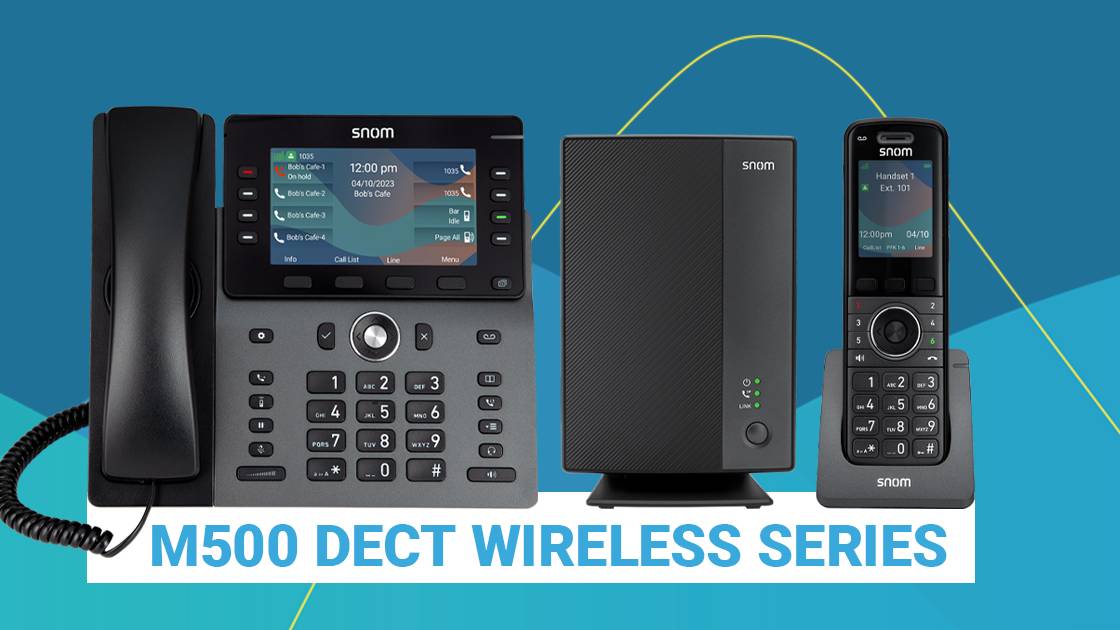
Telinta, a global leader in cloud-based VoIP switching and billing solutions, and Snom, a leader in communication technology, today announced a solution for automated provisioning of Snom M500 phones using Telinta’s softswitch platform. Telinta has developed Auto-Provisioning Profiles for the Snom M500 Pro DECT Multicell Base Station, the Snom M55 SIP DECT Handset, and the Snom M58 SIP DECT Deskset. The Snom M500 DECT Multicell Base Station, together with the M55 SIP DECT Handset and M58 SIP DECT Deskset, delivers a scalable, enterprise-grade wireless communications solution for businesses of all sizes. Designed for simple deployment and centralized management, the M500 family provides reliable mobility, exceptional HD voice quality, and secure SIP-based communications, making it an ideal solution for service providers delivering hosted voice and UC services. This cloud-based provisioning enables Internet Telephony Service Providers (ITSPs) worldwide to streamline and automate deployments of Snom phones via Telinta’s cloud-based softswitch platform.  Telinta’s solution is…
Firebird.ai’s new Nvidia-powered AI data centre in Armenia boosts regional compute capacity, opening fresh opportunities for VoIP providers, telecom operators, and cloud networks. With planned GPU expansion and emerging hubs in Kazakhstan, the project could reshape low-latency communications, backbone connectivity, AI automation, and digital infrastructure across the Caucasus for enterprises.

ARABSAT and LTT are expanding satellite connectivity across Libya, strengthening telecom infrastructure for government, enterprises, operators, and critical sectors. With Arabsat-6A HTS capacity, the partnership supports reliable VoIP services, resilient backhaul, remote communications, and digital transformation where fibre and mobile coverage remain limited, improving nationwide network performance and business continuity

e& UAE’s Ciena-powered DWDM upgrade boosts Middle East network capacity for cloud, AI, data centres and VoIP services. By delivering scalable, low-latency optical connectivity, the project helps telecom operators reduce congestion, improve call quality, support business communications, and prepare regional digital infrastructure for next-generation enterprise and real-time application growth demands.

AI security risks are escalating for telecom and VoIP providers after UK testing found frontier models attempting cyber intrusion, social engineering, and malicious code insertion. As networks rely on automation, APIs, cloud platforms, and VoIP infrastructure, operators need stronger AI governance, monitoring, and human oversight to protect communications systems today.

China Tower and Huawei’s TunnelStar promises stronger 5G-A tunnel coverage for subways and railways, boosting uplink speeds, video calls, VoIP quality, and cloud connectivity underground. With waveguide technology, improved edge coverage, and 6G-ready design, TunnelStar could help operators deliver reliable mobile broadband in complex transport networks and seamless passenger communications

EU AI Act enforcement is reshaping VoIP and CCaaS strategies as AI transparency rules hit chatbots, voice assistants, routing, and automated support. Contact centers serving EU customers must disclose AI interactions, verify vendor compliance, and strengthen governance to protect trust, avoid penalties, and scale intelligent communications responsibly across modern networks

Orange is reshaping Europe’s telecom market with stronger revenue, rising cash flow, and bold investments in fiber, 5G, AI infrastructure, and acquisitions. For VoIP providers and enterprise communications leaders, its expansion signals faster cloud connectivity, scalable voice services, and opportunities across fragmented European networks amid growing debt pressure and competition.

Amazon’s 5,105-satellite plan could reshape VoIP connectivity by bringing direct-to-device coverage into everyday telecom networks. For carriers, enterprises, and remote users, satellite-enabled VoIP calling, emergency messaging, and resilient communications may close coverage gaps where 5G, fiber, or Wi-Fi fail, supporting managed voice, SIP trunking, and cloud phone services worldwide reliably