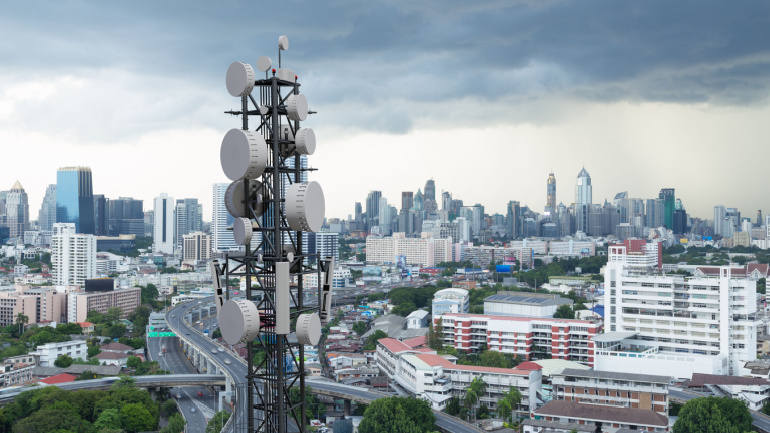
Intelsat’s recent partnership with Telespazio paints a promising image of the future of global network operations. With the inclusion of Telespazio’s premier teleport facility, Fucino space centre, into Intelsat’s network, seamless European connectivity is underway. Moreover, the alliance caters to the growing global demand for managed satellite services, elevating the standard for high-profile sectors, while improving geospatial communication. This precise move highlights the tremendous potential of combining flexible solutions for global positioning.
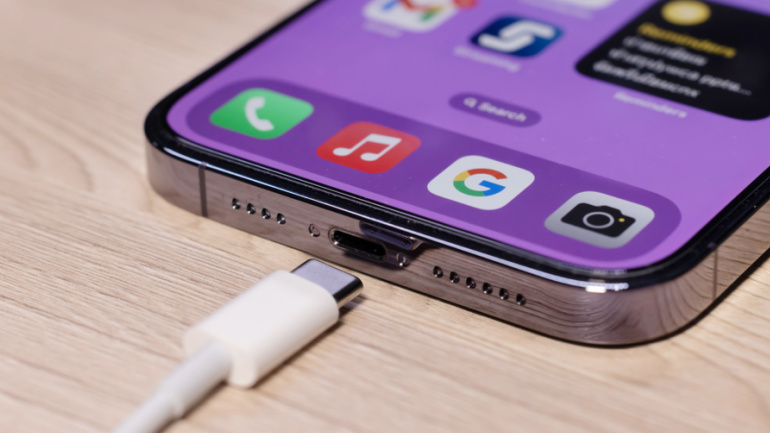
Apple’s recent unveiling of four new iPhone models, with prices starting from £799, highlights the company’s steady stream of innovation. This release has also stirred debate among smartphone enthusiasts questioning the extent of the innovations, especially considering the premium pricing. Despite predicted criticism, Apple maintains its market dominance by committing to incremental upgrades, asserting a commitment to environmental responsibility, and boasting durable, low-bug products.
In a promising move towards transparency, UK’s BT and software giant SAP have joined forces to test SAP’s Sustainability Data Exchange (SDX) – a novel system that captures, tracks and shares data on obscure, indirect emissions, known as Scope 3. Given the numerous entities and different methodologies involved in disclosure, SDX utilizes carbon data interoperability standards to provide a unified portal for monitoring supply chain emissions data, thus streamlining the gathering and dissemination of precise Scope 3 information.
VMO2, a leading UK telecom company, is saying goodbye to 3G services by 2025, focusing on the advancement of 4G and 5G capacities. Though this marks the end of an era, it opens doors for superior technology and remarkable energy efficiencies. What does this imply for consumers and the future of mobile connectivity? Let’s explore.
Deutsche Telekom, in collaboration with AirHop, Juniper Networks, VIAVI Solutions, and VMware, has been testing the waters to leverage telecom technology bound by Open RAN specifications. Treading an intriguing path of innovation, they trialed Non-RT RIC technology by performing a RAN closed-loop optimization proof, embraced by ONAP and Open RAN standards. The journey unfolded two pivotal use case scenarios revolving around PCI optimization and energy-saving dynamics powered by AI and machine learning.
Joining forces to propel Denmark into the 5G age, telecommunications giants Ericsson and TDC NET confront the intricacy of transitioning to Standalone 5G. The venture promises enhanced connectivity, yet its real impact remains under scrutiny. Their collaborative effort hinges not just on operational advancement but also in setting a future-ready network infrastructure with increased energy efficiency and advanced services. However, as TDC NET prepares to navigate this expansive opportunity landscape, it’s essential to question the overall strategic footing of the industry—a fascinating watch for tech aficionados. Stay informed with the Telecoms.com newsletter.
Broadvoice collaborates with tech advisory firm, Bridgepointe Technologies Inc., enabling the latter to offer Broadvoice’s cloud communication services to mid-market clients. OpenAI’s latest release, GPT-3.5 Turbo, can now be fine-tuned by businesses, customizing it for specific tasks. Verizon, Ericsson, and MediaTek’s successful data sessions on Verizon’s 5G network pave the way for cost-effective 5G devices. Versa Networks achieves top scores in Gartner’s SASE report, streamlining security and networking solutions.
Norway’s Telenor pushes forward with a dramatic leadership change aimed at augmenting its growth trajectory in line with its 2025 vision. Notable moves include former Head of Telenor Asia, Jørgen C. Arentz Rostrup, stepping in as Head of Telenor Nordics, while his predecessor Petter-Børre Furberg takes over his former position. Google Cloud’s ex-head of telecoms, Amol Phadke, also joins the team as EVP and group CTO, with a focus on technology transformation.
Intel and Samsung amplify their alliance to revolutionize virtualized Radio Access Network (vRAN) technology. With Intel driving RAN processes into a generalized realm and Samsung narrowing the divide with formidable RAN vendors, vRAN emerges as an attractive alternative to traditional RAN. But will the telecom industry celebrate this technological feat with the same fervor?
Vodafone has joined the UK’s smart meter network, establishing essential 4G IoT connectivity. While Vodafone’s inclusion does not necessarily signify a replacement of current suppliers, it invites intriguing possibilities. The selection of a new provider despite existing 4G options raises questions around the decision-making process. Amid the drive to phase out 2G and 3G networks, this move potentially reflects the evolving needs of the UK’s telecoms infrastructure.