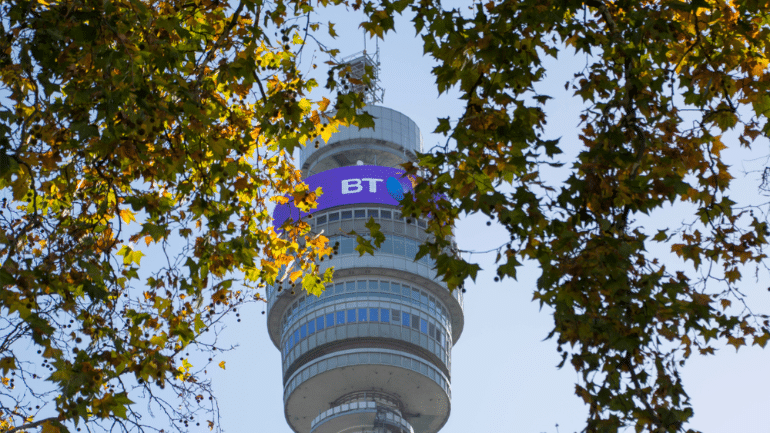
As the world navigates towards an AI-integrated future, the call for reliable connectivity has amplified. The UK’s telecom market, a beacon of global standing, is pivoting towards this demand. Its thrust for seamless connectivity is stimulated by the push for efficient network management and shared infrastructure. Spearheading this transformation is the UK’s transition to fibre optics, aided by the strategic decision to sunset the Public Switched Telephone Network by 2025.

The US government has recently provided clarity regarding foreign equipment purchases under the Broadband Equity, Access and Deployment (BEAD) programme. The emphasis is on minimizing exceptions to ‘buy American’ rules, particularly reflected in the fibre-optic sector. Notwithstanding, one significant provision allows sourcing glass used in fibre optics from overseas. This comes as a relief for firms worried about supply sufficiency and costs. The spotlight of foreign vendors, meanwhile, is potentially electronics, with proposed exemptions including most semiconductors.
The UK’s Advertising Standards Authority recently adjudicated a dispute over the supposed misleading adverts of ISP, 6G Internet. The ASA ruled that the company name erroneously suggested the availability of non-existent 6G services. The decision underlines a recurrent issue of consumer confusion over service offerings in the telecommunications sector. Despite the controversy, 6G Internet has not indicated plans to adjust their brand name, possibly sparking inevitable customer confusion as the prospect of true 6G technology looms nearer.
Gigaclear commits to connecting rural communities in Yorkshire, extending its full fibre network to 16,000 homes and businesses. The move minimizes disruption, using existing Openreach infrastructure, and aims for service availability by year-end.
5G will be available for trial in seven cities across the UK. Birmingham, Bristol, Cardiff, Glasgow, Liverpool, Manchester, and London were selected to run the tests on the upcoming network. Those new infrastructures will be running the new 5G at the end of 2018 between October and December. Earlier this year, Vodafone paid £378 million, to get 50Mhz of the 3.4GHz spectrum. Nick Jeffery, Vodafone’s chief executive stated, “We want to make 5G and new fibre broadband services available to consumers and business throughout the UK, delivering a Gigabit society for all. We will also be bringing ultra-fast 4G to several hundred sites in hard to reach rural areas this year, building on our position as the network that offers the best voice coverage in the UK.” Vodafone’s goal is to launch a full 5G service in the UK by 2020, when 5G devices will be available on the market.
BT’s steady results highlight a shifting VoIP and telecom landscape where legacy voice declines as 5G, fiber broadband, AI-RAN and defense networks gain momentum. From TalkTalk integration risks to Vodafone’s 8 Gbit/s service and GSMA’s 6G warning, operators face growth opportunities shaped by security, spectrum and execution pressures for VoIP markets
Global 5G growth is reshaping VoIP, fixed wireless access, and enterprise connectivity, but standalone 5G adoption still lags. With only 98 operators launching 5G standalone, network slicing, RedCap devices, private wireless, and low latency VoIP services depend on faster core upgrades, broader coverage, and stronger operator investment worldwide for businesses
TalkTalk’s crisis could reshape UK broadband and VoIP services as the provider seeks buyers for its consumer arm and PXC wholesale network. With falling customers, rising debt, cybersecurity concerns and government scrutiny, telecom businesses and VoIP users face uncertainty over connectivity, service continuity, infrastructure resilience and investment across the market
UK mobile infrastructure planning delays threaten 5G, VoIP services, IoT growth, and reliable digital connectivity. Cornerstone warns lost rooftop sites can take years to replace, costing operators millions. Faster approvals, taller masts, and stronger site protection are vital to safeguard national networks and support future cloud, AI, and voice communications.
Nokia and Orange France have trialled optical network tomography, offering telecom operators deeper fibre visibility without extra probes. By detecting degradation, amplifier faults and configuration errors earlier, the technology could improve VoIP service reliability, protect SLAs, reduce outages and support smarter 5G transport networks as traffic demand continues to rise.