2244 Results

infrastructure

Search

In the evolving landscape of sovereign AI strategies, nations are eagerly harnessing VoIP technologies for enhanced communication efficiencies. As they integrate power, infrastructure, and regulatory controls, countries like France and Japan illustrate varied models of AI advancement. With VoIP’s scalability and cost-effective nature, it becomes indispensable.

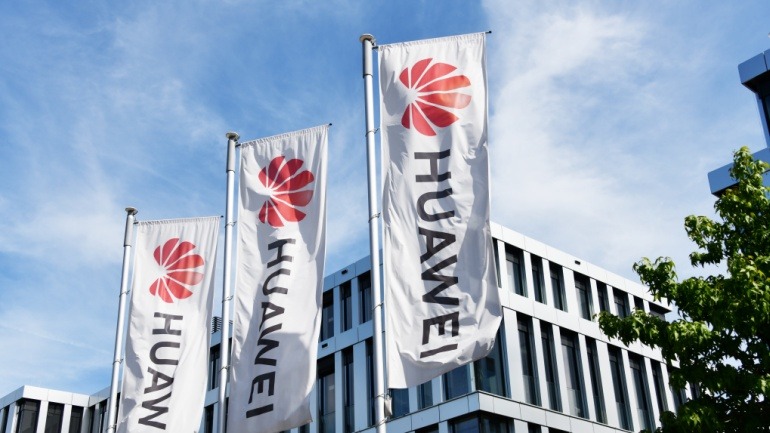
Discover how the partnership between Huawei and Shenzhen Welkin School is leveraging cutting-edge technology to revolutionize education globally. With UNESCO predicting a need for 44 million teachers by 2030, Huawei’s smart education solutions, including interactive whiteboards and high-speed Wi-Fi, aim to bridge the gap, enhancing educational equality worldwide.

The European telecom sector is buzzing with new initiatives aimed at enhancing fiber networks, ensuring VoIP services thrive with improved reliability and performance. As Telenor acquires Enivest and Vodafone enters joint ventures in Greece, the focus remains on minimizing redundancies and boosting efficiency, preparing the ground for advanced VoIP capabilities.

Enterprises are increasingly deploying AI agents, raising security concerns that Zscaler’s latest Zero Trust Exchange updates aim to address. These enhancements prioritize securing AI agents, vital as businesses adopt these technologies rapidly. Zscaler introduces an AI Broker for protected communications and expands AI Protect for robust application protection—critical in today’s fast-paced AI landscape.

Anterix and Lynk Global’s Non-Terrestrial Network (NTN) testing is revolutionizing VoIP communications. By integrating space-based direct-to-device connectivity, they aim to enhance VoIP services, ensuring robust network solutions for critical sectors. Their trials across diverse environments demonstrate the potential of VoIP through NTN, providing resilient, private network infrastructures nationwide.

AT&T is revolutionizing telecommunications, leveraging tokenomics to enhance its Operations Support Systems (OSS) and Business Support Systems (BSS). By streamlining data exchanges with tokens, AT&T optimizes performance, leading to substantial cost savings. This innovative approach not only boosts efficiency but also highlights AI’s transformative role in modern telecom operations.

Ericsson is revolutionizing AI in Radio Access Networks by offering a software-based solution that bypasses the need for costly GPU hardware. This innovative approach promises a cost-effective way for service providers to enhance network performance. Ericsson’s AI in RAN increases downlink throughput, improves spectral efficiency, and doubles high-volume user support, marking significant advancements in 5G networks.

The UK’s strategic investment of £1.1 billion in AI hardware, highlighted by a £750 million supercomputer, aims to revolutionize its AI landscape. By boosting its national compute strategy and nurturing domestic chip startups, the UK positions itself as a key player in the global AI chips market. With contributions from AMD and Nebius, the initiative seeks to strengthen the UK’s AI infrastructure and global competitiveness.

India’s telecommunications sector is at a pivotal juncture with leading operators in a standoff over Vehicle-to-Everything (V2X) spectrum allocation. This vital infrastructure enables seamless communication between vehicles and road infrastructure, enhancing public safety. As TRAI charts a new V2X framework, tensions rise between commercial interests and public safety advocates.