370 Results

smartphone

Search

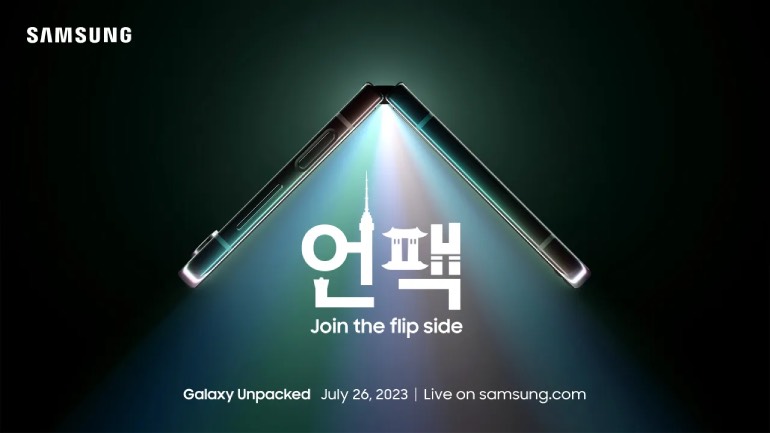
If you’ve ever contemplated making the leap from your trusty flagship phone to a foldable device, Samsung’s latest offering, the Galaxy Z Fold 5, is here to entice you. While it may not be everyone’s cup of tea, the Fold 5 presents significant enhancements that set it apart as a more user-friendly, durable, and productive foldable phone compared to others in the market.

Allot Ltd. is chosen by a major Asian telecom operator to provide Allot DNS Secure, offering cybersecurity threat protection and parental control features to over 50 million customers. Digital Locations unveils technology to connect smartphones worldwide to high-speed Internet from satellites, promising commercial success. Veeam integrates Veeam Backup for Microsoft 365 with Microsoft’s new 365 Backup. Verizon showcases a point-to-multipoint internet solution using mmWave spectrum, reducing costs and complexities. Bridewell’s research warns of environmental challenges amplifying cybersecurity risks for over 80% of U.S. critical infrastructure organizations.

The Biden administration is set to launch a groundbreaking initiative today, introducing a new cybersecurity label for smart devices that aims to bolster security standards and protect consumers from potential threats. Federal Communications Commission (FCC) Chair Jessica Rosenworcel revealed the label, called the US Cyber Trust Mark, during a press briefing. The Cyber Trust Mark will signify that devices bearing it meet stringent security criteria based on the National Institute of Standards and Technology (NIST) report.

Breaking speed boundaries, Ericsson and MediaTek recently achieved an impressive 565 Mbps upload speed within the consumer 5G sector, sparking excitement about the potential of fixed-wireless access (FWA). This feat was made possible through the integration of two of Ericsson’s software features and MediaTek’s T830 chipset for 5G FWA routers. The growing importance of upload speed on multiple applications including online gaming, video streaming, and cloud storage is nudging broadband consumers into creators, underscoring the significance of this development.

Huawei plans a comeback in the smartphone market with new 5G devices using domestic chip supplies. Concerns persist about the quality of these chips and Huawei’s absence from the Android Play Store. CityFibre challenges Openreach with a faster wholesale FTTH service, while Optus collaborates with SpaceX’s Starlink to expand mobile coverage in Australia’s remote areas. Ofcom investigates O2 Virgin Media over customer complaints, and the European Court of Justice rejects a ruling on the Three-O2 merger, adding to the uncertainty in the telecommunications regulatory landscape.

Taking a bold stride in data transfer innovation, the IEEE has sanctioned the 802.11bb standard, also known as LiFi. This game-changing technology uses light waves instead of radio frequencies, virtually turning an LED lightbulb into a data transmission hub. While promising high bandwidth and added security, LiFi does require line-of-sight connections, which may limit its practical applications. Industry leaders see this as more of an adjunct technology to WiFi rather than a direct competitor.

Witness an intriguing experiment as three major European telecom leaders dive headfirst into field-testing the European Union’s digital ID scheme, dubbed ‘Potential’. An initiative that aims to streamline identity verification across 19 EU nations, it brings to our digital life convenience, efficiency, and the promise of enhanced security. However, it’s not without its challenges -potential data leaks, risks of stringent gatekeeping and concerns over invasive surveillance.