Verizon’s latest results highlight strong 5G growth broadband gains and rising AI edge infrastructure demand while challenging SpaceX satellite-to-phone ambitions For VoIP providers the update signals why low-latency fiber fixed wireless spectrum depth and carrier-scale networks remain critical for reliable cloud communications mobile VoIP and future 6G connectivity services worldwide

Nvidia and Nokia are pushing telcos to transform networks into distributed AI infrastructure, bringing edge computing closer to users. For VoIP providers, AI-RAN, fiber, and 5G upgrades could cut latency, improve call quality, and unlock smarter enterprise communications, while operators balance future AI revenue with today’s connectivity demands and growth
AT&T and Verizon are pushing AI deeper into the RAN to improve throughput, spectral efficiency, coverage, and VoIP network performance. Early trials show smarter automation, faster optimization, and better energy use, but operators say AI must prove measurable value before large-scale deployment across 5G radio networks and customer services nationwide
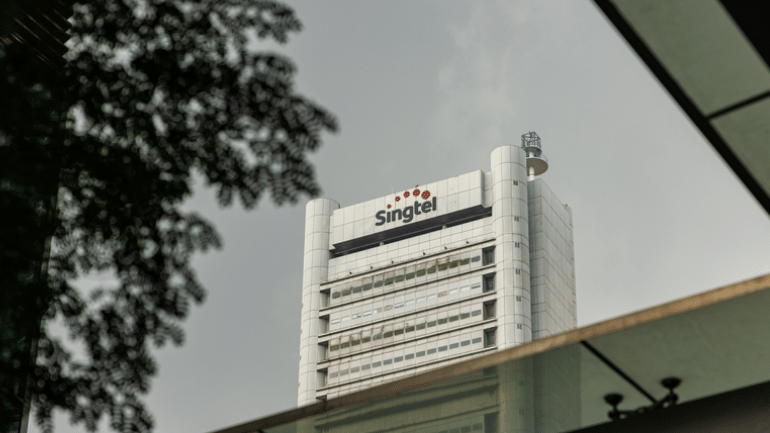
Singtel is positioning quantum-safe networking as a critical telecom and VoIP security migration, not a future theory. With QKD, post-quantum cryptography, Ericsson collaboration, and Singapore’s national initiatives, the operator is preparing carriers, enterprises, cloud platforms, and IoT services for resilient encryption before quantum threats disrupt communications networks and VoIP infrastructure
Vodafone Business is sharpening its enterprise telecom strategy as mobile, IoT, SD-WAN, network slicing, and cloud security reshape VoIP connectivity demand. With millions of business links and growing SME opportunity, the operator must convert 5G innovation into revenue, practical communications solutions, and stronger enterprise market momentum over the next decade.
T-Mobile is using AI to reshape 5G network planning, outage recovery and customer-driven coverage, with implications for VoIP reliability. By analyzing real usage, dropped calls, churn and traffic surges, its AI systems target smarter upgrades, improve resilience during storms and prepare telecom networks for AI-native 6G services and business VoIP
On-demand connectivity is reshaping telecom as IoT, 5G, fiber, and AI-RAN become programmable network services. For VoIP providers and enterprises, software-defined infrastructure promises faster provisioning, smarter automation, stronger control, and scalable global deployments. Yet sustainable VoIP and telecom growth depends on real demand, secure operations, and proven use cases today.
Regional carriers must accelerate 5G standalone upgrades, secure spectrum access, and use AI-driven automation to compete with national networks. For VoIP providers, stronger rural broadband, lower latency, and reliable mobile infrastructure can unlock better voice services, cloud communications, and customer experiences as investment pressure rises ahead of 6G planning cycles.
Regional U.S. carriers are redefining connectivity as mobile, broadband, satellite, and AI infrastructure converge. For VoIP providers, this shift means stronger rural coverage, smarter edge networks, and new fixed wireless opportunities. Fiber-backed towers, satellite gap filling, and AI-ready sites could transform voice, data, UCaaS, and business communications nationwide across markets
Sparklight Carrier Services has upgraded its wholesale ordering platform to speed service delivery for carriers, ISPs, wireless providers, and VoIP networks. With improved automation, order tracking, and location qualification, the platform reduces friction, boosts visibility, and supports faster broadband and voice deployments across middle-mile and last-mile markets nationwide efficiently today.