Verizon used its latest quarterly update to send two clear messages. The operator sees stronger growth ahead. It also rejects the idea that satellite players can cheaply disrupt mobile networks.
The company raised full-year guidance for the third straight quarter. Its adjusted EBITDA rose 8% to $13.8 billion. Operating revenue reached $34.3 billion, up 1.5%. Net income climbed 5.2% to $5.3 billion.
Customer momentum also improved sharply. Verizon added 406,000 postpaid 5G phone customers in the quarter. That marked its strongest third quarter in five years. It also added 314,000 broadband connections across fiber and fixed wireless access.
At the same time, Verizon highlighted lower commercial costs. Acquisition costs fell 41%. Retention costs dropped 30%. Those figures suggest the carrier improved efficiency while defending its base.
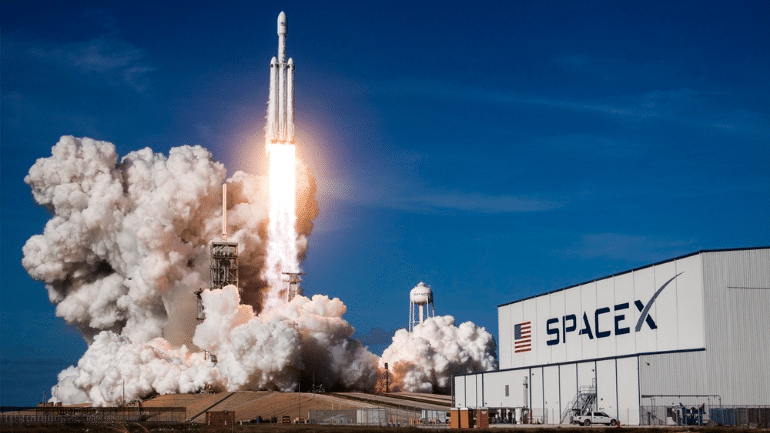
Yet the most pointed remarks focused on SpaceX. Verizon chief executive Dan Schulman argued that a national terrestrial mobile network needs major investment. In his view, satellites alone cannot replace dense ground infrastructure.
“There’s no magic wand. There’s no secret sauce. There’s no shortcut,” Schulman said.
He said SpaceX would need tens of thousands of macro sites. It would also need backhaul, RAN equipment, spectrum, retail systems, and support operations. RAN means the radio access network. It connects phones to the wider mobile core.
Schulman estimated such a build could take four to six years. He also suggested costs could reach $300 billion to $500 billion. That scale would place SpaceX in familiar telecom territory.
This view challenges the market excitement around satellite-to-phone services. Such services can help close coverage gaps. They can also support emergency messaging and remote connectivity. However, they may struggle with dense urban demand and full mobile broadband capacity.
Meanwhile, Verizon is leaning into AI infrastructure as another growth engine. The company signed $4 billion in AI Connect deals within six months. These include dark fiber, lit fiber, and edge-compute locations.
It also signed a deal worth more than $2 billion with AWS. The agreement targets real-time edge AI workloads. Edge computing places processing closer to users and devices. This can reduce delay and improve application performance.
“We will price it as such,” Schulman said about network capacity for AI agents.
Verizon believes AI will increase demand for distributed network assets. Hyperscalers, neocloud firms, and enterprises need low-latency links. Fiber routes and edge sites could gain value as AI moves beyond central data centers.
Looking ahead, Verizon plans to expand gigabit fixed wireless coverage. It also pointed to millimeter wave spectrum as a key advantage. The company holds 1,700 MHz of that high-capacity spectrum.
Schulman added that Verizon is already testing 6G applications. His message was direct. New entrants may arrive, but network economics remain unforgiving. For now, Verizon wants investors to see scale as its strongest defense.