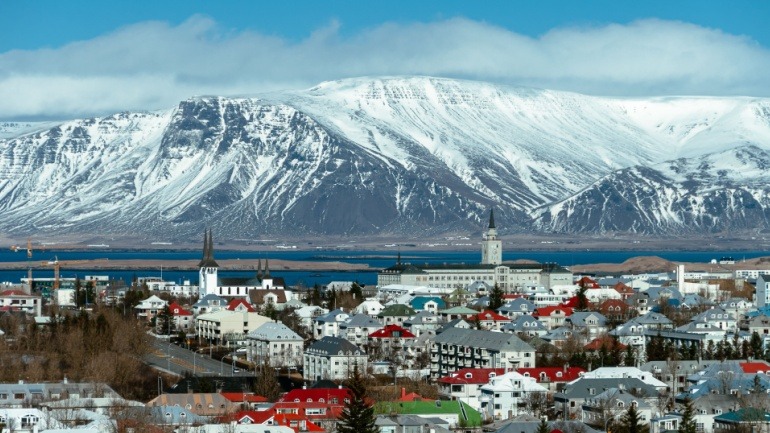
Farice, Iceland’s telecommunications company, is bolstering its infrastructure with the AUÐUR subsea cable, linking Iceland to Scotland. Enhancing VoIP capabilities, this 1,300-kilometer cable promises high-capacity data services, crucial for Nordic regions thriving on data center growth. A pivotal investment for improved VoIP connectivity, it’s set to operationalize by 2030.
EXA Infrastructure sets a new benchmark in digital connectivity by launching the first new North Sea subsea cable in 25 years. This 1,200 km fibre route, including a critical 115 km subsea segment, connects London, Frankfurt, Amsterdam, and Brussels, enhancing Europe’s capabilities.
The AAE 2 subsea cable project, led by PCCW Global, Sparkle, Telecom Egypt, and ZOI, aims to connect Hong Kong, Singapore, and Italy through a mix of terrestrial and underwater routes. Designed to boost global data capacity, it offers strategic expansion potential and reflects the growing international push to enhance telecommunications infrastructure and digital connectivity.
A group of major European telecoms, including Vodafone and Orange, urges urgent EU, UK, and NATO action to protect subsea cables amid rising hybrid threats. Citing recent incidents and geopolitical tensions, the coalition supports enhanced cross-border collaboration and the EU’s Cable Security Action Plan to safeguard Europe’s connectivity.
The E2A transpacific subsea cable promises to revolutionize telecommunications infrastructure, linking Japan and the USA by 2028. Connecting major regions like Taiwan, South Korea, and Japan to the US, this project is backed by telecom giants Chunghwa Telecom, SoftBank, SK Broadband, and Verizon.
Sparkle and Turkcell are revolutionizing internet connectivity with a new 4,000 km subsea cable linking Europe and the Mediterranean. Enhancing capacity to over 25 terabits per second per fiber pair, this collaboration connects Turkey, Greece, and Italy.
Sweden is investigating a potential sabotage of the Cinia C-Lion1 undersea telecom cable. Despite the damage, the link between Finland and Germany remains active.
Meta’s Project Waterworth sets a new benchmark in subsea cable infrastructure, aiming to enhance global connectivity through over 50,000 kilometers of cables. This groundbreaking effort will streamline voip services across continents, crucial for sustaining global communication.
Sweden is investigating the damage to critical subsea cables in the Baltic Sea, urging a Chinese ship, Yi Peng 3, to return for inquiry. The incidents, involving cables linking Sweden, Lithuania, Finland, and Germany, raise concerns over potential sabotage.
Recent submarine cable cuts in the Baltic Sea have raised concerns about deliberate sabotage, affecting vital data pathways from Sweden to Lithuania and Finland to Germany. Operators emphasize the need for increased network redundancy to ensure stable connectivity.