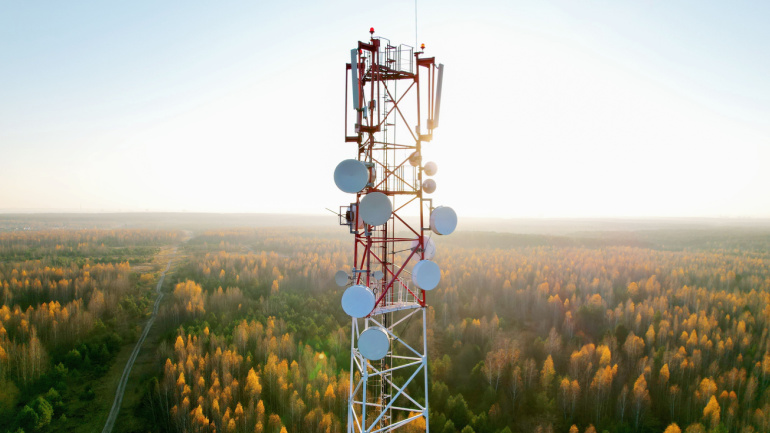
The UK’s Department for Science, Innovation and Technology earmarked £36 million from its budget for 10 regions, highlighting a drive towards 5G innovation. Projects range from enhancing port operations to supporting advanced manufacturing and boosting tourism. However, an interesting aspect to note is the unique applications, including agricultural advancements in Sussex and the creation of 5G science parks in Oxfordshire.

An enthusiastic exploration of advancing telecommunication technologies, particularly 5G and its bigger sibling, 5.5G, was recently exhibited by Huawei’s Antenna Business Unit President, Eric Zhao. Eric emphasizes how competent R&D pursuits are imperative to propel antenna performance, a critical aspect in 5.5G proliferation. He highlights the enhancement of user experience, operational efficiency and service extension as key objectives. Moreover, Huawei’s strides in working towards the goals of unrestricted deployment, zero signal loss, and ‘zero touch’ O&M demonstrate their ambition. Yet, the journey towards these ambitious targets is far from over.
As 5G Fixed Wireless Access (FWA) evolves with its next phase, 5G Advanced, worldwide research indicates growth and potential for higher speeds and reduced latency. The Middle East currently showcases impressive progress with over 1.6 million 5G FWA users. Yet, debates exist over its future, exploring whether 5G FWA will remain an affordable alternative to fixed broadband or tap into its speed for new applications. Moreover, cost is a concern for Customer Premises Equipment (CPE) devices, considered a current hurdle in advancing 5G FWA.
Stepping into the spotlight, Ericsson unveils a software toolkit aimed at enhancing 5G connectivity services. Harnessing fresh algorithms to optimize performance, modifying RAN slicing for faster service, and promising superior low-latency capabilities, this toolkit is a game-changer. Despite the off-pulse struggle to unlock 5G potential, this toolkit is deemed as a catalyst for transitioning from ‘best-effort’ broadband to premium experience. Yet, the question remains: Will consumers bite? In this backdrop, Network X, a collaboration with the wireline and cloud industries, promises insightful stories and strategies, marking a critical date for telecom enthusiasts.
The implementation of 5G and 5.5G continues to hit roadblocks for mobile network operators – from an overwhelming number of O&M alarms to growing energy usage. Striking a balance between enhanced user experience and energy efficiency becomes crucial. Furthermore, the substantial financial expenditure for service provisioning underscores the need for attracting high-value customers. As the industry clarity grows on evolving towards autonomous networks, the two standout levels are L3 – a process that enhances efficiency, and L4 – that takes O&M to a proactive level with preventive tactics. Huawei’s solutions in this field focus on syncing optimal energy efficiency with ideal service experience. Interestingly, Huawei’s collaboration with a German operator led to the introduction of a premium package, further opening doors to business growth.
At the Global Mobile Broadband Forum 2023, Ken Hu of Huawei underscored the impressive growth of 5G networks worldwide, signaling a transformative shift. With 260 5G networks serving almost half the global population, 5G is identified as the catalyst of synergistic growth in the B2B market. However, realization of its full potential will base on consistent network investment, as reiterated by Bruce Lam—CEO, Consumer, at Hong Kong Telecommunications.
Huawei champions the development of 5.5G technology, anticipating significant steps in network infrastructure. Advocating for evolution and readiness, Huawei focuses on 5G-Advanced as a cornerstone of future telecom progression. However, global implementation poses challenges, with promising 5G speeds needing considerable network densification and negative trends in capital expenditure. As such, Huawei and other vendors are pivoting to cater to the enterprise market, favouring an immersive approach in changing market needs, instead of simply relying on network infrastructure investment.
An ambitious €1 billion initiative is underway in Spain to narrow down the digital divide in rural areas, spearheaded by the Ministry of Economic Affairs and Digital Transformation. The project focuses on escalating the presence of 5G technology, committing an impressive €544 million towards standalone deployments. Aimed at areas unlikely to be targeted by private sector network deployments, it accentuates the government’s determination to extend tech revolutions to the unserved regions. With potential applications to various sectors, Spain’s pathway to complete 5G integration could serve as an inspirational model for others in this era of digital transformation.
Amazon’s Project Kuiper, which birthed two prototype satellites aimed to test potential satellite broadband service, operates similarly to Space-X’s Starlink and OneWeb. The venture is set to increase internet connectivity in remote areas using an extensive satellite constellation. Still, the delay in launching has welcomed accumulating competition. Rabid advancements by competitors including satellite direct-to-device technology pioneers and those concentrating on 5G NTN IoT services could tilt the scales. Would adopting the 5G NTN-compatible network give Project Kuiper a competitive edge? Or will the ongoing innovations by industry leaders overshadow it? However, underlying operational challenges and time constraints might hamper Amazon from contemplating a substantial shift in direction.
China’s immense 5G market pulses with new additions, logging nearly 17 million subscribers in August as migrations to advanced telecommunications networks grow. Still, this uptake signifies a dampening speed, attributed to the top trio: China Mobile, China Unicom and China Telecom, seeing a fall in new users compared to prior months. Abstract figures of network utilization and the quality of reception, however, leave much to be unraveled. The niche player, China Broadnet, despite a recent debut, experiences stiff competition, highlighting the difficulty of penetration amidst dominant forces.