Despite a minor dip in its median download speed, T-Mobile continues to reign in mobile performance. However, Verizon and AT&T are gradually closing the gap, as reflected in Ookla’s recent market report. Nonetheless, T-Mobile remains dominant, not only in download speed but across most network parameters. The race is particularly close in 5G latency and consistency, where all three telecom giants exhibit competitive performance. Stay tuned as these corporate titans strive to have the final say in technological supremacy.

NAVIGATE, part of the UK’s ONE competition, involves renowned telecom providers NEC and Freshwave, working to create a neutral host small cell solution for areas with high signal demand. This project, backed by a substantial £7.42 million funding, aligns with the UK Government’s goal of diversifying the 5G supply chain and nurturing Open RAN spaces. NEC and Freshwave will develop an energy efficient, financially viable solution based on NEC’s Open vRAN software that could significantly boost the multi-operator neutral host network. As the UK joins forces with Australia, Canada, Japan, and the US in the Global Coalition on Telecommunications, this project may herald an inventive, cooperative future for the telecoms industry.
Phoenix Tower International’s acquisition of NOVEC’s German unit offers a lucrative entry point into a high-potential European market, despite a downturn in mergers and acquisitions within the tower sector. This pivotal move solidifies Phoenix Tower’s expansion strategy, leveraging Germany’s stature as Europe’s largest economy and a global wireless build-out hub. Intriguingly, Phoenix’s bold move contrasts with rivals like Cellnex, who have curbed spending due to financial pressures. This daring feat underscores the fluidity and continuous evolution in the telecommunications infrastructure sector.
Anticipation builds as the international telecommunication industry readies for the 2023 Global Telecoms Awards, offering a glimpse of the brightest advancements in the sector. This year’s fierce competition promises a thrilling revelation on November 30th, stretching from top-shelf 5G innovations to groundbreaking strides in AI and sustainable telecom solutions. Coinciding with the awards, the Future Vision Executive Summit promises to stimulate discussion on pressing telecom industry topics. Don’t miss out, the future of telecommunications unfolds here.
Thierry Breton, Internal Market commissioner of the European Commission, is advocating for a unified European telecoms market, anticipating advancements in growth, innovation, and swift adaptability to emerging technologies. Arguing against the current market fragmentation, he believes regulatory easing on issues like spectrum acquisition could invite investors to support future networks. Simultaneously, telecom operators suggest cross-border consolidation as a potential path when local financial conditions improve.
Telecom giants Vodafone and Orange are breaking new ground with the first real-life 4G calls over a common shared network in an Open RAN setting. Stemming from a landmark endeavor near Bucharest, this initiative provides a glimpse into the potential strengths of an Open RAN-based network. What’s more? The progress doesn’t halt at 4G. The duo are set to soon take down another first – operating 2G and subsequently 5G, over shared Open RAN sites. Both operators see this as a model for extending mobile networks throughout rural Europe.
Taking leaps in autonomous network management, Telefónica skillfully navigates the complex landscape, developing standards and aligning with recognized organizations. With their Autonomous Network Journey program, they unravel the value of AI and machine learning at multiple levels. With successful solutions like Vivo Config, they’ve achieved substantial work savings and dramatically reduced network alarms and reworks, while actively focusing on energy efficiency and emissions reduction – invaluable attributes in the era of sustainability.
VoIP continues its growth trajectory, serving both businesses and individuals for internet-based calls and messaging. Predictions for the next decade include 5G integration, AI-driven enhancements, IoT synergy, and mobile VoIP expansion. VoIP adoption will increase globally, cybersecurity investments will rise, and it will be integral to customer-centric strategies. Ultimately, VoIP may replace PSTN, undergo infrastructure improvements, and remain promising with 5G and AI advancements.
Luxembourg’s Prime Minister and SK Telecom have inked an agreement, initiating a strategic collaboration to advance the quantum tech ecosystem. Connexion between this MoU and an earlier South Korean – Luxembourg agreement hints towards a momentous ‘quantum Internet of Things’. Meanwhile, telecom operators globally look to leverage quantum technology’s disruptive potential towards traditional data security protocols. SK Telecom, recognized for its pioneering quantum work, also boosts its pursuit in the AI realm, underlined by a significant investment in AI firms.
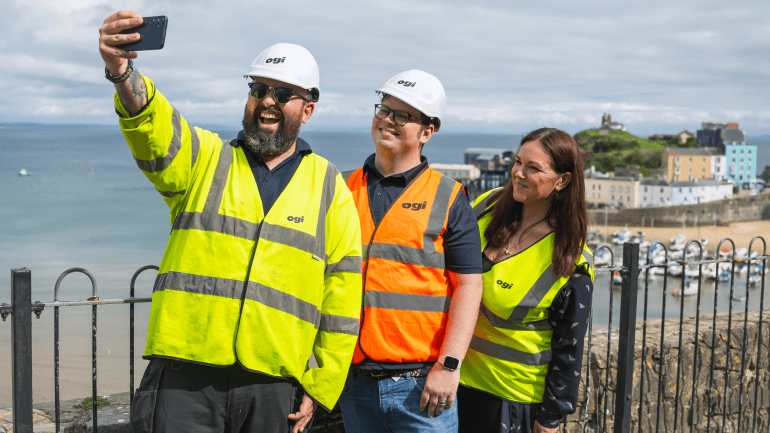
Wales’s leading alternative telecoms provider – Ogi – has revealed plans to bring full fibre connectivity to Tenby, one of Pembrokeshire’s most iconic seaside towns. Tenby is the latest of over 60 communities across south Wales to benefit from Ogi’s privately backed broadband rollout launched in 2021. Once work to connect around 5,000 premises in the town is complete, Ogi will be the leading alternative choice in much of west Wales.