At the Future Enterprise Networks event, experts discussed challenges of 5G private network adoption, emphasizing security benefits and market infancy. Strategies to expand usage to SMEs and overcoming obstacles like education and cost were also highlighted.
The FCC’s recent proposal for shared access of the 42 GHz band could revolutionize the telecom industry by introducing new service providers and business models. With mixed reactions, the proposed sharing mechanism aims to prevent interference and encourage competition, potentially attracting companies like Amazon to the mmWave spectrum.
Wyre, the newly rebranded joint venture between Telenet and Fluvius, gears up for next month’s network rollout with a focus on upgrading hybrid fiber-coaxial networks to fiber-to-the-home, aiming for 78% footprint expansion in Flanders by 2038.
Telecom operators globally embrace digital transformation, with East Asia dominating the top positions in Omdia’s benchmark. China Mobile leads, driven by high-speed broadband deployment and innovative service development, followed by SK Telecom’s AI-focused reinvention.
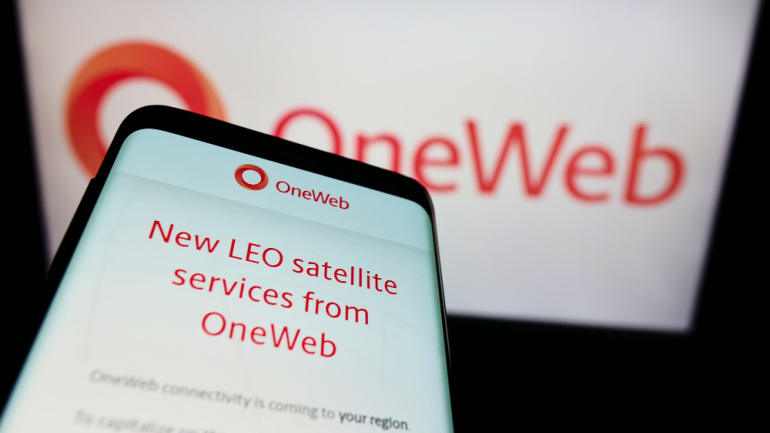
OneWeb partners with Speedcast and F. Laeisz to launch a maritime connectivity service, providing hybrid satellite solutions to improve connectivity in remote polar regions, advancing the benefits of multi-path, multi-orbit technologies.
UK’s latest telecommunications initiatives involve satellite broadband for remote Scottish regions, collaborating with Australia on telecoms diversification, and implementing advanced digital infrastructure such as smart lampposts, showcasing its commitment to becoming a global industry leader.
The European Commission allocates $9.2 billion for R&D initiatives in telecoms and semiconductor sectors, targeting innovative microelectronics, 5G and 6G technologies. To support digital sovereignty goals, private investment of $15.5 billion and 56 companies are involved.
Hangzhou leads the digital revolution with the Dual 10 Gigabit City project, partnering with industry giants like Huawei to foster 5.5G technology, enhance connectivity and pioneer innovative applications for a smarter future.
Rising Ransomware Costs Versus Cybersecurity Countermeasures Industry reports indicate that hackers are thriving despite advancements in cyber defense. The median cost of ransomware attacks has doubled to $26,000 over the past two years, with 95% of incidents resulting in financial loss ranging from $1 to $2.25 million. Social engineering and phishing remain highly effective tactics due to the human element. Senior leadership is increasingly becoming a cybersecurity threat. Governments and law enforcement agencies are taking more decisive actions against high-profile attacks, but these measures mainly deter hackers from targeting less coordinated markets. IoT devices used in DDoS attacks have risen to 1 million, accounting for 40% of global DDoS traffic, necessitating stronger network security and awareness. Despite improved measures, hackers are expected to continue succeeding. Read the full article Viasat Selected for AFRL’s ARBALEST Program: Enhancing Tactical Space Connectivity Viasat Inc., a global communications company, has been chosen by the…

EE enhances 4G coverage by deploying small cells across UK towns and cities, reducing congestion and increasing capacity in high traffic areas. Utilizing advanced network analytics and Nokia’s 4G technology, EE aims to seamlessly integrate small cells into its future 5G network.