5016 Results

AI

Search

Luxembourg’s Prime Minister and SK Telecom have inked an agreement, initiating a strategic collaboration to advance the quantum tech ecosystem. Connexion between this MoU and an earlier South Korean – Luxembourg agreement hints towards a momentous ‘quantum Internet of Things’. Meanwhile, telecom operators globally look to leverage quantum technology’s disruptive potential towards traditional data security protocols. SK Telecom, recognized for its pioneering quantum work, also boosts its pursuit in the AI realm, underlined by a significant investment in AI firms.

The European Commission is urging member states to conduct shared risk assessments in key tech realms including advanced semiconductors, AI, quantum tech, and biotech. Amidst the cloud of geopolitical tech skirmishes, EU stands poised to protect sensitive technologies and is resolved not to preemptively decide on any corrective measures. Only time will reveal the Commission’s next steps after risk assessments.

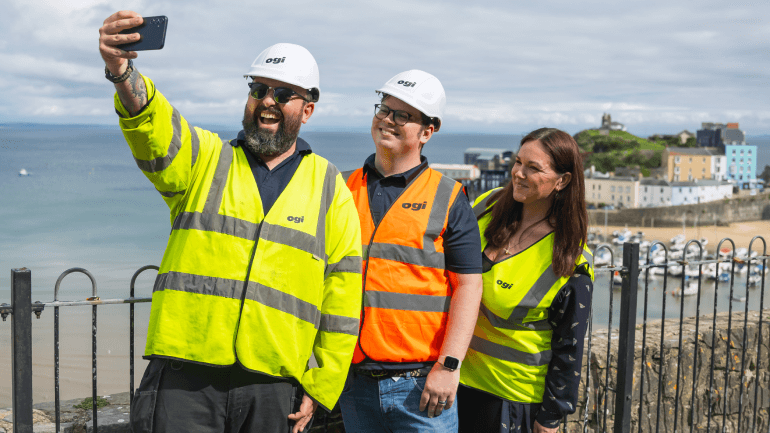
Wales’s leading alternative telecoms provider – Ogi – has revealed plans to bring full fibre connectivity to Tenby, one of Pembrokeshire’s most iconic seaside towns. Tenby is the latest of over 60 communities across south Wales to benefit from Ogi’s privately backed broadband rollout launched in 2021. Once work to connect around 5,000 premises in the town is complete, Ogi will be the leading alternative choice in much of west Wales.

Securing a nearly $2 billion loan, Reliance Jio fortifies its ambition in the 5G arena. The funds will enhance Jio’s growth with the acquisition of leading-edge Nokia 5G equipment. Planning one of the fastest 5G rollouts, it’s further partnering with Samsung and Ericsson. Please note, success breeds competition and Bharti Airtel isn’t far behind.

Leading the way in private network establishment, the U.S. capitalizes on unique advantages from Citizens Broadband Radio Service (CBRS) and its innovative three-tiered spectrum approach. This nonpareil blueprint fosters efficient allocation of limited spectrum resources, empowering the expansion of private 5G networks. Riding this wave, companies like Quanta Cloud Technology and Intel synergize to create future-focused solutions, navigating challenges and setting the stage for 5G’s transformative potential.

Denmark’s leading telecommunication firm, TDC, is performing an internal review after fears of overleverage and slipping cash flow puts its credit rating at risk. The investigation is in early stages, with outcomes and possible transactions still unclear. However, TDC’s majority stakeholder, Australian firm Macquarie, will be watching closely. Despite a strategic split into separate business units last year aimed to accelerate growth, both have shown mixed financial results. Amidst increasing competition, TDC’s future is set against the backdrop of evolving telecommunications business models and industry debates.

Summoning a significant tide in the telecommunications sector, 20 notable European telco CEOS, under the GSMA, urge EU policymakers for a comprehensive revamp of the present regulatory environment. They key point is the mounting need for major tech corporations to contribute to telco infrastructure costs in the midst of a data traffic surge. However, critics argue such proposal infringes upon net neutrality principles and imposes a dual-end payments system.

Strengthened by two pivotal elements, technical prowess and spectrum liberalization advancements, 5G cellular technology emerges as a game-changer. Its reliable performance makes it a preferred choice, enriching private 5G networks globally; a feat powered by QCT and its OmniPOD solution. In the telecommunications horizon stands ‘Network X’, a groundbreaking initiative merging wireline and cloud under the 5G umbrella. Slated for October 2023 in Paris, it aims to propel progress in product innovation and network modernization. Indeed, the 5G revolution is unmissable for businesses and individuals alike, with platforms like Network X offering invaluable insights.

In a strategic overhaul, Singtel has sold its cybersecurity subsidiary, Trustwave, to MC2 Titanium in a $205 million transaction. The sale, which was on the lower end of predicted ranges, marks a significant loss on Singtel’s initial investment. This action is part of Singtel’s wider initiative to optimize resources and improve shareholder value by centring its focus on 5G and other digital services. This story brings a further glimpse into Singtel’s resculpting journey, with the effectiveness of this asset divestiture strategy awaiting a verdict in upcoming fiscal reports.