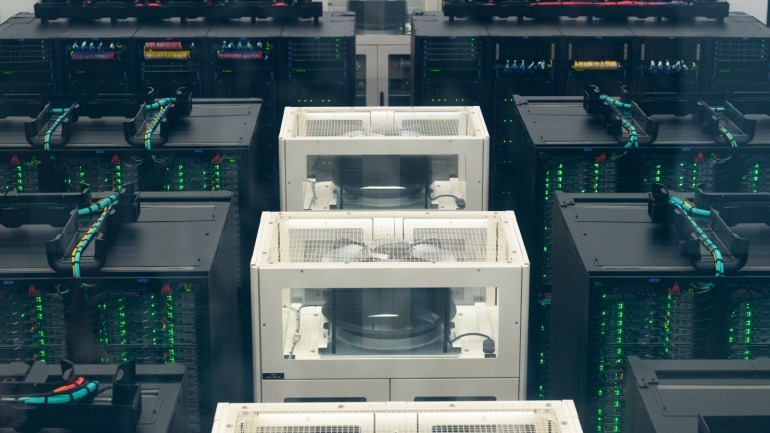
The launch of a data center into Low Earth Orbit by UAE’s Madari Space promises to revolutionize satellite data processing, offering real-time capabilities previously unattainable. As the demand for efficient data management grows, this innovation opens new doors for satellite operators.

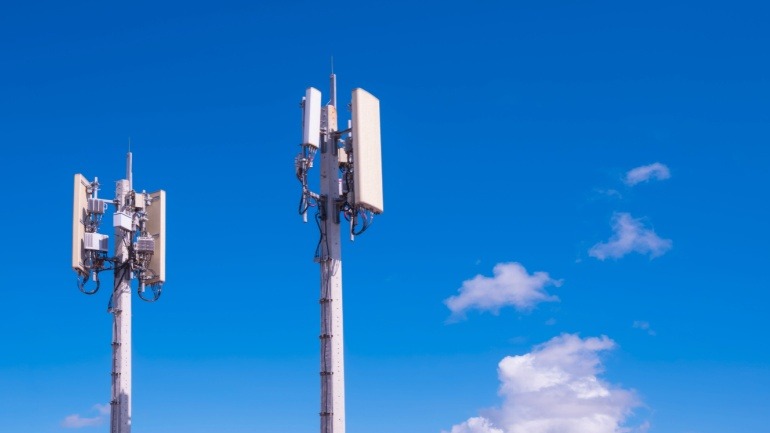
True Corporation’s launch of Dynamic Spectrum Sharing (DSS) in Bangkok revolutionizes spectrum allocation, enhancing both 5G and 4G services. This advanced technology dynamically reallocates the 2.6 GHz band based on real-time demand, optimizing network performance and efficiency.
OpenAI is taking a bold stride in AI infrastructure with its Stargate Norway project, a pioneering European AI data center. Positioned in Narvik, Norway, it leverages renewable hydropower, offering sustainable solutions for large-scale AI operations.
Ericsson is in talks to invest in Intel’s new networking unit, potentially gaining a small stake. The spinoff will focus on advanced silicon for communications infrastructure, aligning with Intel’s broader strategy to streamline operations and prioritize core areas like AI and CPUs.
T-Mobile and Fluid Conservation Systems are transforming US water management with advanced IoT leak detection. This collaboration reduces water loss and infrastructure damage, leveraging T-Mobile’s cellular solutions to provide real-time data on leaks.
NTT Data and Mistral AI are revolutionizing enterprise AI by prioritizing data privacy and infrastructure independence. Their strategic collaboration empowers organizations with secure AI systems, especially in regulated industries.
San Jose, California, is ambitiously positioning itself as the West Coast’s leading data center hub, partnering with PG&E to add 2,000 megawatts of transmission capacity. This bold move ensures reliable power connections, crucial for data centers with high energy demands.
Google will invest six billion dollars to build Asia’s largest data center in Visakhapatnam, India. Two billion dollars will fund renewable energy infrastructure. This marks a major step in Google’s regional expansion and supports India’s growing digital ecosystem.
AT&T and Ericsson achieved a milestone by deploying a third party RAN automation application on a live network. Built on the Open RAN R1 interface and powered by Ericsson’s Intelligent Automation Platform, it optimizes performance with telemetry and policy data.
BT refunded £18 million to customers after Ofcom found it failed to share required contract details with over a million users. The regulator also fined BT £2.8 million and ordered donations to charities. The company apologised and pledged stronger compliance.