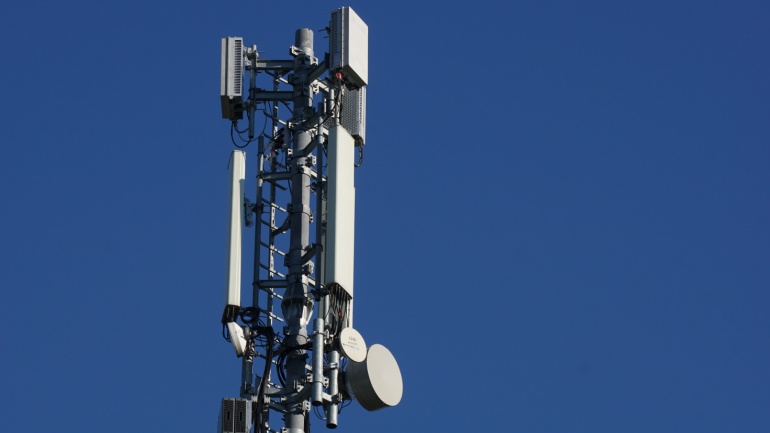
The Ultra-Broadband Forum 2023 has seen industry leaders propose the revolutionary 10 Gbps City Initiative, aiming to construct digitally transformative and ultra-connected cities. Beyond being a mere term, the 10 Gbps City represents a significant shift in infrastructural development. This ambitious project hints at the power of telecommunications transformation, driving the digital economy to unexplored territories. Governments hold the key role in accelerating these changes, as they can bridge digital divides and facilitate universal digital services.
First Orion introduces SENTRY™, combatting fraudulent calls and preserving brand integrity. CO-OP KINKI enhances customer security with Vonage’s 2FA technology for online shopping. Cloud communications market soars, set to reach $180.7 billion by 2027. T-Mobile shifts users to pricier plans, raising concerns over rate plan commitments.
Thierry Breton, Internal Market commissioner of the European Commission, is advocating for a unified European telecoms market, anticipating advancements in growth, innovation, and swift adaptability to emerging technologies. Arguing against the current market fragmentation, he believes regulatory easing on issues like spectrum acquisition could invite investors to support future networks. Simultaneously, telecom operators suggest cross-border consolidation as a potential path when local financial conditions improve.
Huawei champions the development of 5.5G technology, anticipating significant steps in network infrastructure. Advocating for evolution and readiness, Huawei focuses on 5G-Advanced as a cornerstone of future telecom progression. However, global implementation poses challenges, with promising 5G speeds needing considerable network densification and negative trends in capital expenditure. As such, Huawei and other vendors are pivoting to cater to the enterprise market, favouring an immersive approach in changing market needs, instead of simply relying on network infrastructure investment.
As the Competition and Markets Authority gears up for an official investigation about the planned merger between Vodafone and Three, concerns such as reduced consumer choices, price hikes, and changing market dynamics are cropping up. Simultaneously, anticipation builds over potential improvements and expansive opportunities the merger might usher in for the UK’s mobile network scene.
BT and Immersive Interactive Ltd introduce the Immersive Spaces project across Northern Ireland. This 5G-enabled, interactive simulation offers a variety of experiences and learning opportunities for multiple sectors. The space offers a 360° view through HD projectors connecting to EE’s mobile network. Attributes like real-life scenarios, interactive elements, and sensorial enhancements are plunging users into exciting simulated realities. The technology has applications in training environments and sectors across the board, allowing users to step into realistic or imagined situations. Learn more about this revolutionary platform and its potential.
DIDWW, a global provider of premium quality VoIP communications, two-way SIP trunking and SMS services for businesses and telco carriers, has established its new Point of Presence (POP) in Amsterdam. This latest addition is now ready to deliver robust performance, efficiently handling customer voice traffic and ensuring enhanced connectivity.
In an exciting move, Vodafone and Arm have united to innovate within the telecom industry, developing an adaptable platform with Arm-based processors ideal for Open RAN base stations. Their collaborative effort showcases both parties’ commitment in enriching the competitive Open RAN landscape, offering robust computational power for 5G services and improved energy efficiency. In addition, illustrious companies like SynaXG, Ampere Computing, and Fujitsu are lending their expertise to test and validate this technology. The joint venture also presents opportunities for Vodafone to reach its net-zero targets.
In a pioneering collaboration, Samsung, Vodafone, and Orange have achieved a significant breakthrough by completing the first 4G calls over shared networks in rural Romania using Open RAN technology. This milestone, with the promise of integrating 2G and 5G, signifies a transformative step towards more efficient, sustainable, and innovative telecommunications.
Vodafone is expanding its devotion to Open RAN technology, joining forces with Nokia in a progressive venture in Italy. The initiative aligns with Vodafone’s Open RAN directive, largely centered in the UK, and extends influence to the Italian telecom landscape. With this first commercial 5G Open RAN pilot in Italy, they aim to prove Nokia’s Open RAN solution matches the functionality and quality of traditional RAN. With an eye on promoting automated, adaptable networks for the ever-growing demand of responsive 5G services, such innovation bolsters the EU’s digital sovereignty and global competitiveness.