281 Results

Chip

Search

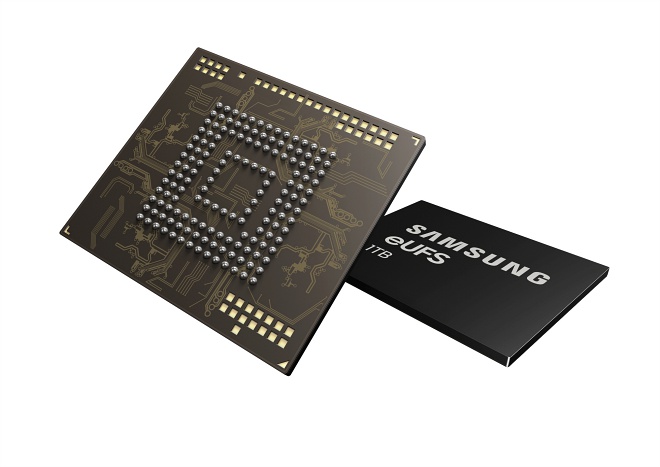
This week, the tech giant Samsung officially introduced the industry’s first 1 TB embedded Universal Flash Storage (eUFS) chip for smartphones. The terabyte-sized native storage solution will considerably enrich the company’s mobile devices, eliminating the need to install additional microSD cards for handling large capacities. Samsung has already begun mass production of the storage chip, however there is no clear indication of when they will be installed in smartphones. “The 1TB eUFS is expected to play a critical role in bringing a more notebook-like user experience to the next generation of mobile devices,” said Cheol Choi, Executive vice president of Memory Sales and Marketing at Samsung Electronics. “What’s more, Samsung is committed to assuring the most reliable supply chain and adequate production quantities to support the timely launches of upcoming flagship smartphones in accelerating growth of the global mobile market.” The new eUFS memory chip measures the same…

Taara is transforming AI infrastructure with its wireless optical communication solution, offering fiber-like data transmission using invisible light beams. This innovation eliminates the challenges of laying physical fiber, ensuring quick deployment and high-capacity connectivity. As AI’s data demands surge, Taara’s WOC becomes essential for agile, reliable communication solutions.

The UK’s strategic investment of £1.1 billion in AI hardware, highlighted by a £750 million supercomputer, aims to revolutionize its AI landscape. By boosting its national compute strategy and nurturing domestic chip startups, the UK positions itself as a key player in the global AI chips market. With contributions from AMD and Nebius, the initiative seeks to strengthen the UK’s AI infrastructure and global competitiveness.

Microsoft Build 2026 witnesses a revolutionary leap in workplace technology with Project Solara. As Microsoft pivots towards AI-driven task management, the integration of AI agents on low-power devices like wearable badges is set to revolutionize VoIP communications by streamlining operations and enhancing efficiency in a rapidly digitalizing work environment.

China’s leap into 6G technology heralds a transformative era for VoIP and telecommunications. With the Chinese Ministry of Industry and Information Technology allocating the 6GHz band for real-world testing, this pivotal move underscores China’s ambition to lead the 6G revolution. The trials, involving giants like Huawei and ZTE, innovate VoIP’s future connectivity.

The Asia Pacific region serves as a dynamic field for satellite broadband expansion, showcasing varied connectivity scenarios. Low Earth orbit systems like Starlink, orbiting nearer Earth, address latency issues ideal for high-demand applications like VoIP and video calls. These innovations are crucial where geography complicates fiber adoption, offering timely, albeit costly, solutions.

The integration of Xsight Labs’ programmable X2 switch into SpaceX’s Starlink v3 satellites heralds a revolutionary leap for satellite communication systems. Promising data throughput exceeding 1 terabit per second, this advancement supports both terrestrial and satellite networks. Aspiring to redefine global connectivity, the collaboration underscores Xsight’s leadership in satellite broadband innovation.

Huawei foresees a transformative era in mobile networks with AI agent applications driving massive uplink traffic. As AI agent connections soar to 100 billion, mobile networks face unprecedented demands. Huawei’s initiatives like AI MOS and A2A-T protocols aim to optimize AI service quality and communications efficiency, reshaping telecommunications for an AI-driven future.