Microsoft Build 2026 witnesses a revolutionary leap in workplace technology with Project Solara. As Microsoft pivots towards AI-driven task management, the integration of AI agents on low-power devices like wearable badges is set to revolutionize VoIP communications by streamlining operations and enhancing efficiency in a rapidly digitalizing work environment.

China’s leap into 6G technology heralds a transformative era for VoIP and telecommunications. With the Chinese Ministry of Industry and Information Technology allocating the 6GHz band for real-world testing, this pivotal move underscores China’s ambition to lead the 6G revolution. The trials, involving giants like Huawei and ZTE, innovate VoIP’s future connectivity.
The Asia Pacific region serves as a dynamic field for satellite broadband expansion, showcasing varied connectivity scenarios. Low Earth orbit systems like Starlink, orbiting nearer Earth, address latency issues ideal for high-demand applications like VoIP and video calls. These innovations are crucial where geography complicates fiber adoption, offering timely, albeit costly, solutions.
BenQ’s latest RP05 interactive display promises to revolutionize classroom and office collaboration with robust on-device AI, Android 15, and Google EDLA certification. Its AI-driven features like real-time content enhancement and automated transcription make it a top choice for interactive learning and teamwork, minimizing external hardware reliance.
The integration of Xsight Labs’ programmable X2 switch into SpaceX’s Starlink v3 satellites heralds a revolutionary leap for satellite communication systems. Promising data throughput exceeding 1 terabit per second, this advancement supports both terrestrial and satellite networks. Aspiring to redefine global connectivity, the collaboration underscores Xsight’s leadership in satellite broadband innovation.
Huawei foresees a transformative era in mobile networks with AI agent applications driving massive uplink traffic. As AI agent connections soar to 100 billion, mobile networks face unprecedented demands. Huawei’s initiatives like AI MOS and A2A-T protocols aim to optimize AI service quality and communications efficiency, reshaping telecommunications for an AI-driven future.
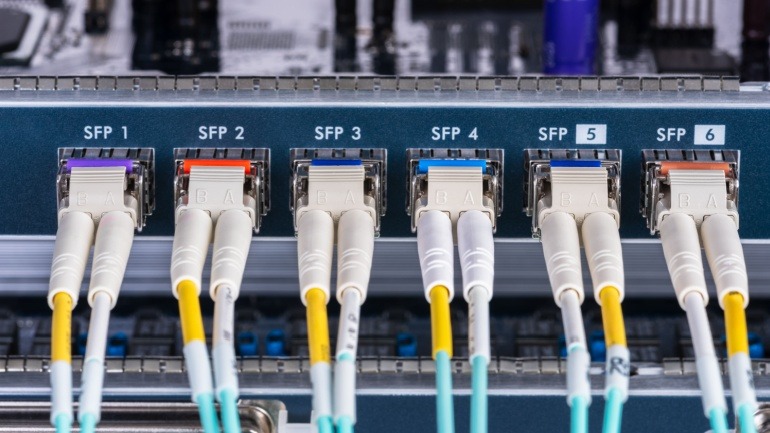
Explore how hollow core fiber (HCF) is revolutionizing AI data centers. With its photonic-crystal fiber roots, HCF offers faster data transmission and less signal loss compared to traditional optical fiber. This advancement is crucial for industries needing reduced latency, potentially easing land and energy constraints while enhancing AI efficiency.
At Mobile World Congress, Arrcus showcased a breakthrough in AI and network infrastructure, highlighting the need for intelligent, policy-aware VOIP systems. As AI tasks shift towards edge computing, the demand for robust network fabrics grows. Arrcus’s innovative approach promises enhanced VOIP solutions, optimizing latency, throughput, and data management.
The International Telecommunication Union’s 51st WP 5D meeting was pivotal for 6G, as Minimum Technical Performance Requirements for IMT-2030 were finalized, transitioning 6G from vision to reality. With ZTE driving advanced 6G strategy, the company targets a seamless shift to the agent-centric internet era, prioritizing connectivity and AI integration.
Europe’s pivotal role in the global AI ecosystem is evident as it becomes a key exchange hub for artificial intelligence. With rising data generation from connected devices and AI technologies, robust digital infrastructure is essential. Data centers and strong networks are vital for handling data volumes, highlighting Europe’s strategic advantage.