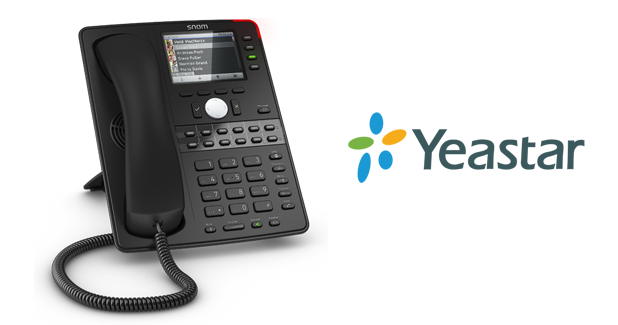
Yeastar is a Chinese company founded in 2006 and based in Xiamen. It offers innovative equipments in VoIP PBX systems and VoIP Gateways for the SMB. Since then, Yeastar became a leader in the industry. On the other hand, Snom (a leading German manufacturer) started in 1997 as one of the first to understand the VoIP technology, thus offering in 2001 the first IP phone. It has today one of the largest catalogue of products for any kind of business or need in connection to communication. It became in 2016 a division of VTech Holdings Limited. Both companies had an history of making sure that their products could work together. Still the interoperability was not complete until recently. As for now, Yeastar auto provisioning supports all the Snom IP Phones, as they were all successfully tested. The full range of Snom IP phones, including the latest Snom D785 advanced desk phone…
To compete with Facebook’s Messenger and WhatsApp as well as Apple’s iMessages, Google is looking for bold new ideas. They have had a number of failures in this area, having tried Talk, Hangouts and Allo! But for an American company, there’s no such thing as failure – there’s just the gaining of experience. Looking forward, Google will focus on delivering their new calling and messaging system called “Chat.” Chat aims to replace SMS, and uses the RCS protocol (Rich Communication Service) to achieve its goals. With Chat, users no longer need to download an application and keep that application updated, and the open-source nature of the RCS protocol will make this platform accessible to developers. According to The Verge media publication, more than 60 companies all over the world, including developers and operators such as Orange, Samsung and Asus have already committed to supporting Chat. For its part, Google promises…
Voice over Internet Protocol (VoIP) has been revolutionizing global communications for a while and nowadays it is considered the coolest and smartest way to talk on the phone. As a result, there has been an explosion of VoIP apps, programs and hardware that offer you amazing features. So whether you are a business owner, an online video gamer, or just an ordinary user, you know that VoIP provides you with an easy, low-cost way to communicate with people around the world. But it’s hard to choose the right application for you with so many options available. So to make your life easier, here are the 10 most popular VoIP apps available: Skype Skype was the first VoIP app for end-user, and is still, by far, one of the most popular VoIP apps available, with more than 300 million subscribers. Skype to Skype audio and video calls, group calls, instant messaging…
Without a doubt, the new generation of VoIP Softphones has revolutionized the industry by allowing real-time, high-quality free calls to be carried out across devices. Furthermore, voice over Internet Protocol (VoIP) has become a vital tool for many businesses and companies. With that in mind, this is an in-depth comparison between some of the most notable VoIP softphones available today. 1. Call.Center Call.center is compatible with various operating systems, call.center is definitely one of the most multifaceted VoIP Softphones available right now. Using a single SIP line across various desktop and mobile devices, this app allows you to seamlessly take VoIP calls no matter where or when. In addition to having a variety of useful functionalities, this app aims at simplifying the configuration, management and secure deployment of your VoIP services. Due to its compatibility with various operating systems and devices, it may be somewhat difficult to install and configure.…
Are you part of the VoIP industry or just interested in the subject? Are you wondering what the VoIP market is up to? Do you want to keep your strategy ahead of the game? Are you concerned about the future of cloud communications? If so, you should start attending VoIP events and conferences, after all, it is the best way for you to stay up-to-date with the latest VoIP news, innovations, trends, and at the same time engage in high-quality networking. There are hundreds of telecom conferences around the world, but here are our top must-attend VoIP events: IT EXPO This event was first held 18 years ago and it is still one of the industry’s most important annual starting points. With its content and participants continuously evolving with the marketplace, is it one of the only VoIP events dedicated to solutions that drive communications transformation for the enterprise mid-market,…
Few have contributed as greatly to the open-source world of VoIP and telecommunications as Mark Spencer. Faced with financial obstacles, he did what any good leader would and built his own solution that has since then benefitted businesses around the world. His open-source framework Asterisk has been able to disrupt the status quo of PBX or Private Branch Exchange, systems while giving business owners a way to inexpensively manage their telecommunications. Education and Beginnings Mark Spencer wasn’t a man who came out of nowhere and built this innovative program. He was enrolled at Auburn University as a computer engineer when the entrepreneurial spirit first hit him. While still a student and finishing up his degree, Spencer decided it was time to put his education to the test and found his own business. This culminated in Linux Support Systems, a company started in 1999 with the original aim of supplying Linux support…
Call centers are at the front line of customer service and are expected to run at peak efficiency while maintaining a high call volume. There are many challenges in managing and operating a call center, one of them being securing inbound calling services that meet both current and future needs. Voice support serves as the backbone for the call center, and it is short-sighted for a brand to risk their reputation by exposing consumers to a substandard voice product. Management is constantly concerned with basic communication issues. Are callers getting a busy signal? Are calls being dropped? Is the voice quality satisfactory? At the same time, the concurrent call requirements have to be managed, to ensure sufficient capacity without wasting money on excess channels. Furthermore, in recent years, organizations have seen their customer base contact them not only through more media channels but also from diverse locations around the globe.…
Well-designed software and plentiful features are essential to having the best softphone: effective and useful. This is especially true of the user interface (UI), where all the necessary functions must be displayed front and center, smoothly integrating voice operations with the workflow processes. In many cases, the softphone is designed to resemble a traditional telephone, with a display panel and buttons for user control, very much like a standard phone interface. Over and above the importance of the user interface, there are a number of factors to consider when choosing the right product. We will discuss these factors in order to assist you in making an informed decision in selecting the best softphone. Cost There is a wide range of both free and paid softphones. In many cases, vendors offer a free, limited-feature version of their paid products. If you wish to use the free version, then you should carefully evaluate this…
Most businesses today have several incoming telephone numbers, each one used for a different purpose or department such as customer service, sales, marketing etc. Some companies even have the ability to assign a personal phone number to each employee without requiring multiple physical phone lines, making it possible for telephone traffic to be split up and managed more easily. This powerful framework is only achievable using Direct Inward Dialling (DID). DID, also known in Europe as DDI (Direct Dial-in), is a service offered by telephone companies, that allows organizations, who operate a private branch exchange (PBX) system, to have multiple telephone numbers lines connected to one or more analog or digital physical circuits to their PBX. The system sends the dialed telephone number to the PBX so that an outside caller can have direct access to the PBX extension, possibly avoiding an auto-attendant. In a business with DID, the telephone…
“This call may be monitored and recorded for record-keeping, training and quality-assurance purposes,” is a message that probably all of us have heard before when calling a contact center. But once an agent answers the phone, we immediately forget that we are being recorded, after all, we will most likely never hear that call recording. For the Contact Center, on the other hand, that recording is extremely useful. It allows business to collect and analyze a set of data that enables them to improve and optimize their service. However, there is much more to call recording than the eyes can meet. Steve Kaiser, Co-founder and CEO of OrecX Open Source Recording, shows us that it is not only a great feature available thanks to Business VoIP and the Cloud, but a powerful tool to boost your business. Why do businesses use call recording? Businesses are aware that nowadays customer experience…