The current telecommunications market is abundant with a variety of business phone systems carefully designed to improve day-to-day communications and handle the complex needs of various organizations. Among the different existing types of telephone systems appropriate for use by small-to-medium size businesses, VoIP-related phone solutions are currently the most common and are growing in popularity. VoIP phone systems operate using broadband Internet connections and generally include quick and easy installation, cost effective pricing, high scalability and advanced features with options to cater to any entity size, ranging from a small business to a multi-service enterprise. A comprehensive VoIP solution should include a range of voice functions needed by the organization, and support both external and internal communications as required. Finding the most suitable phone system may be overwhelming, so for those currently on the lookout, here are the top ten VoIP phone systems to investigate. Nextiva VoIP Software…

Most progressive and forward-thinking companies employ advanced technologies when trying to find new ways to strengthen commercial relationships and reinforce their business processes to promote growth. In today’s global digital world, telephony has become much more than just communications – it promotes innovation, efficiency, flexibility and integration. While more and more companies are seeking to adopt modern, cost-effective communication technology such as VoIP (Voice over Internet protocol), the task of communicating with customers and taking care of their needs is often accomplished using advanced and high-tech CRM (customer relationship management) solutions. VoIP-CRM integrations allow cloud VoIP providers to connect their customer’s CRM accounts with the implemented business phone systems, and exchange data between the two platforms. Let’s analyze the benefits of CRM and phone system integration, and the smart communication models for business that offer the combination of VoIP and CRM. The concept of VoIP-CRM integration In general, CRM…
The Global mobile Suppliers Association (GSA) has launched the first database in the telecommunications industry to track worldwide 5G devices. This new 5G device tracking and reporting facility, which forms part of the GSA Analyser for Mobile Broadband Devices (GAMBoD) database, “represents an important milestone for the 5G ecosystem as it moves from service trials and prototype user equipment to commercially available services and devices”. In its first survey, 5G Device Ecosystem Report, dated March 2019, the GSA identified a total of 23 vendors that have confirmed the upcoming availability of 5G devices, with 33 different devices available, including regional variants. There were 7 publicized 5G device form factors, namely phones, hotspots, indoor CPE, outdoor CPE, modules, Snap-On dongles, adapters and USB terminals. On a per form factor basis, the report identified 12 phones (plus regional variants), 5 hotspots (plus regional variants), 8 CPE devices (indoor and outdoor),…
Do you want to change your telecommunication service provider, but need to keep your current phone number? This process is called number portability, and defines the mechanism and procedures that allow you to switch from one phone network service provider to another in any Licensed Service Area (LSA), while maintaining your existing number. Number portability offers customers the right to exercise their choice in selecting a service provider and, at the same time, avoid the inconvenience of being allocated a new phone number. This important facility provides the customer with freedom-of-choice and, as a result, generates competition among service providers encouraging lower tariffs, improved services and enhanced Quality of Service (QoS) of the networks. It is important to note that the portability feature only concerns the phone number, and is not applicable to services. In this article we focus on the complete porting process from start to finish and, at…
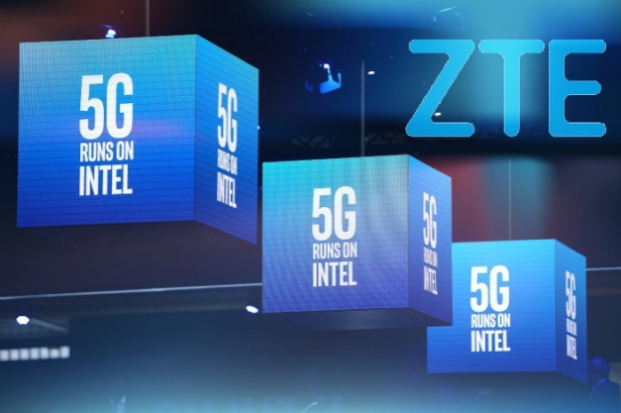
ZTE Corporation and Intel have jointly launched the Light Cloud platform for access networks at the 5G Summit being held at Mobile World Congress 2019 in Barcelona. The Light Cloud solution is based on Intel’s innovative Edge products, impeccably integrated into ZTE’s flagship optical fiber access platform, Titan, thus merging Multi-access Edge Computing (MEC) and Network function virtualization (NFVI). The solution employs lightweight blade servers equipped with Intel Xeon D processors. When embedded in an OLT or BRAS device, the blade servers transform it into lightweight cloud infrastructure, thus reducing high capital costs and making a positive environmental impact. The infrastructure opens up computing and storage possibilities based on telecom access equipment, and allows the deployment and distribution of application-sensitive services. The access layer with cloud features is supported by built-in blade servers, and facilitates the ability to offer a wide range of cloud applications and services, including…
The Mobile World Congress – MWC Barcelona 2019 – is here. More than 100,000 mobile industry insiders, telecom specialists, professionals, analysts, reporters, and admirers of the most advanced devices have gathered to explore the wonders of the latest technology. Tech giants such as Samsung, Huawei, Xiaomi, and Vivo unveiled their innovations just before the show, but here we list some notable smartphones that have been presented at MWC. LG V50 ThinQ South Korea’s LG Electronics has unveiled its first 5G smartphone with a dual screen, the V50 ThinQ. The two screens are independant, enabling users to watch videos on one screen and browse the Internet on the other. Qualcomm’s cutting-edge Snapdragon 855 chipset together with a X50 5G modem will power the V50 model to support high-resolution games and data-rich applications without latency. The phone, with a 6.4-inch OLED full vision display, is equipped with a 4,000 mAh battery and…
The global organization representing the interests of mobile network operators, GSMA, has called for European governments to “safeguard network security and competition” in the telecommunications infrastructure industry. The association has issued a warning to Europe to refrain from activities that would obstruct the use of certain equipment necessary for 5G mobile network development. According to the GSMA, “Actions that disrupt the equipment supply for the various segments of the network (access, transport and core) will increase costs to European operators, businesses and citizens; delay 5G deployment by years across Europe and potentially also jeopardise the functioning of existing 4G networks upon which 5G is intended to be built.” Although no specific company names are mentioned in the statement, the GSMA initiative highlights the industry’s significant endeavor to prevent the application of additional sanctions, similar to those announced by the United States and Australian governments on Chinese vendors Huawei…
VoIP has become an integral part of the day-to-day lives of many people throughout the world, offering a plethora of technological advancements and options, simplifying many communication processes and making interactions more convenient and consumer friendly. VoIP is one of the most talked-about technologies, and its prevalence is anticipated to grow in the upcoming years. Over the last twenty years, VoIP has provided businesses around the world with the convenience of increased mobility, due to constant development and emerging cutting-edge technologies. The usage of VoIP as a service has grown rapidly – between 1998 and 2002, VoIP carried only 1-3% of all voice calls worldwide, but in 2005, VoIP was responsible for more than 200 billion call minutes. With 2019 already underway, let’s have a look at what the future holds for the VoIP communications industry. In particular, we examine the insights and predictions regarding the trends and technologies that will…
The technical support team plays a critical role in a VoIP business, being the initial reference and contact point for customers experiencing technology-related issues. In addition, these important employees are responsible for analysing and resolving system failures and outages, product installation errors, user enquiries and any other technical problems that prevent customers from using an application or service. There is a wide and diverse range of possible technical issues that can occur, depending on the type of telecommunication services provided. Nevertheless, some of the most common VoIP connectivity concerns are audio quality, caller-ID problems, the dropping of calls, and post dialling delay (PDD). Studies reveal that passing on valuable technical advice or providing substantial assistance to customers is the number one method for telecom companies to improve the user experience for their products and services. At voip.review, we have summarised some relevant ideas for VoIP providers to…
Telstra, the largest Australian telecommunication company, has announced the launch of a new rapid restoration service for one of its busiest subsea cable routes in Asia. The company has joined forces with Ericsson and Ciena to ensure that their customers stay continuously connected. The solution offers carriers and cloud service providers increased network visibility, flexibility and reliable data access. Nadya Melic, Telstra’s head of Connectivity and Platforms, said the new service is now available on three of its intra-Asia routes, following the successful tests carried out in December 2018. “The Asian region presents one of the most challenging environments for subsea cable systems. Busy and shallow shipping ports in Hong Kong and Singapore, high-levels of fishing activity and an ecosystem prone to natural disasters, all threaten to disrupt or damage underwater infrastructure,” said Melic. The new rapid restoration service on the subsea network will be provided using…