1378 Results

att

Search

After years of hype, we are looking forward to the impending rollout of 5G networks. This transformational technology will lay the foundation for many future services and change how we view productivity. But how will 5G affect you? Speed and responsiveness It is not yet possible to state definitively what network speeds will be reachable, but it is fair to say that the biggest benefit of 5G to the average user will be the speed of this service. Early estimates have shown that data rates could be up to a thousand times faster than 4G, potentially exceeding 10 Gbps. In practical terms, everything we currently do on the Internet would be significantly faster, and these speeds would enable users to download an entire HD film in a few seconds. Responsiveness or latency refers to the time between a request and a response. The ultra-low latency of 5G will result in response…


Security researchers from Rapid7 have found a large number of insecure UDP Internet services in Germany, which are used for VoIP. The researchers found nearly six million exposed SIP services on port 5060 / UPD, more than any other country in the world. The Session Initiation Protocol (SIP) is used to establish a communication session in Internet telephony and is particularly difficult to secure. Only encrypted SIP (SIP-TLS on port 5061 / TCP) provides adequate protection against active and passive eavesdropping and toll fraud, but plain text SIP is still widely used in Germany. This is demonstrated by Rapid7’s new National Exposure Index, an annual ranking that examines the extent to which countries around the world are at risk of active cyber attacks. For the study, Rapid7s security researchers scoured the entire Internet for TCP / IP services that, for example, are not secured with modern encryption methods or offer…

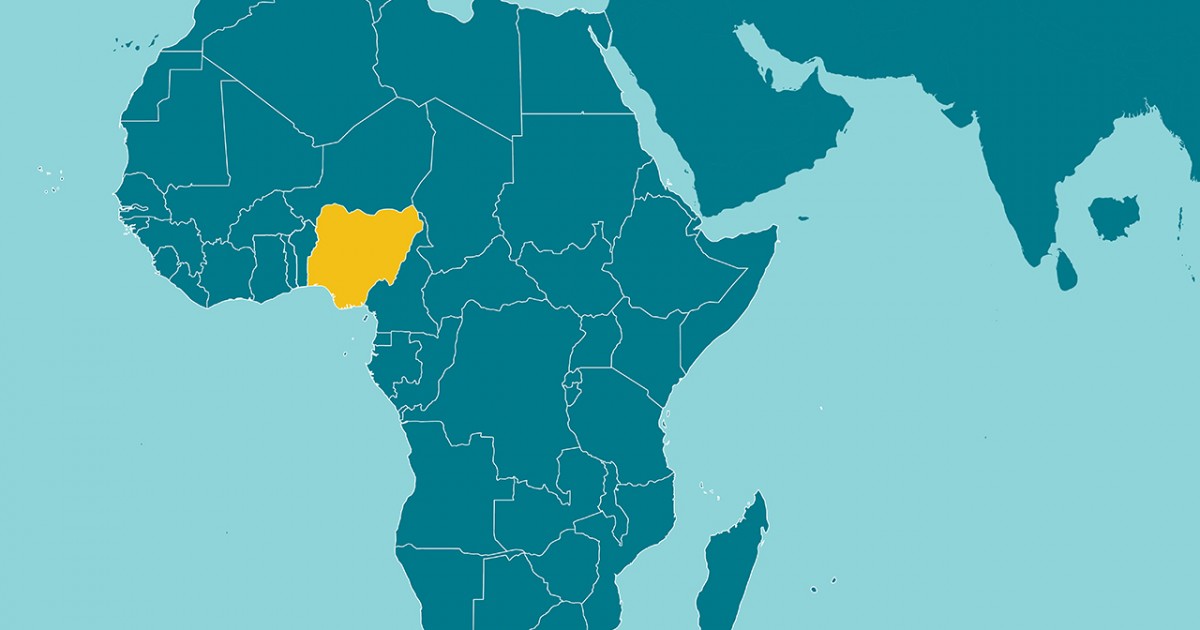
One of Africa’s largest economy, if not the largest (an ongoing debate with South Africa), Nigeria’s VoIP sector has seen in increase of subscription over a period of 12 months. With 93% of growth on one year, VoIP went from 46,348 users in May 2017 to reaching 89,447 in April 2018. Out of the two main operators in that segment, Smile Communications is in charge of 93% of the market with 83,445 accounts against 6,032 for its smaller rival, Ntel network. Still, the VoIP technology is a very narrow market on a GSM-dominated market. So far VoIP represents 0.06% of communications when GSM accounts for 99.7%. This is mainly due to a lack of broadband penetration into the country’s infrastructure. The Nigerian Communications Commission (NCC) assured that it expect to increase broadband penetration to 30%, compared to 22% right now, by putting on policies to achieve this goal. Prof. Umar…

Two of the main key players in South African mobile operators, MTN and Vodacom, have shown interest in investing in the Ethiopian company Ethio Telecom. Both companies have invested in many countries on the continent. Ethiopia was not one of them as the government wanted to keep this sector under its control. But their policy is changing and they have decided to consider opening Ethio Telecom’s capital to investors. According to MTN, “Ethiopia presents many exciting telecommunication opportunities and we look forward to further discussions with that nation’s authorities on potential partnerships and opportunities.” and Vodacam stated that it “has said on many occasions that Ethiopia is an attractive market so it follows that there would be interest. Naturally this is dependent on what might become available and if it fits within our investment parameters.” Abiy Ahmed, Ethiopian new Prime Minister, came to power with promises of reforms. This policy…

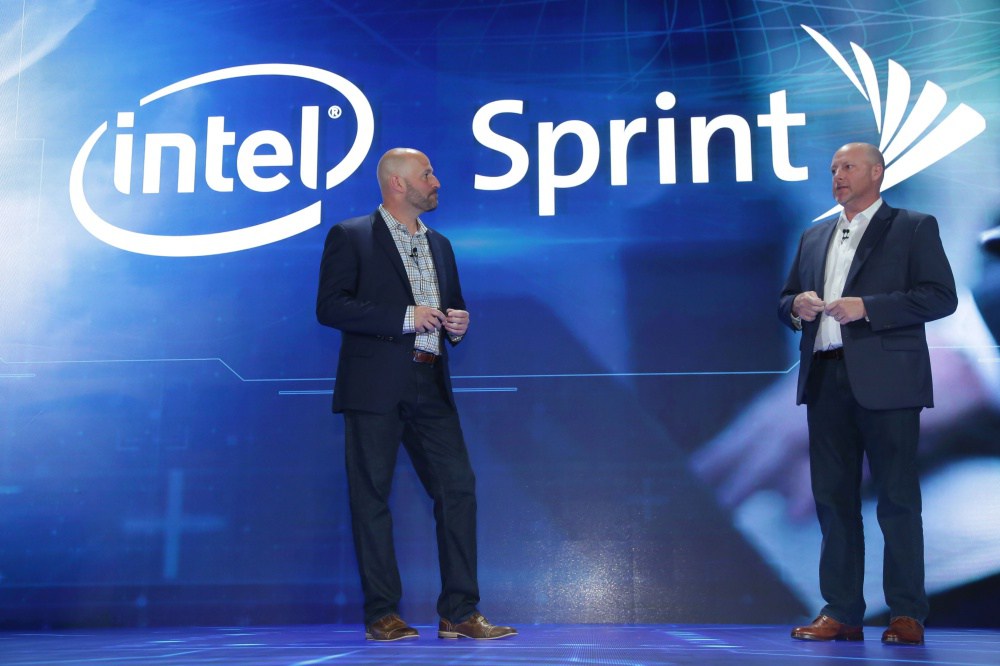
Sprint announced that 5G PCs will be available to buy in their stores next year. Those computers will be built around Intel’s chips. The operator won’t be the only one to offer 5G PCs as Acer and Asus also recently declared their plan to produce 5G Intel-based computers. With Microsoft, Dell, HP and Lenovo having already announced their plan to launch 5G laptops, the market will see a total of six companies battling for this new segment, until others tech companies come out with their own project. Intel has fought hard for this, as the company met difficulties competing with Qualcomm in implementing its chips in connected devices, especially in 4G PCs that are supposed to be available in stores this year with Snapdragon chips inside.

The battle over Telecom Italia seems to have to come to an end, as shareholders were called to elect a new board. Telecom Italia’s directors resigned last March. Paul Singer, head of Elliott Management, an activist fund, was successful to get two thirds of the seats. He won the battle over the French conglomerate, Vivendi. Despite only have 9% of the shares, Elliott was able to impose its team over Vivendi that possesses 24% of Telecom Italia. By pointing out the way Vivendi failed shareholder’s interest in Telecom Italia, Singer was able to get a vote in which they had two options. They could either pick up a board composed of ten Italian business personalities selected by Elliott, or keep a team made of Vivendi’s CEO and its employees for the most part. After that loss, Vivendi stated that it would “take all measures necessary to preserve its value and…

No doubt, “blockchain” is the hottest buzz word being discussed across all industries, and telecommunications is no exception. The blockchain is being proposed for use in various applications in the telecommunications industry, such as securing CDRs, billing data and access logs, ensuring data authenticity or ensuring strict operational procedures. Blockchain will certainly optimize costs by eliminating third-parties such as clearing houses, automating audits and improving fraud detection. However, there is one area where the use of blockchain technology has the potential to not only benefit the operators, but will have a revolutionary impact on the way we all understand, use and protect our identities. The Phone Number as your Digital ID Our phone number is our most valuable digital identity, and will remain the only unique international method of identification well into the future. The PSTN, which is wholly based on the use of phone numbers, is the largest social…

After months of battle and negotiations, the third and fourth largest wireless carriers in the U.S.A. finally agreed on a merger. The fusion between the two companies is one of massive proportions in terms of capital and clients, as it will be a $26 billions all-stock deal and will concern 127 millions customers. The main goal of this deal is to give birth to a strong opponent to AT&T and Verizon. Actually, the announcement might be due to T-Mobile’s fail to acquire a company called Straight Path a year ago, that focuses on providing technology, in the 28 GHz z to 39 GHz millimetre wave spectrum. Verizon, who won the bid gets an advantage in the 5G market. In order to be competitive in this new 5G technology the merger became necessary. T-Mobile and Sprint tried to merge 7 years ago, in a much different environment and the failed, as…

That’s what researchers at CCS Insight believe. According to their report, China and the United States will lead the way in deploying the next generation of mobile technology. Commercial deployments of 5G in the U.S. are expected as soon as the end of 2018.  CCS Insight’s forecast of an initial U.S. lead corroborates with a report from the GSMA at the end of March 2018, but the firms appear to disagree on the rest of their rankings for the period prior to 2025. In the GSMA’s report, by 2025, China falls to fourth place with 25 percent of mobile connections being 5G. The United States takes the lead with 49 percent, followed by Japan (45 percent) and Europe (31 percent). IN 2025, MOBILE BROADBAND IS STILL PREDICTED TO REPRESENT 98% OF ALL 5G CONNECTIONS “The industry might be struggling to establish the business models for investment in 5G, but this isn’t stopping leading…

Sprint and T-Mobile, two important mobile operators in America, have resumed discussions on a merger of their activities in the United States. In the world of telecoms, it seems that there are some things that never end. In the US, the prospect of a marriage between the mobile operators, T-Mobile and Sprint, regularly makes headlines. According to the Wall Street Journal, discussions have recently resumed between these two players, respectively number three and four of the market, behind the unstoppable tandem formed by the giants Verizon and AT&T. According to the business daily quoting sources familiar with the matter, the negotiations are “at a preliminary stage”. With all the failures of mergers that they faced in the past, we understand that the two boards are cautious … As a reminder, the two actors had once again attempted to join forces late last year. But they failed to reach an agreement, ending their…