The American chipset manufacturer Nvidia is rolling out its EGX platform to bring real-time artificial intelligence (AI) to the edge of the network. Nvidia EGX is an accelerated computing platform, which boasts low-latency AI that enables companies to perceive, understand and act in real time on continuous streaming data between 5G base stations, warehouses, retail stores, factories and beyond. AI computing will occur at the edge of the network, where sensors collect data before it is sent to cloud-connected data centers. This platform is expected to satisfy the increasing demand for AI applications to assist numerous devices streaming continuous raw sensor data and is designed for high-throughput AI at the edge where data is primarily sourced to achieve instantaneous and guaranteed response times while reducing bandwidth to the cloud. According to the company, by 2025, there could be up to 150 billion machine sensors and the Internet of Things (IoT) devices streaming…
The Chinese telecommunications, enterprise and consumer technology and equipment provider ZTE Corporation has launched its first domestic cybersecurity lab in Nanjing, China, thus confirming its commitment to the ICT industry to counter cybersecurity threats. The company is also planning to expand across the globe with similar facilities in the near future, with the first installations being in Italy and Belgium. According to a statement by ZTE, the opening of a new lab represents an important milestone for the company as it aims to increase transparency and enhance trust with third parties, including customers, global regulators and other stakeholders. This initiative is in direct response to the national security concerns that are prompting several countries to apply restrictions on the use of equipment from Chinese vendors in 5G rollouts. Zhong Hong, Chief Security Officer at ZTE, said, “The security lab is an open and cooperative platform for the industry.…
China’s Huawei Technologies has launched new database and storage products with the aim of redefining its data infrastructure and strengthening the global presence of its cloud business. The world’s first AI-native database GaussDB supports differentiated scenarios such as private and public clouds and data services in the finance, internet, logistics and automotive sectors. Huawei’s FusionStorage 8.0 is claimed to be the industry’s best-performing distributed storage solution for supporting enterprise applications. “Humanity is entering the age of an intelligent world,” said David Wang, Huawei Executive Director of the Board and President of ICT Strategy and Marketing. “Data is the new factor of production, and intelligence the new productivity. Heterogeneous, intelligent, and converged databases will become the key data infrastructure of the financial, government, and telecoms industries.” With this new database management product, the Shenzhen-based company marks its official entry into the database field and places itself in direct competition with…
Global satellite operator Telesat, the Vodafone Group and the University of Surrey in the UK, have successfully accomplished the world’s first 5G backhaul demonstration deploying a Low Earth Orbit (LEO) communications satellite. This successful trial demonstrates that LEO satellites are able to provide efficient backhaul transport channels for mobile network operators (MNOs), including for 5G advanced services. During the live test conducted by these partners in April, Telesat’s Phase 1 LEO satellite was connected to the University of Surrey’s 5G testbed network, with the support of specialist Vodafone engineers. Vodafone also provided some funding and arranged licensing for the demonstration system. John Miller, Head of Satellite Engineering at Vodafone, said: “The use of LEO satellites provides an additional mobile backhaul option and can be an important part of the delivery system particularly to customers in our markets who live in rural areas.” Professor Barry Evans, University of Surrey, said: “The University of Surrey is very…
The current telecommunications market is abundant with a variety of business phone systems carefully designed to improve day-to-day communications and handle the complex needs of various organizations. Among the different existing types of telephone systems appropriate for use by small-to-medium size businesses, VoIP-related phone solutions are currently the most common and are growing in popularity. VoIP phone systems operate using broadband Internet connections and generally include quick and easy installation, cost effective pricing, high scalability and advanced features with options to cater to any entity size, ranging from a small business to a multi-service enterprise. A comprehensive VoIP solution should include a range of voice functions needed by the organization, and support both external and internal communications as required. Finding the most suitable phone system may be overwhelming, so for those currently on the lookout, here are the top ten VoIP phone systems to investigate. Nextiva VoIP Software…
NTT Communications Corporation (NTT Com), the ICT solutions and international communications business within the NTT Group, is promoting the expansion and development of its European data center platform with the launch of their Amsterdam 1 Data Center (AMS1). The group’s first data center in the Netherlands has been opened by NTT Com’s subsidiary E-Shelter, which provides secure environments for housing and connectivity of IT and network systems. Tetsuya Shoji, President and CEO of NTT Com, said in his official opening speech: “I am delighted to open our latest state-of-the-art data center campus located in Amsterdam, one of the key internet hubs in Europe”. The carrier-neutral E-Shelter’s AMS1 data center will have a capacity of up to 40 MW IT load spread over a 16,000 square meter campus and, as NTT’s 21st data center in Europe, will leverage more than 400 MVA power capacity across the continent, with plans…
Cherry Servers is one of the leading hosting companies in Europe since 2001. As IT market grows and changes constantly, demand for new services and infrastructure development is crucial. “After 2 and a half years of hard work and development, I can proudly say that we have finally launched our Bare Metal Cloud”, – says Artūras Lazejevas, CEO of Cherry Servers. “Before starting to pursue a new venture, we always ask ourselves if there’s a strong business case behind it. As of Bare Metal Cloud we found out that there are many customers who need to have cloud-like elasticity on bare metal machines, but want to avoid vendor lock-in that is so prevalent among hyperscale providers. We remove the redundant virtualization layer, while adding security and decreasing complexity of the infrastructure, which results in greater performance. With specialized infrastructure and hardware level control our customers get raw compute power that allows…
Google Cloud has responded to its customers’ requests for the ability to use open-source technology easily in a cloud-native manner. At Google Cloud Next 2019, the company announced strategic partnerships with seven “leading open source-centric companies” working on data management and analytics. The products from Confluent, DataStax, Elastic, InfluxData, MongoDB, Neo4j and Redis Labs will be integrated into the Google Cloud Platform (GCP) and offered as managed services. According to Google, this new project will deliver a seamless user experience in management, billing and support and will simultaneously provide the ability to easily leverage these open-source technologies in Google’s cloud. In addition, the tech giant will cooperate with its partners to build integration with native GCP services like Stackdriver for monitoring and logging, and IAM for user and security policy management. Manvinder Singh, the head of infrastructure partnerships at Google Cloud, said in a press briefing: “As you…
American technology companies Ribbon Communications and Neustar have announced an expansion of their cooperation to provide a comprehensive solution designed to tackle the issues of robocalling and call spoofing. Ribbon, a global software leader providing IP-based real-time communications security and software solutions, is working in partnership with Neustar, the exclusive host of the ATIS Robocalling Testbed, to develop and support an integrated platform for their STIR-SHAKEN implementation. Secure Telephone Identity Revisited (STIR) standards and the Signature-based Handling of Asserted information using toKENs (SHAKEN) framework were developed by the IETF and ATIS/SIP Forum NNI Task Force, respectively. STIR-SHAKEN is a major industry initiative set up to help service providers protect consumers against illegal robocalls and caller ID spoofing. The Ribbon session border controller, as well as policy and routing products coupled with the Neustar Certified Caller platform will enable service providers to promptly detect suspicious calls and inform business and…
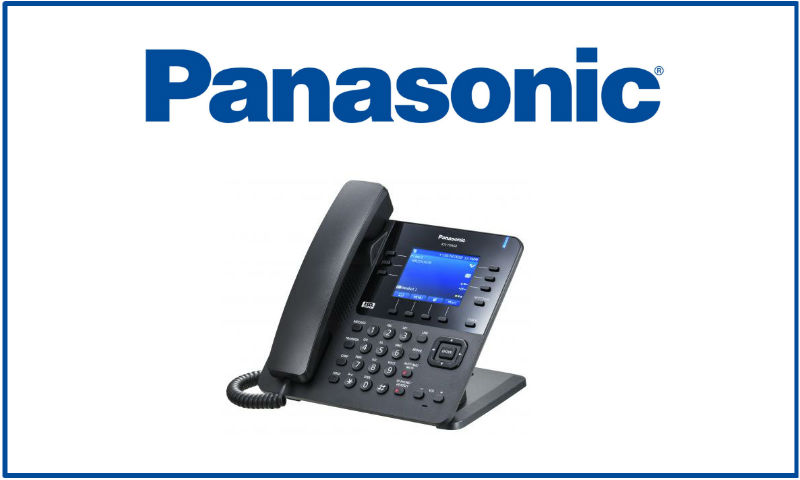
The extensive lineup of desktop SIP phone systems has been supplemented by yet another cordless solution, as Panasonic Systems Solutions Company of North America has announced the release of their new SIP cordless KX-TPA68 communication terminal. The phone was designed “for intuitive use and added flexibility as a member of the KX-TGP600 SIP cordless phone system family”. The Panasonic KX-TPA68 facilitates collaboration among staff members and enables real-time shared call appearance. The communication terminal allows users to pick up calls, retrieve held calls and join calls from lines shared across multiple KX-TPA68 cordless desk phones that are registered to the same base unit. The included features allow users to monitor the status of up to six phone lines on the same screen in real-time, and complete actions with a single touch. The new solution features an enhanced user interface and is equipped with a 3.5-inch color LCD, 18…