Earlier this week, a leading IT solutions provider Tech Mahindra, announced its partnership with Microsoft to build a blockchain-based robust ecosystem meant to tackle unsolicited commercial communications in India. This blockchain solution will be developed based on Microsoft Azure, and will comply with the regulations issued by the Telecom Regulatory Authority of India (TRAI). TRAI has been working with both these companies and other stakeholders to curb the profusion of spam calls and messages so widely spread across the country. While the initial step of introducing a “Do Not Disturb” registry in 2010 seems to be a success with 230 million listed subscribers, the telemarketers still manage to find fraudulent workarounds to obtain consent and continue delivering spam calls. “Blockchain as a technology is a powerful tool to combat the issue of spam calls and fraud risks, to protect user information, as well as the integrity of the telecom sector.…
Chunghwa Telecom (CHT), Taiwan Mobile and Far Eas Tone (FET) Telecommunications have increased their sales thanks to new cheaper mobile plans. CHT got NT$19.51 billion (US$652.9 million) in sales for May, an increase of 12.71% from last year with a Net profit of NT$4.56 billion. Its optical broadband service reached 3.563 million subscribers, and its MOD service users reached 1.758 million on the same period. Also in May, Taiwan Mobile got NT$10.01 billion, with a net profit of NT$1.51 billion, thus having NT$49.86 billion in revenue on the last 12 months. In May, FET was able, on its side to gather a revenue of NT$7.299 billion for a net profit of NT$984 million.
Security researchers from Rapid7 have found a large number of insecure UDP Internet services in Germany, which are used for VoIP. The researchers found nearly six million exposed SIP services on port 5060 / UPD, more than any other country in the world. The Session Initiation Protocol (SIP) is used to establish a communication session in Internet telephony and is particularly difficult to secure. Only encrypted SIP (SIP-TLS on port 5061 / TCP) provides adequate protection against active and passive eavesdropping and toll fraud, but plain text SIP is still widely used in Germany. This is demonstrated by Rapid7’s new National Exposure Index, an annual ranking that examines the extent to which countries around the world are at risk of active cyber attacks. For the study, Rapid7s security researchers scoured the entire Internet for TCP / IP services that, for example, are not secured with modern encryption methods or offer…
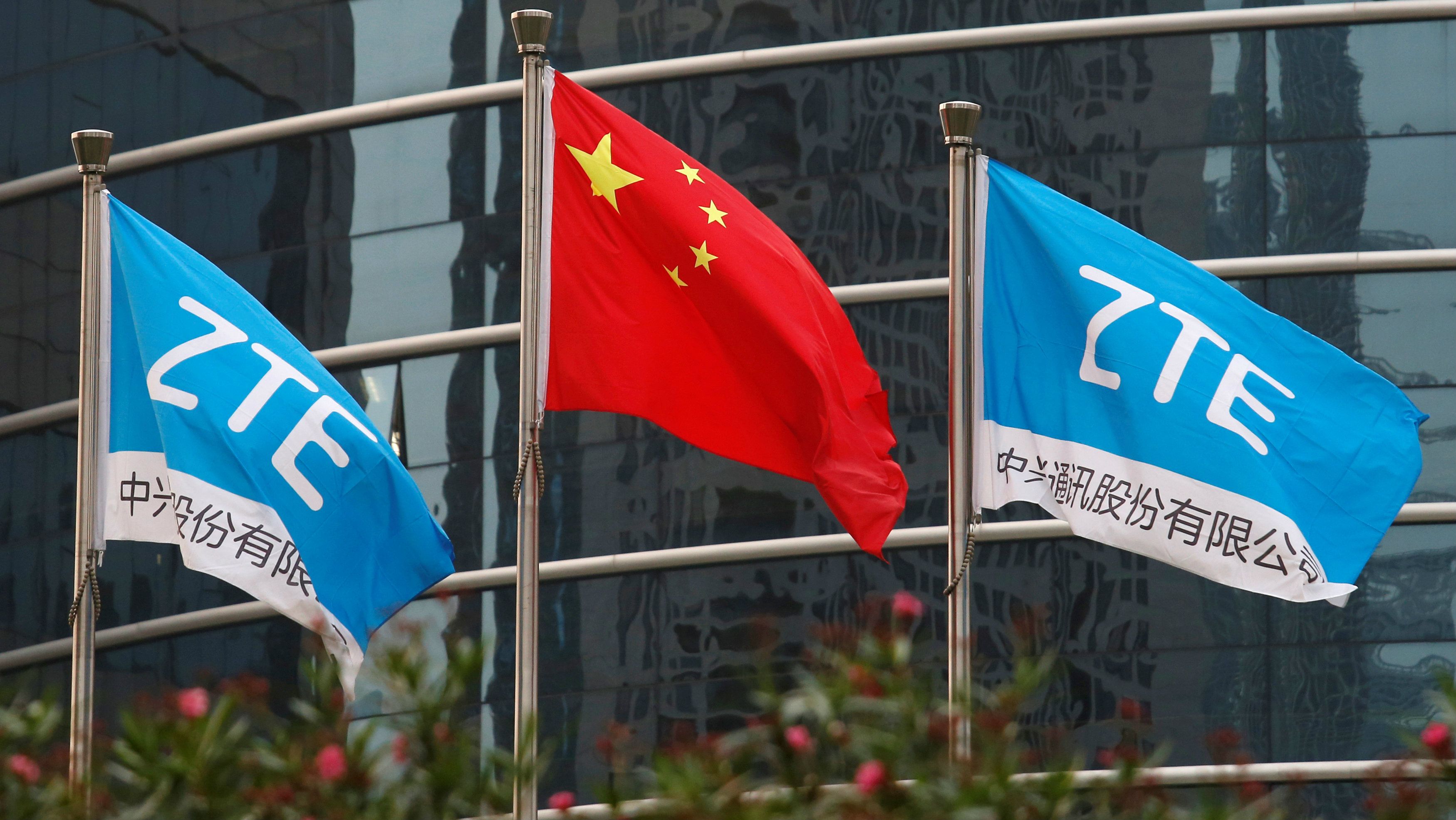
After President Trump asked the U.S. Commerce Department to find an agreement to save ZTE Corp., an agreement has been found. It all started when an investigation found out that ZTE was doing business with Iran and North Korea by sending U.S. products. Despite the opposition of several members of congress, mostly Democrats, but also many Republicans, that are accusing Trump of bending under Chinese pressure, ZTE will be able to trade with American companies. ZTE was banned from doing any business with the U.S. since April 15th and has lost $3 billion. ZTE will have to pay a $1.3 billion fine to the U.S. in addition to a $900 million fine they already paid last year. Part of the deal, aside from the fine, includes a change in management and will have to get parts from U.S. suppliers. The situation between ZTE and the U.S. Administration created some tensions…
China Telecom (China Telecommunication Corporation) and HGC (formerly Hutchinson Global Communication) will be working together in building a carrier-to-carrier fiber optic connection on the Hong Kong-Zhuhai-Macau Bridge. HGC, founded in 1992 under British ruling, is the leader in fixed-line operators. It also has an extensive number of infrastructures outside of Hong Kong. It is also one of Hong Kong’s main Wi-Fi provider with 29,000 hotspots. It is now owned by I Square Capital, under Asia Cube Global’s infrastructure. On the other hand, China Telecom is the most important state-owned telecommunication company in China. It manages the third largest broadband network in the world. Their internet offers has 160 million subscribers, and the customers’ number of their mobile service is 260 million. This Bridge connects Zhuhai, up north Macau, Macau itself and Hong Kong. It is set to open for vehicles on July 1rst 2018. It will also be used for…
No doubt, “blockchain” is the hottest buzz word being discussed across all industries, and telecommunications is no exception. The blockchain is being proposed for use in various applications in the telecommunications industry, such as securing CDRs, billing data and access logs, ensuring data authenticity or ensuring strict operational procedures. Blockchain will certainly optimize costs by eliminating third-parties such as clearing houses, automating audits and improving fraud detection. However, there is one area where the use of blockchain technology has the potential to not only benefit the operators, but will have a revolutionary impact on the way we all understand, use and protect our identities. The Phone Number as your Digital ID Our phone number is our most valuable digital identity, and will remain the only unique international method of identification well into the future. The PSTN, which is wholly based on the use of phone numbers, is the largest social…
Are you part of the VoIP industry or just interested in the subject? Are you wondering what the VoIP market is up to? Do you want to keep your strategy ahead of the game? Are you concerned about the future of cloud communications? If so, you should start attending VoIP events and conferences, after all, it is the best way for you to stay up-to-date with the latest VoIP news, innovations, trends, and at the same time engage in high-quality networking. There are hundreds of telecom conferences around the world, but here are our top must-attend VoIP events: IT EXPO This event was first held 18 years ago and it is still one of the industry’s most important annual starting points. With its content and participants continuously evolving with the marketplace, is it one of the only VoIP events dedicated to solutions that drive communications transformation for the enterprise mid-market,…
The VoIP industry is booming, and this has created a significant demand for DID (Direct Inbound Dialing) services and choosing a DID provider has become harder. Very often, these services are essential to the basic premise of the business or enterprise; incoming calls should reach their required destination efficiently with the proper quality and expected reliability. In all likelihood, voice support serves as the backbone for your business, and it is short-sighted to risk your reputation by exposing employees and consumers to a substandard voice product. Selecting a provider that satisfies your requirements for coverage, quality, scalability, and pricing is a complex issue, and some of the essential criteria to consider during this decision process are: Global Coverage Ensure that your DID provider includes the geographic coverage of numbers that you require for your business, including toll-free, local, mobile, national and SMS-enabled numbers. In addition, the provider should be actively…
When we talk about the future of corporate communication networks, most experts point to VoIP technology as the future. However, many companies still opt for older platforms that, although offering fewer features, can still be quite reliable. The most famous of them goes by the name of SS7. But what are the fundamental differences between VoIP and SS7? In this article, we will examine what each of these technologies does, their advantages and disadvantages, and in what situations they present themselves as the best options for the communication structure of companies around the world. SS7: An old technology, but it may still be necessary SS7 is the abbreviation for Signalling System 7: a digital network dedicated and used for initializing and controlling voice calls. Each signaling point on the SS7 network is uniquely identified by numeric point code. These are loaded in signaling messages exchanged between signaling points in order…
Since 2014 the Federal Communications Commission (FCC) has been demanding that the telecommunications industry in the US come up with a solution to the growing and disturbing problem of fraudulent robocalls and telephone spoofing. As a result, the proposed Shaken & Stir authentication solution was developed jointly by the SIP Forum, the Alliance for Telecommunications Industry Solutions (ATIS) and the Internet Engineering Task Force (IETF). However, the American Cable Association (ACA) warns that the solution must be cost-effective for smaller VoIP providers. The association, which represents small and mid-sized telecom companies, suggests that the FCC obtain more information from the industry and that small VoIP providers be involved in the evaluation of its cost-effectiveness before it is approved. It stated that if the robocall solution is adopted, members might need extra time to implement it. ACA’s reaction is a result of FCC’s new chairman, Ajit Pai’s determination in carrying out strong measures…