Global telecom operators AT&T, KPN, Orange and Swisscom have launched LTE-M roaming services across their respective IoT networks, thus enabling connected low power IoT devices to operate more efficiently on multiple networks in North America and Europe. This collaborative rollout of LTE-M networks is expected to accelerate the growth in the IoT market all over the world. In a statement, John Wojewoda, AVP of global connections management at AT&T, said, “More and more of our enterprise customers require global capabilities as they deploy IoT devices and applications. These LTE-M roaming agreements help meet that demand and make it easier for businesses around the world to benefit from the power of a globalized IoT.” Carolien Nijhuis, Director IoT at KPN, added, “The introduction of LTE-M creates many new possibilities for our partners, customers and prospects. Roaming with LTE-M has been one of the most requested features by our customers…

The American chipset manufacturer Nvidia is rolling out its EGX platform to bring real-time artificial intelligence (AI) to the edge of the network. Nvidia EGX is an accelerated computing platform, which boasts low-latency AI that enables companies to perceive, understand and act in real time on continuous streaming data between 5G base stations, warehouses, retail stores, factories and beyond. AI computing will occur at the edge of the network, where sensors collect data before it is sent to cloud-connected data centers. This platform is expected to satisfy the increasing demand for AI applications to assist numerous devices streaming continuous raw sensor data and is designed for high-throughput AI at the edge where data is primarily sourced to achieve instantaneous and guaranteed response times while reducing bandwidth to the cloud. According to the company, by 2025, there could be up to 150 billion machine sensors and the Internet of Things (IoT) devices streaming…
Telecommunications and data services vendor BullsEye Telecom and the cloud-based VoIP networks security solutions provider RedShift Networks have announced a new partnership to deliver innovative cybersecurity solutions for protecting and securing enterprise VoIP and SIP-based networks. BullsEye Telecom is adopting RedShift’s VoIP security, threat intelligence analytics and proactive fraud prevention technologies to ensure industry-specific compliance for regulatory sensitive clients in the healthcare, financial and government services industries. Vilas Uchil, Vice president of Technology and Engineering for BullsEye, said, “Our clients now have access to an incredible portfolio of cloud, voice and unified communications security protection through our partnership with RedShift Networks. Together, BullsEye and RedShift offer clients proven solutions and security to protect their VoIP and UCaaS networks against expensive malicious attacks. We are preventing theft, fraudulent transactions and service downtime.” As stated in the announcement, RedShift’s Unified Communication Threat Management (UCTM) platform works to establish communication baselines…
Norwegian telco Telenor Group and Malaysia-based Axiata Group have announced their discussions regarding a prospective non-cash merger of their telecom and infrastructure assets in Asia, in which Telenor would take a majority stake. Telenor and Axiata’s jointly owned telecommunications giant MergeCo would combine the two companies’ operations in South and Southeast Asia, and in its headquarters in Malaysia would serve almost 300 million customers using approximately 60,000 communication towers located across Asia. Gunn Wærsted, Chair of Telenor Group, said: “Today we announce that Telenor and Axiata are in discussions on joining forces in Asia, one of the most dynamic and innovative regions in the world. Together, we aim to create a leading and well-diversified pan-Asian telecom and infrastructure company with substantial synergy potential and strong regional operations. It is Telenor’s strategy to develop and create value from our core telco assets in the Nordic and Asian region. This potential merger…
A consortium of nine technology companies – Intel, Cisco, Dell EMC, Microsoft, Hewlett Packard Enterprise, Facebook, Google, Alibaba and Huawei – has been formed in order to create and launch a new standard, called Compute Express Link (CXL). This project will accelerate ever-expanding data workloads, such as high-performance computing, artificial intelligence (AI), internet of things (IoT), rich media services, and cloud applications. Jim Pappas, director of technology initiatives at Intel, said in a statement: “CXL is an important milestone for data-centric computing and will be a foundational standard for an open, dynamic accelerator ecosystem. Like USB and PCI Express, which Intel also cofounded, we can look forward to a new wave of industry innovation and customer value delivered through the CXL standard.” The new cluster of tech giants, described as “the biggest group of influencers driving a modern interconnect standard”, also affirmed the CXL Specification 1.0, which enables…
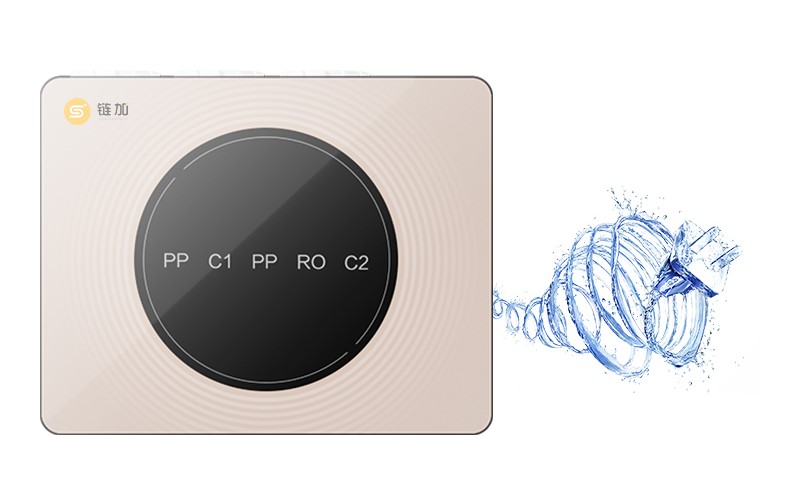
China Mobile, one of the largest state-owned telecommunications companies in that country, has designed a water purifying device powered by blockchain, thus making an explicit statement that blockchain technology is not something extraneous and out of this world, but is a beneficial high-tech solution that may be advantageously applied to ordinary household appliances. The Product Market Director at China Mobile IoT, Xiao Yi, stated: “Our goal is to also attract those who are not in the cryptocurrency or blockchain community, who may have heard of this technology but not necessarily understand it. To embrace a more mainstream adoption, we need to turn something that appears professional into something that’s very ordinary.” The Internet of Things (IoT) division within the company has developed a product with a built-in computing chip and an IoT module. This innovative gadget collects applicable user data related to consumer behaviour habits and shares it…
The 1st of January, 2019 saw the first live TV broadcast of the annual Bosingak bell-ringing New Year’s event over a 5G commercial network. SK Telecom, a South Korean wireless carrier, took advantage of the festive opportunity and offered a live, 11-minute broadcast of the country’s largest celebration in Seoul. High-definition footage on an entertainment channel XtvN showed the New Year’s countdown ceremony, the bell-ringing event and interviews. “With today’s successful live TV broadcasting over commercial 5G network, SK Telecom ushers in a new era of 5G-based media services,” said Choi Nak-hoon, Senior Vice President and Head of 5GX IoT/Data Group of SK Telecom. “In this new era, individual creators will be able to provide high-quality live broadcast anytime, anywhere, via 5G smartphones.” SK Telecom commercialised its 5G network in December 2018, accompanied by a ‘T Live Caster’ app. The solution was developed over a period of four…
The Nordic telecom companies Telia and Ericsson have made important progress towards implementing 5G innovations for commercial use across Sweden in 2020, by launching their 5G development platform at KTH, the Royal Institute of Technology in Stockholm. Their hopes are for the network to play a vital role in developing innovative new solutions and services. The KTH campus was chosen as the host venue due to the research such as remote VR, Internet of Things (IoT) and industry automation being conducted at that facility. Professor Jan Gulliksen, the Vice President for Digitalization at KTH, appreciates this amazing opportunity “to have access to Sweden’s first 5G network here on campus.” He claims that it “gives our researchers, teachers and students a head start when it comes to understanding and developing this new technology ahead of its wider launch. This is exactly the kind of partnership we believe helps stimulate research-driven…
We are rapidly evolving into a digital and decentralized society, where private keys on mobile devices will play a critical and indispensable role in ensuring the safety of our daily transactions and securing our digital identities. FIX Network are aiming to revolutionize the blockchain and cellular industries by providing mobile device users with innovative key holder and transaction security, coupled with a practical user experience. The underlying technology for securing the user’s private keys are the SIM cards used by mobile operators, enabled by the FIX Network open-source STK residing on those SIM cards. This standard SIM hardware, together with blockchain- powered, distributed policy engines that govern end-user transactions, form the architectural backbone of the FIX Network security solution. This solution introduces the concept of a pool of SIM cards, enhancing security, and at the same time, eliminating the possibility of a single point of failure. Multiple SIM…
The Finnish telecom equipment manufacturer Nokia has officially announced that its plant in Chennai, Southern India, has started manufacturing their 5G New Radio (NR) based on the 3GPP 5G New Radio Release 15 standard. “This is another big leap towards the ‘Make in India’ vision as our factory continues to contribute to the Indian economy and the country’s growing profile as a manufacturing and engineering hub. Nokia was the first to leverage the skills and capabilities in India and start manufacturing telecom networks equipment in the country in 2008, and develop the local supply chain for various components. We are now pioneering 5G manufacturing in the country, making India and the world ready for 5G,” commented the senior vice president and head of the India Market at Nokia, Sanjay Malik. Nokia’s factory in Chennai has maintained its position as one of largest and leading plants in the country by…