149 Results

7 GHz

Search

Apple iOS 13 Launch Confirmed: 5 iPhone Security Features Coming This Month As the tech company that really cares about its user’s privacy, Apple attempts to differentiate itself from Facebook, Google and Amazon, and is bringing a number of massive improvements to the company’s iOS operating system this month. One of the biggest improvements is that the security enhanced Apple iOS 13 will not let Facebook and WhatsApp apps run VoIP in the background when the programs aren’t actively in use. Also, the system will send alerts about any apps that track user’s location and let an app access the location only once. Read more at: https://tinyurl.com/y4w8rj92 Samsung’s Exynos 980 chip is a processor and 5G modem in one The Korean tech giant has introduced its first 5G-integrated mobile chipset Exynos 980. This AI mobile processor combines a 5G modem and mobile application processor in a single chip, thus allowing…

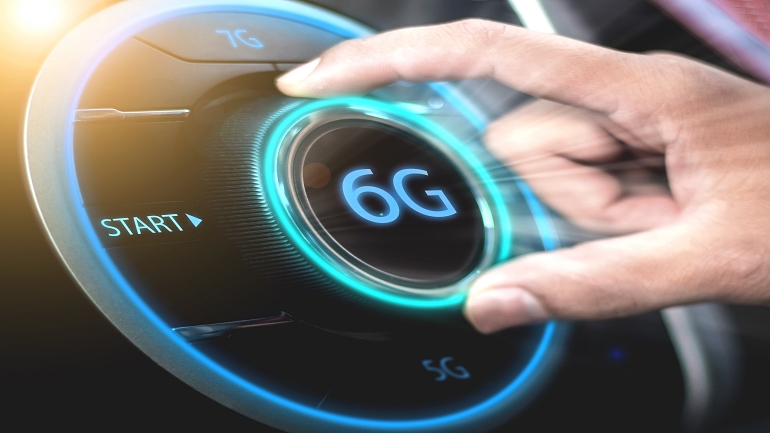
The global race for future technologies has accelerated even further, with the South Korean wireless carrier SK Telecom announcing that it is joining forces with network hardware providers Ericsson, Nokia and Samsung Electronics to carry out collaborative research and development projects to pave the way for 6G mobile network technologies. The partnership will also help to upgrade the already-advanced 5G technology, and expand  its adoption in other areas, including self-driving cars and in-built solutions. Park Jin-Hyo, Chief technology officer and Head of ICT R&D Center of SK Telecom, said, “Through strengthened cooperation with Ericsson, Nokia and Samsung Electronics, SK Telecom will be able to secure the world’s best 5G quality and lead the way towards 6G mobile network communications.” In accordance with the terms of the signed memorandums of understanding (MOUs), SK Telecom will work closely with each company to promote the advancement of 5G network technologies. They…

In 2020, Apple is anticipated to release its first 5G-enabled iPhone powered by chipsets from Qualcomm and Samsung, according to a report from reliable supply chain analyst Ming-Chi Kuo of  TF International Securities. Following Intel’s announcement earlier this month about exiting the 5G modem chip market for iPhones, Apple had to turn to Qualcomm to ensure the supply of a 5G modem chip. The tech-giant is also looking for a second supplier and, in all probability, this will be Samsung. “We expect Apple will likely adopt 5G baseband chips made by Qualcomm (focus on mmWave markets) and Samsung (focus on Sub-6GHz markets) for lowering supply risk, reducing costs and having better bargaining power,” said the analyst Ming-Chi Kuo. Kuo believes that the introduction of a 5G-enabled iPhone could create a wave of upgrades and purchases, especially for the high-end models. “We are positive on the high-end iPhone models’ replacement…

Three telecommunication giants, Verizon, Motorola and Samsung, have shared some good news and provided updates regarding progress with the long-awaited 5G network. Verizon has announced that they have successfully accomplished the connection of a 5G-upgradeable Motorola smartphone using a Qualcomm 5G modem and Samsung’s 5G technology to their 5G network. The team performed tests that included video calling and Internet browsing by means of a 5G link. According to Bill Stone, vice president, Technology Development and Planning for Verizon, “In the past two years, we have consistently led the world in 5G, including launching the world’s first commercial 5G service last month”. Obviously upbeat about this successful test using an actual smartphone, he assured, “We will be the first to offer a 5G upgradeable smartphone on our network in 2019.” Verizon’s 28 GHz spectrum and Samsung 5G New Radio solutions were employed to complete the transmissions. The 5G-enabled…

Today, 14th November 2018, the European Parliament is expected to vote on the final approval of the European Electronic Communications Code (EECC), which digs deeper into the EU’s telecom regulatory context. This reform paves the way for new fibre and 5G networks, and also expands the level of consumer protection available to the subscribers of telecom and OTT services. The EU officials first presented the Digital Single Market (DSM) strategy in May 2015, and the following year they introduced a connectivity agenda with proposals for the telecom sector. The DSM strategy contains diverse subjects, including support for cross-border e-commerce, prevention of geo-blocking, expansion on EU policies for the cloud, AI and competitiveness. The key legislation for the DSM must be completed by May 2019. It will presumably assist in reaching the new targets for broadband connectivity set by the Commission for 2025: gigabit speeds for digital businesses and public…

While 5G maintains its dominant position in telecom news headlines, Qualcomm has made a major move towards the realization of this disruptive technology with the announcement of the first fully-integrated QTM052 5G NR mmWave  and QPM56xx sub-6 GHz RF modules for mobile devices. These antennas will be used in conjunction with the Snapdragon X50 5G module to achieve the stellar target speeds of 5G networks. “Qualcomm Technologies’ early investment in 5G has allowed us to deliver to the industry a working mobile mmWave solution that was previously thought unattainable, as well as a fully-integrated sub-6 GHz RF solution. Now, these type of modem-to-antenna solutions, spanning both mmWave and sub-6 spectrum bands, make mobile 5G networks and devices, especially smartphones, ready for large scale commercialization,” commented the president of Qualcomm Incorporated. Even though the mmWave signals can offer the critically higher speeds that are essential for this cutting-edge network, they can…

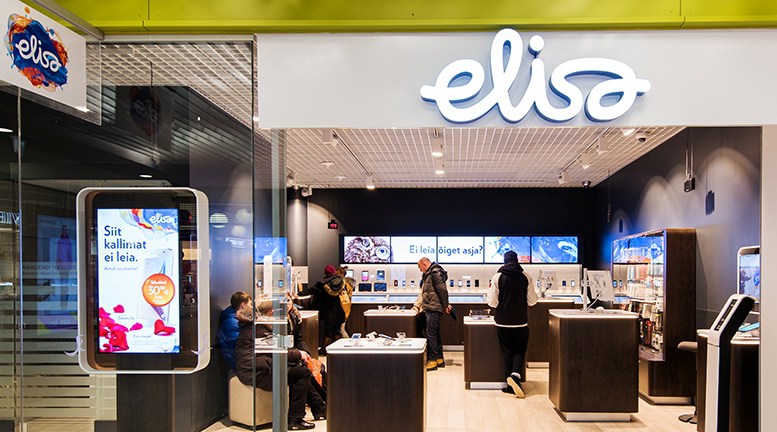
Amongst all the excitement of approaching 5G rollouts, the Finnish operator Elisa has grabbed the headlines by officially announcing that they are the first operator in the world to begin commercial use of a 5G network. Elisa’s first 5G network services were launched in Tampere (Finland) and Tallinn (Estonia). The first person to use the 5G network was Finland’s minister of Transport and Communications, Anne Berner, who made an international video call to Estonia’s minister of Economic Affairs and Infrastructure, Kadri Simson, using Huawei 5G terminal devices. Even though there are no commercial 5G-compatible devices available to the public, Elisa is already offering two types of 5G subscriptions. A significant hurdle that must be overcome for mass 5G rollouts is the issue of licensing. The Finish Ministry of Communications is set to allocate the first 5G licences for the 3.4-3.8 GHz bands in autumn, thereby enabling Finland to maintain their…

5G will be available for trial in seven cities across the UK. Birmingham, Bristol, Cardiff, Glasgow, Liverpool, Manchester, and London were selected to run the tests on the upcoming network. Those new infrastructures will be running the new 5G at the end of 2018 between October and December. Earlier this year, Vodafone paid £378 million, to get 50Mhz of the 3.4GHz spectrum. Nick Jeffery, Vodafone’s chief executive stated, “We want to make 5G and new fibre broadband services available to consumers and business throughout the UK, delivering a Gigabit society for all. We will also be bringing ultra-fast 4G to several hundred sites in hard to reach rural areas this year, building on our position as the network that offers the best voice coverage in the UK.” Vodafone’s goal is to launch a full 5G service in the UK by 2020, when 5G devices will be available on the market.

After months of battle and negotiations, the third and fourth largest wireless carriers in the U.S.A. finally agreed on a merger. The fusion between the two companies is one of massive proportions in terms of capital and clients, as it will be a $26 billions all-stock deal and will concern 127 millions customers. The main goal of this deal is to give birth to a strong opponent to AT&T and Verizon. Actually, the announcement might be due to T-Mobile’s fail to acquire a company called Straight Path a year ago, that focuses on providing technology, in the 28 GHz z to 39 GHz millimetre wave spectrum. Verizon, who won the bid gets an advantage in the 5G market. In order to be competitive in this new 5G technology the merger became necessary. T-Mobile and Sprint tried to merge 7 years ago, in a much different environment and the failed, as…